

Audio By Carbonatix
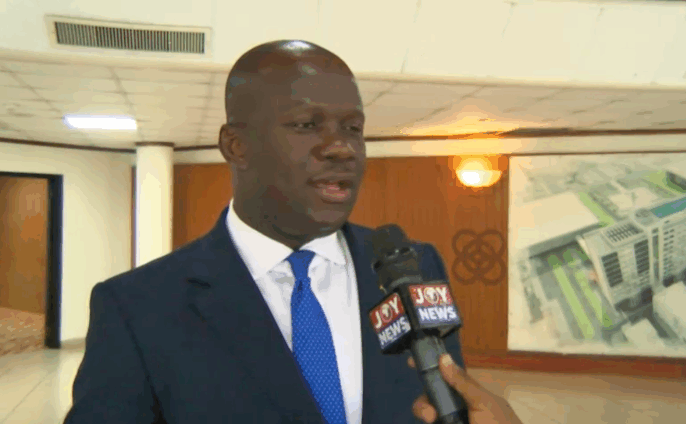
The Member of Parliament for Damongo and Ranking Member on Parliament's Foreign Affairs Committee, Samuel Abu Jinapor, has called for stronger continental action against recurring xenophobic violence in South Africa.
He urged African leaders to consider escalating the matter to the African Union while cautioning against retaliatory actions targeting South Africans living elsewhere on the continent.
Mr Jinapor made the remarks during an appearance on JoyNews' Newsfile programme on Saturday, May 30, as concerns continue to mount over recent xenophobic tensions in South Africa and Ghana's response to the unfolding situation.
His comments come as the Government of Ghana intensifies efforts to evacuate citizens affected by the unrest. So far, approximately 300 Ghanaians have been successfully evacuated from South Africa, with authorities indicating that additional evacuees are expected to return home in the coming days.
The latest developments have renewed concerns about the safety and welfare of African migrants living in South Africa, where periodic outbreaks of xenophobic violence have, over the years, resulted in attacks on foreign nationals, destruction of property and strained diplomatic relations between Pretoria and several African countries.
Addressing the issue, Mr Jinapor strongly condemned the attacks and urged South African authorities to take decisive measures against those responsible.
"I think whilst we continue to condemn the situation in South Africa and also call on the South African authorities to rise up to the occasion and crack down on this very unfortunate conduct by certain citizens of South Africa," he stated.
The Damongo MP argued that the recurring nature of xenophobic attacks raises broader questions about the effectiveness of measures taken by South African authorities to prevent such incidents and protect foreign nationals residing in the country.
He further suggested that the matter should not be viewed solely as a domestic issue for South Africa but as a continental concern requiring collective intervention.
Mr Jinapor proposed that African leaders consider elevating the matter to the African Union, with discussions potentially focusing on sanctions or other measures aimed at compelling stronger action against xenophobic violence.
He said the situation warranted consideration at the highest levels of African governance.
"Perhaps escalate it to the level of the African Union in terms of instituting sanctions against South Africa as a country and putting measures to deal with this situation," he said.
Mr Jinapor also challenged narratives that attribute xenophobic attacks solely to unemployment and economic hardship.
While acknowledging the social and economic pressures facing South Africa, he argued that the issue is more complex and reflects deeper challenges within the country's political and social environment.
"The body politic in South Africa itself is problematic and the matter cannot be reduced to unemployment," he observed.
The MP further indicated that concerns about the role of political leadership in confronting xenophobia are legitimate and should not be ignored.
"Constructive complicity from the government of the day is something that is a major legitimate point to raise," he added.
Despite his strong criticism of the attacks, Mr Jinapor cautioned against allowing public anger to fuel retaliatory actions against South Africans living in Ghana or elsewhere on the continent.
He acknowledged the deep emotions generated by reports of attacks on African migrants but warned that indiscriminate responses would only worsen an already volatile situation.
"I can very well understand the kind of emotion this evokes and there is absolutely no two ways about that," he said.
However, he urged restraint in public discourse and political commentary surrounding the crisis.
"We also should be careful in the narrative and the discourse not to instigate a certain reaction which is very possible, where South Africans, for example, are indiscriminately targeted here in Ghana and other parts of Africa. That would just worsen the situation."
The Government of Ghana has been working closely with diplomatic authorities to facilitate the safe return of affected citizens.
Latest Stories
-
Mahama’s proposed airline looks to South America, Caribbean as Ghana confronts mounting drug trafficking cases
6 minutes -
5% progress on Suame Interchange Phase One inadequate – Roads Minister tasks contractor to speed up work
8 minutes -
Photos: Vice President joins GAAS Awards to celebrate outstanding women leaders
9 minutes -
OSP vs Ken Ofori-Atta, SML and others: Court gives OSP four more weeks to serve Ofori-Atta with summons
11 minutes -
High Commission sends caution to Ghanaians in South Africa ahead of planned protests
14 minutes -
Okai Mintah outlines vision for NDC Youth Wing as he engages MMDCEs
19 minutes -
Mahama Ayariga leads renewed push for stronger local governance through partnerships
23 minutes -
NDC youth organiser aspirant Okai Mintah consults MMDCEs ahead of elections
24 minutes -
PHOTOS: Ayikuma Methodist Basic School wins National Juniors Challenge
26 minutes -
Silence has entered our homes : Salomey Awiti Bafoh and the chilling effect of free expression in Ghana
27 minutes -
UG Pro-VC calls for stronger research funding to curb brain drain
29 minutes -
Woman in critical condition after shooting at funeral grounds in Yeji
31 minutes -
Breast Cancer awareness must lead to action – Deputy Health Minister
34 minutes -
UK identified as leading destination for Ghana’s illicit cannabis exports – Report
36 minutes -
Drug money allegedly finances Ghana’s political parties and real estate – Global Organised Crime Index
41 minutes