

Audio By Carbonatix
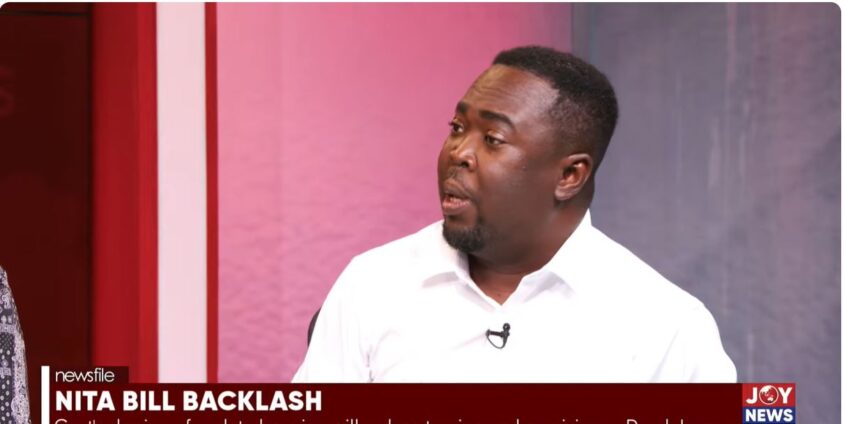
The Acting Director-General of the National Information Technology Agency (NITA), Ing. Dr Mark-Oliver Kevor, has explained that the ongoing development of the proposed NITA Bill has followed a “novel” and exploratory consultation process, which he says has contributed to public misunderstanding about the status and content of the draft legislation.
According to him, the approach adopted by the agency involved extensive stakeholder engagement from the early stages of the policy formulation process, allowing inputs from industry players, regulators, and other stakeholders before the formal legislative drafting stage.
“We took an exploratory approach where we said, right from the beginning, let us go out there,” he explained. “Which has been applauded. So we should understand the novelty of the process.”
He noted that while the broad consultation process was intended to strengthen the policy framework, it also meant that not all suggestions could be incorporated into the final proposal.
“It is not every suggestion that you take on board, else you will have a whole book of wishes from everybody,” he said, adding that the process required balancing competing interests.
The Acting Director-General further explained that one of the key challenges in drafting the bill has been managing regulatory overlaps between institutions such as the Data Protection Commission and the National Communications Authority (NCA).
According to Dr Mark-Oliver Kevor, these overlaps needed to be addressed clearly to establish proper regulatory boundaries within Ghana’s ICT ecosystem.
He noted that ICT regulation is complex because the sector is “horizontal” and cuts across multiple industries, including agriculture, health, and other digital services, requiring coordination among various regulators.
“We have a lot of other domains that you are dealing with, so you need time to synthesise all that has come in and come up with what I call a negotiated proposal,” he stated.
Dr Mark-Oliver Kevor also clarified that there had been public confusion about whether the bill had already been laid before Parliament, stressing that the process was still ongoing and had not yet reached the formal legislative stage.
According to him, after stakeholder consultations, the proposal will proceed to Cabinet, then to the Attorney-General’s Department for legal drafting, before eventually being laid before Parliament for consideration and further public input.
He added that part of the confusion stemmed from misunderstandings about NITA’s mandate, noting that while the agency was established as an ICT regulator, its regulatory functions had not been fully activated over the years.
"...So I think that this process, because of its novel nature, also confused a lot of people. There were people who were even suggesting that the law had already been passed by parliament. There were people who even thought that it was already in parliament because of the novel nature of the process.
And that is the clarity that we have sought to bring about for some time now. In fact, others were also confusing our existing mandate and regulatory actions that we are taking with what we are proposing. We must understand that Act 771 created NITA as an ICT regulator. But for all this while, that regulatory mandate had been sleeping," he explained.
He explained that the proposed reforms aim to strengthen NITA’s oversight role, particularly in supervising government ICT projects throughout their lifecycle—from planning and implementation to testing and deployment.
The Acting Director-General also indicated that discussions are ongoing regarding whether NITA should be granted authority to license ICT professionals, arguing that such considerations depend on how information systems are defined within the broader ICT framework.
The NITA Bill is expected to undergo further refinements as it moves through the remaining stages of the policy and legislative development process.
Latest Stories
-
FoSCel foundation calls for end to stigma and stereotyping against people living with sickle cell disease
10 minutes -
Auditor-General to track audit recommendations as GH¢280.5m in surcharges remains unpaid
10 minutes -
Walewale MP withdraws ‘rude’ comment on Bagbin’s Parliament recall, apologises
27 minutes -
FoSCel founder urges curriculum reform to strengthen sickle cell education in Ghana
34 minutes -
United States launches America.Gov for public services 5 years after Dr. Bawumia launched Ghana’s version Ghana.Gov
45 minutes -
Cocaine probe: Majority used super majority with Speaker’s support to weaken Parliament – Afenyo-Markin
49 minutes -
UGMC Research Director urges stronger clinical trials to bridge gap between research and patient care
59 minutes -
IEAG calls on FDA to resolve delays in import code issuance
59 minutes -
UGMC research must translate laboratory findings into healthcare solutions – Prof Evelyn Yayra Bonney
1 hour -
Court remands 3 over alleged gold concentrate robbery
1 hour -
Two bodies stuck at St. Anne’s mortuary after refrigeration engines break down
2 hours -
‘We will not let this matter rest’ – Afenyo-Markin after Bagbin rejects narcotics probe
2 hours -
AFCON 2027Q: Ghana suffer 4-2 defeat to Gambia
2 hours -
Your strike could disrupt academic calendar – GES urges teachers to return
2 hours -
Speaker’s ruling has failed integrity test required of Parliament to discharge its duties – Afenyo-Markin
2 hours