

Audio By Carbonatix
The Member of Parliament for Effia and a member of Parliament's Finance Committee, Isaac Boamah-Nyarko, has commended efforts by the government to engage stakeholders on the proposed National Information Technology Agency (NITA) Bill, while urging ministries to make public consultation a standard feature of Ghana's legislative process.
His remarks come amid growing public debate and opposition to the proposed legislation, which seeks to expand the mandate of the National Information Technology Agency beyond its traditional role of coordinating information and communication technology (ICT) development within the public sector to becoming a broader regulator of Ghana's digital ecosystem.
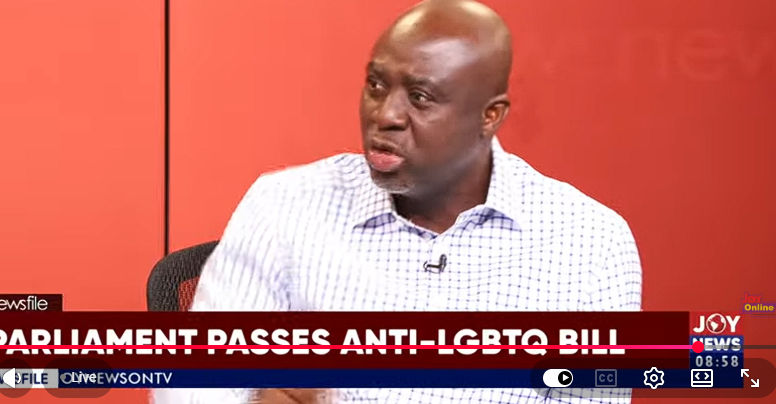
Appearing on JoyNews' Newsfile on Saturday, May 30, Mr Boamah-Nyarko described the ongoing consultations on the NITA Bill as a positive development that should be replicated across government ministries and agencies.
"Very commendable, as I said earlier," the Effia MP stated. "As much as possible, it should be part and parcel of our culture now. If you want to adopt a bill, ministries introducing legislation should ensure there is adequate consultation."
The lawmaker expressed concern about what he described as the increasing trend of legislation being passed under certificates of urgency, leaving little time for Parliament, stakeholders and the general public to adequately scrutinise proposed laws before their passage.
According to him, many bills introduced by the current administration have moved through Parliament at an unusually rapid pace, often within a matter of hours.
"When it comes to this government, we are passing bills within 24 hours, and in less than 24 hours we have passed almost all the bills in Parliament that come under certificates of urgency," he said.
Mr Boamah-Nyarko argued that such expedited procedures limit meaningful debate and weaken opportunities for comprehensive stakeholder engagement.
He noted that even parliamentary committees, which are tasked with reviewing legislation before it is presented to the House, are often constrained by tight timelines.
"In some cases, the bill comes to Parliament, it is referred to a committee, and within 24 hours the committee comes back to Parliament and the bill is passed into law," he observed.
The MP suggested that relying solely on stakeholder engagement processes organised by ministries may not always be sufficient, stressing the need for Parliament itself to have adequate time to conduct independent scrutiny and gather broader public input.
He argued that laws with far-reaching consequences should not be rushed through Parliament without adequate opportunities for public engagement, expert input and detailed parliamentary scrutiny.
The Finance Committee member maintained that the current consultations surrounding the NITA Bill present a useful example of how government institutions can engage stakeholders before legislation is finalised.
"I think it is very good," he said. "We can encourage other ministries to do that."
Latest Stories
-
‘We have to say sorry’ – Queiroz apologies after Ghana’s humiliating defeat to Gambia
35 seconds -
‘Beating Ghana did not surprise me’ – Gambia boss
40 minutes -
OpenAI agents get rebrand – as ‘dots’ – while safety worries delay new model
47 minutes -
US ban on Canadian alcohol and dairy takes effect as trade war drags on
60 minutes -
Baffour Awuah’s EOCO case reopens Equity Savings & Loans file as SIC recovery battle emerges
1 hour -
Ghana ranked 5th source of cocaine seized at Antwerp, Belgium in 2025
1 hour -
‘We knew there was disruption’ – Gambia boss claims Ghana players clashed at half-time
1 hour -
Bagbin adjourns Parliament indefinitely
2 hours -
African Most Beautiful USA Queen to host Community Zumba Dance session in Accra
2 hours -
Cocaine probe: Speaker got it wrong by blocking parliamentary inquiry – Minority Leader
2 hours -
FoSCel foundation calls for end to stigma and stereotyping against people living with sickle cell disease
2 hours -
Auditor-General to track audit recommendations as GH¢280.5m in surcharges remains unpaid
2 hours -
Walewale MP withdraws ‘rude’ comment on Bagbin’s Parliament recall, apologises
2 hours -
FoSCel founder urges curriculum reform to strengthen sickle cell education in Ghana
2 hours -
United States launches America.Gov for public services 5 years after Dr. Bawumia launched Ghana’s version Ghana.Gov
3 hours