

Audio By Carbonatix
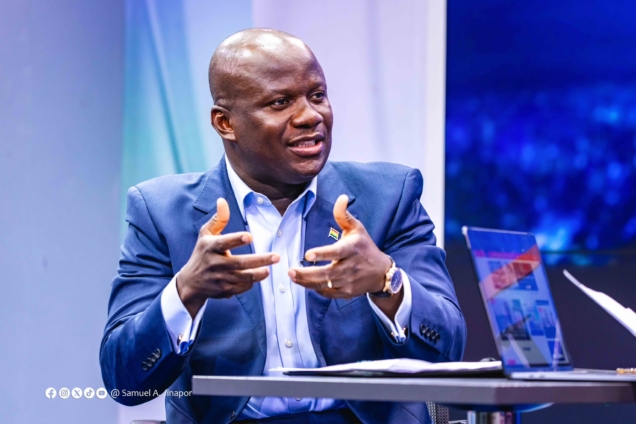
The Member of Parliament for Damongo and Ranking Member on Parliament's Foreign Affairs Committee, Samuel Abu Jinapor, has cautioned against inflammatory rhetoric and retaliatory actions against South Africans living in Ghana and other African countries
He warned that such reactions could further deepen tensions arising from ongoing xenophobic attacks in South Africa.
Appearing on JoyNews' Newsfile on Saturday, May 30, Mr Jinapor said while there was widespread justification for anger and frustration over the treatment of foreign nationals in South Africa, African countries must avoid responding in ways that could trigger a cycle of reprisals across the continent.
His comments come as Ghana continues efforts to evacuate citizens affected by the latest wave of xenophobic tensions in South Africa.
So far, approximately 300 Ghanaians have been repatriated, with authorities indicating that more evacuees are expected to arrive in the coming days.
The latest developments have reignited concerns about the safety of African migrants living in South Africa and raised fresh questions about the country's ability to effectively address recurring outbreaks of violence targeting foreign nationals.
Mr Jinapor acknowledged the strong emotions generated by reports of attacks on African migrants, including Ghanaians, but stressed that public commentary and political discourse must be carefully managed to avoid provoking further hostility.
"We also should be careful in the narrative and the discourse not to instigate a certain reaction which is very possible where South Africans, for example, are indiscriminately targeted here in Ghana and other parts of Africa," he stated.
According to the Damongo MP, there is a real risk that anger over events in South Africa could fuel retaliatory sentiments against innocent South Africans residing or doing business elsewhere on the continent.
He warned that such actions would only aggravate an already difficult situation and undermine efforts to find a lasting solution to the crisis.
"That would just worsen the situation," he added.
While advocating restraint, Mr Jinapor was unequivocal in his condemnation of the attacks and called on South African authorities to take decisive action against those responsible.
"I think whilst we continue to condemn the situation in South Africa and also call on the South African authorities to rise up to the occasion and crack down on this very unfortunate conduct by certain citizens of South Africa," he said.
The lawmaker argued that South African authorities must demonstrate a stronger commitment to protecting foreign nationals and ensuring that perpetrators of xenophobic violence are held accountable.
He further suggested that the issue may require intervention at the continental level, proposing that African leaders explore mechanisms through the African Union to address the recurring attacks.
"Perhaps escalate it to the level of the African Union in terms of instituting sanctions against South Africa as a country and putting measures to deal with this situation," he stated.
Mr Jinapor also challenged explanations that attribute xenophobic violence solely to unemployment and economic hardship.
Although economic pressures are often cited as a major factor behind hostility towards migrants, he argued that the issue is rooted in broader political and social challenges within South Africa.
"The body politic in South Africa itself is problematic and the matter cannot be reduced to unemployment," he observed.
The Ranking Member on Parliament's Foreign Affairs Committee also suggested that concerns about the response of South African political leaders to xenophobic violence remain valid and deserve serious consideration.
"Constructive complicity from the government of the day is something that is a major legitimate point to raise," he said.
Mr Jinapor's comments come against the backdrop of heightened public anger across several African countries whenever xenophobic attacks occur in South Africa.
Past incidents have occasionally sparked calls for boycotts of South African businesses and retaliatory measures against South African nationals living abroad.
In some instances, South African-owned companies operating elsewhere on the continent have faced threats, protests and acts of vandalism.
The Damongo MP warned that such reactions risk undermining the principles of African unity and solidarity that underpin regional integration efforts.
Latest Stories
-
Gov’t to suspend GH¢1 D-Levy on diesel for October and November
18 minutes -
Fire destroys belongings in Akweteyman apartment
48 minutes -
Baffour Awuah to turn himself in to EOCO today – JoyNews sources
54 minutes -
Government identifies payment discrepancy holding up teachers’ strike resolution
1 hour -
BoG signals no FX intermediation for October as GoldBod plans $1bn support for banks
1 hour -
When share ownership becomes personal: The African mindset of the Dangote IPO
1 hour -
Why MFWA Legal Fund matters to Ghana’s democracy
1 hour -
Fuel prices to rise from October 1; diesel could hit GH¢19.60 – COMAC
1 hour -
Parliament must investigate how 3.9 tonnes of cocaine left Ghana undetected – Samuel Jinapor
1 hour -
Government pledges to pay striking teachers as payment dispute is resolved
2 hours -
Government cannot investigate drug exports under its own watch – Abu Jinapor
2 hours -
Government extends GH¢2 diesel subsidy for two more months
2 hours -
GTEC flags over 100 tertiary institutions as unrecognised
2 hours -
Agric Committee chair commends NAFCO for turnaround from GH¢20m debt to GH¢96m profit
2 hours -
NPP: Judicial office requires judges to surrender some personal freedoms
2 hours