

Audio By Carbonatix
Patient Rights Watch Ghana is calling for a proper enforcement of the Patient's Charter to deal with the violation of patient's rights in the country.
The charter was introduced as a tool to ensure patients’ rights and dignities are protected and upheld within healthcare facilities.
But 12 years after its implementation, various assessments have highlighted challenges including ineffective enforcement in health facilities.

Violation of patients’ rights is common in healthcare institutions in Ghana.
The occurrences are often attributed to systemic and institutional challenges, such as insufficient healthcare staff, logistics, and unprofessional attitudes.
This influenced the introduction and implementation of the Ghana Patient Charter in 2002 and 2012 respectively.
The Charter highlights the patients’ rights and responsibilities in the care process irrespective of age, gender, ethnic background and religion.
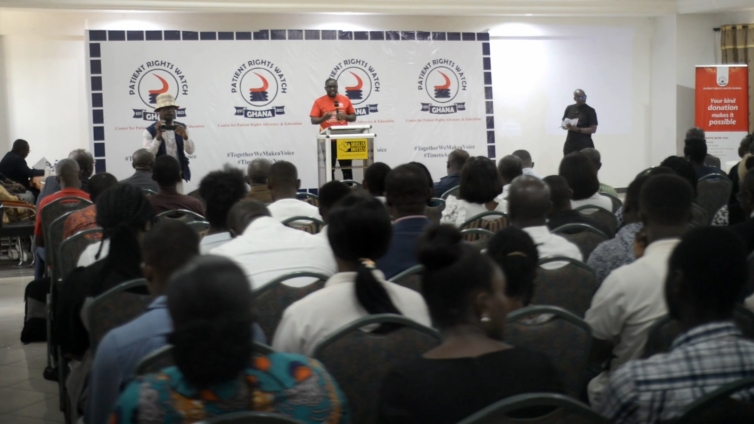
President and Founder of Patient Rights Watch Ghana, Isaac Ofori Gyeabour, Esq insists enforcement of the charter will help the country.

“There is so much to know about the charter, and programs like this symposium are what help. We believe the document contains enough to get us the required health we need. The only thing missing is enforcement,” he said.
A medico-legal symposium themed: “Ghana's Patient Charter; 12 Years On” by the Patient Rights Watch Ghana seeks to create awareness and highlight shortcomings in the implementation of the Charter.
Justice of Court of Appeal, Sir. Dennis Dominic Adjei led an analysis of the legal implications of the rights and responsibilities of patients.

“Some people go to the hospital and get their conditions worsen. If there is a charter, it will bind their actions and put everyone in check,” he said
Principal Nursing Officer, Abigail Appiah indicated that an improved healthcare infrastructure and working conditions of health personnel will help lessen nurse-patient conflict.

“One nurse is to 839 patients. You can understand the pressure. We don't have the necessary logistics to accommodate and it overwhelms the nurse and conflict arises.
“We will try our best to promote good interpersonal relations with our patients. But we need many of these critical issues addressed,” she said.
Latest Stories
-
Conflicts among care providers linked to maternal, neonatal deaths – Expert
1 hour -
GIS marks 10th TIME conference, champions improved teaching practices
2 hours -
BRICS Or Balance? What Ghana’s bid really means
2 hours -
GPRTU wants full TRAFFITECH-GH implementation to start in 2027
2 hours -
Mahama announces plans to import electric wheelchairs for PWDs
2 hours -
KGL U17 Colts 2026: Western beat Prempeh Elite Academy to set up final final with Greater Accra Region
3 hours -
Late Solanke strike salvages 10-man Spurs draw at Man United
3 hours -
Gender Ministry to monitor welfare of Nana Akua Addo’s children amid domestic violence case
3 hours -
Benedict Okyere Yeboah: Ghana’s football problem goes beyond sacking a coach
3 hours -
GPL 2026/27: Darkwah Wiafe’s winner sees All Blacks beat Kotoko
3 hours -
ITF World Tour : Patel Wins Boys’ Singles Final at J100 Accra
3 hours -
Ghana must pursue BRICS partnership if it brings economic benefits – Kpebu
3 hours -
Success and Wright Claims J100 Accra Girls’ Doubles Championship
3 hours -
ITF J100: America’s Wright wins J100 Accra Girls’ Singles Title
4 hours -
Expedition hopes to find aviator Amelia Earhart’s plane on remote island
4 hours