


Audio By Carbonatix
The Ghana Investments Fund for Electronic Communication has assured of reviving its operations to get all rural areas connected with data services in the coming weeks.
According to its Chief Executive, Prince Sefah, the initiative had a few challenges but the road is clear now to get the project back on track.
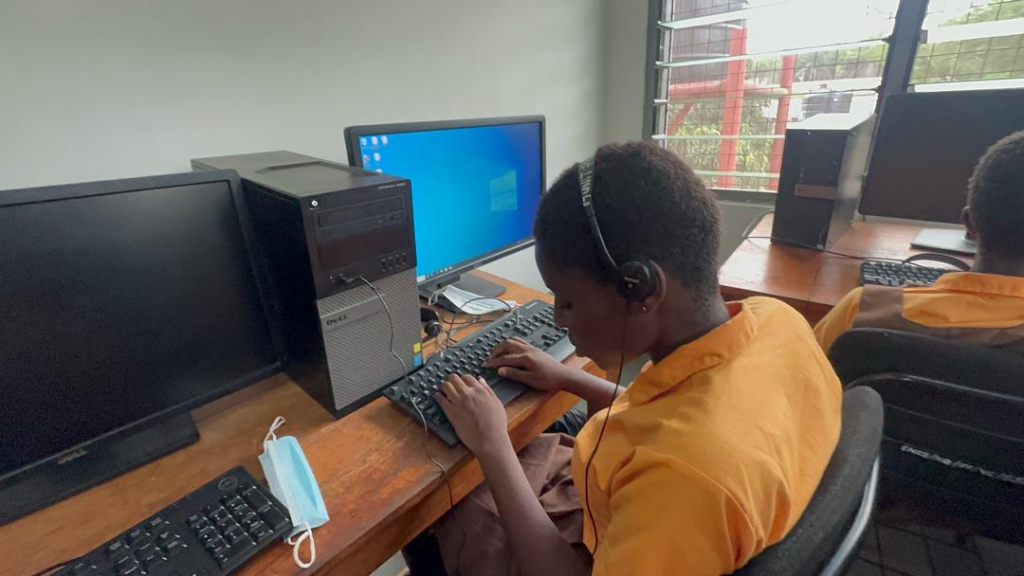
He spoke to Journalists after inspecting a training for beneficiaries of the Introduction to Computer Basic for the visually impaired in the Central Region.
“More than a thousand cell sites are operational and about four hundred are yet to be connected due to a few financial challenges but now things are getting back and we’re staying on track to get all connected.
"The financing gap has been cleared for funds to be released so work can resume in the coming weeks. There are few communities left to be connected so we’re continuing the work and over the next few weeks, we are going to be back on track to get everyone connected” he assured.
As part of the Digital Transformation Centers (DTC), the International Telecommunications Union (ITU), in collaboration with partners and ST Foundation provides Basic computer skills training for the visually impaired, under the title "Introduction to Computer Basics for the Visually Impaired.
The ongoing session seeks to train 450 visually impaired citizens in 13 regions on the fundamentals of computers over 15 days.
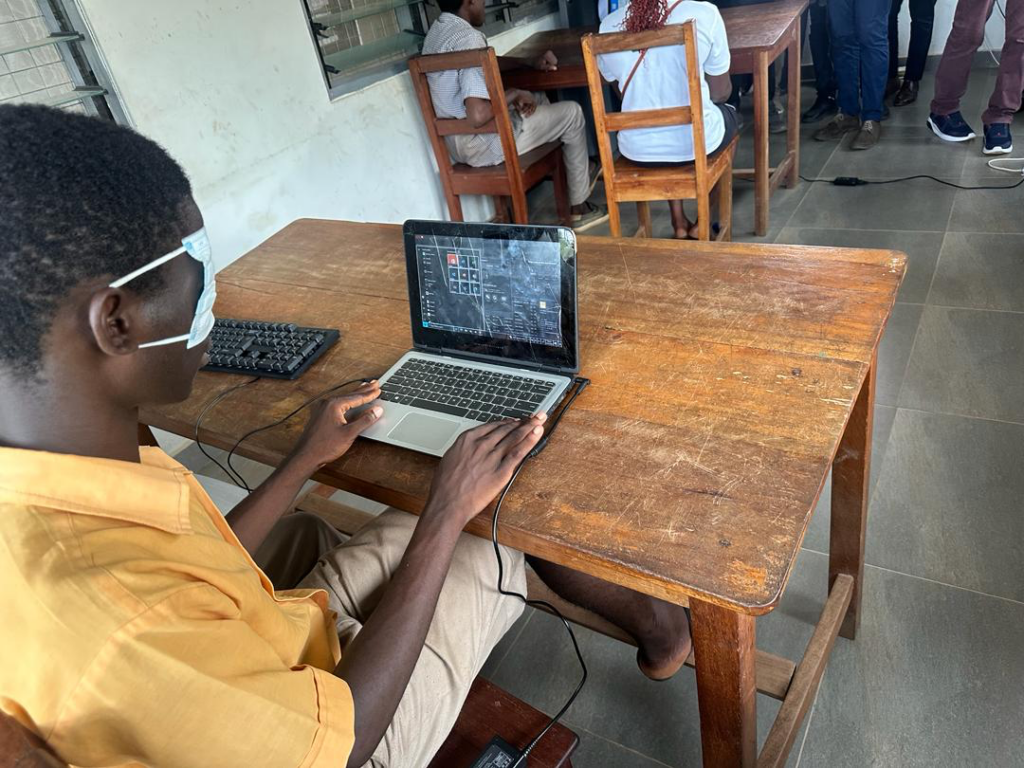
Speaking to Journalists during the inspection, the Chief Executive of GIFEC, Prince Sefah expressed satisfaction with the enthusiasm of the beneficiaries and confidence in getting more funds to continue training more people under the project.
He also provided some details on the programme as one of its flagship projects.
“We have begun this project from last year with the aim of training for people who fall under the disability population.
"It is important that we empower them and also give them those tools and digital knowledge so that they become more independent and can do more for themselves with a fulfilling life.
"This year we started training people in the underserved and rural communities directly” he said.

The training programme is designed to develop digital skills, mainly at the basic and intermediate levels, particularly in underserved communities.
The programme forms part of a broader goal of building an inclusive digital society where a lack of digital skills should not be a barrier to participation in the digital economy.
It aims at building a digitally literate citizenry to boost their ICT capabilities to enable them to participate meaningfully in the knowledge society of today.
Latest Stories
-
ExxonMobil return talks emerge as GIPA CEO holds back details
5 seconds -
Council of State meets teacher unions over strike today
6 minutes -
Ntim Fordjour appeals to Mahama to abandon regulation restricting preaching in buses
13 minutes -
Volta youth farmers commend Agric Minister, appeal for markets for cassava growers
19 minutes -
Mahama commissions expanded production line at Nestlé Ghana Ltd
24 minutes -
Chief of Staff urges journalists to uphold accuracy, fairness
29 minutes -
Mahama pays a working visit to Three Dreamer Manufacturing
34 minutes -
Shell, Chevron sign exploration MoU as Petrobras eyes Ghana’s oil blocks
38 minutes -
Mahama urges Ghanaian businesses to build beyond founders
39 minutes -
Mahama congratulates Kasapreko PLC on successful GSE listing
44 minutes -
55 aspirants cleared to contest NDC executive positions in Lambussie
50 minutes -
Ghana moves to regulate growing electric vehicle charging sector
56 minutes -
Bolster southern borders against cross-border crime, violent extremism – NCCE
1 hour -
Madina NDC Poll: Sidii Abubakar camp rejects Musah Dankwah’s figures
1 hour -
Jubilee, ENI partners announce $3.5bn investments in Ghana’s oil sector
1 hour