

Audio By Carbonatix
John Boadu, the Director-General of the State Interest and Governance Authority (SIGA), has disclosed that the government is preparing to divest its interest in most state-owned enterprises (SOEs).
Mr. Boadu stated that this would allow Ghanaians to also invest in such institutions by buying shares.
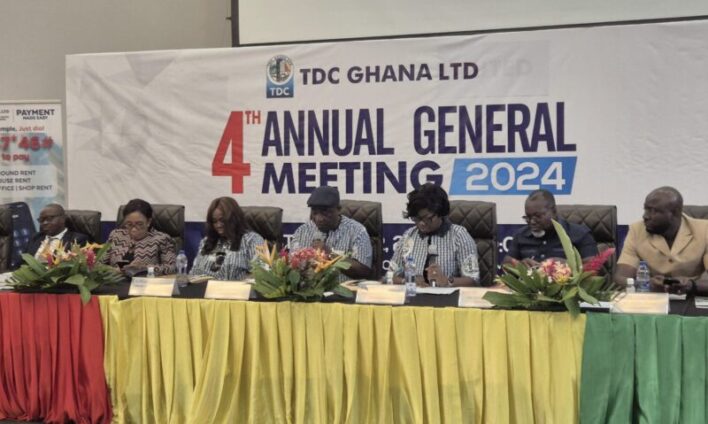
He revealed this at the fourth annual general meeting of the TDC Ghana Limited, saying, “The government is preparing itself to diversify its interest in most SOEs, 100 percent ownership for what, and the people of this country are also ready to invest in these entities.”
He noted that a look at most countries that have developed showed that governments have limited shares in their SOE sectors, adding that this ensures that people who are capable are put on the board.
He added: “You are not limited to costs that must be paid by the government, and you must pay those costs that ensure that you are not able to make the required profits.
Touching on the operations of TDC, Mr. Boadu commended the company for its performance over the past years, adding that it is about time that state limited liability entities challenge the market in which they operate.
The SIGA Director-General reminded TDC of its ability to borrow at the backbone of the government, provided its financials are good.
Commenting on the provision of affordable houses to Ghanaians, he said for the TDC to provide such houses and still survive, “the government must take the difference so they can survive; that’s how it works elsewhere.”
Meanwhile, Kofi Brako, the Board Chairman of the TDC, has appealed to the government to involve TDC in more affordable housing projects to help address the challenges in the sector and promote growth.
He said the real estate sector in Ghana continues to stand out as one of the fastest-growing industries, showing consistent expansion over the years, revealing that the industry over the years has experienced growth ranging between eight and 10 per cent.
This, he noted, was fuelled by the country’s rise in population and urbanisation trends, adding that, despite the promising development in the sector, Ghana grapples with a significant housing deficit, with Ghana currently having an estimated deficit of 1.8 million units of houses.
Latest Stories
-
Abass Nurudeen accuses Minority of ‘scandal scavenging’ over World Cup visa controversy
1 minute -
US Embassy recognised NSA, GFA and GTA as separate entities for visa applications – Sports Minister’s aide
8 minutes -
Only 30% of Ghanaian teachers satisfied with their jobs – CAPCOE data reveals
19 minutes -
Communities affected by construction of Akosombo Dam urge government to speed up compensation process
40 minutes -
World Cup visa scandal: Sports Ministry not shielding anyone – Sports Minister’s special aide
1 hour -
World Cup visa scandal: Over 30 people misrepresented as GTA board members to US Embassy – Vincent Assafuah alleges
1 hour -
Fire destroys wooden structure near Yesu Mo Villa at Bush Road
1 hour -
NDC threatens sanctions over oversized campaign posters, gives aspirants 5 days to comply
2 hours -
Star Oil paid GH¢2.7bn in taxes, levies in nine months of 2026
2 hours -
Samson’s Take: The rule of law is cheaper before the bulldozer
2 hours -
GRA blames system failure for delay in issuing receipt over passenger’s customs duty
3 hours -
Livestream: Newsfile discusses World Cup visa scandal, beach demolitions, education strikes, BRICS bid
3 hours -
NC-PTAs welcomes end of teachers’ strike, urges parents to prepare children for Monday
3 hours -
Government procures over 2,000 transformers as Ghana’s electricity access hits 89.13% – Energy Minister
3 hours -
UTAG-UG threatens strike on October 19 over unpaid allowance
3 hours