

Audio By Carbonatix
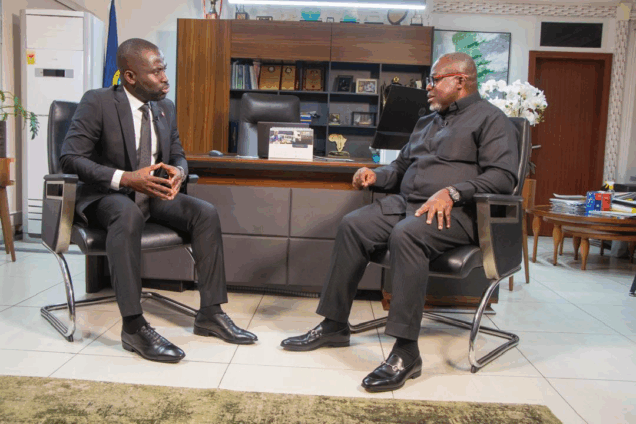
The Commissioner-General of the Ghana Revenue Authority (GRA), Anthony Kwasi Sarpong, says the Authority is deliberately pursuing a “human face” approach to tax collection while remaining firm on the law.
Speaking on Joy News’ PM Express Business Edition, he said GRA’s focus in recent years has been on building a culture that treats taxpayers with respect, even as the Authority enforces compliance.
“In terms of being friendly, it’s always in the life of institutions a process and a journey, and it depends upon at which point in time we are on.
"Over the last five years, we have invested in what we call customer experience resources, where we are engaging our people in the culture of dealing with taxpayers with respect, with cordiality, but at the same time enforcing the laws that ensure that taxes are paid,” he explained.
He admitted that taxes will never be popular, but stressed that GRA’s posture has shifted.
“The posture that we’ve taken as leadership is using GRA to bring the human face in terms within the context of a customer experience.
"We have a full-fledged department, we embedded that in our training programs, and we are on the journey at a point where we are going to conduct what we call an annual service that people will give us feedback in terms of interacting with GRA.”
Mr. Sarpong, however, made it clear that GRA cannot ignore the law when taxpayers refuse to comply.
“Because taxes are not palatable, it’s not every individual or business that really wants to pay. Within that context, the law permits GRA to use some level of reasonable force when individuals are making gains and yet they are not paying.
"So, for example, the law states that if somebody owes taxes, you must give them 30 days’ notice. After the 30 days, if you don’t comply, the law gives opportunity to give you a notice that we may use extra force.”
He explained that this “reasonable force” could include directing banks to divert funds from accounts to settle tax obligations or even physically blocking trading.
“This is used very rarely. It’s only in situations where the taxpayer has become recalcitrant, and yet we are fully aware that they have funds at the bank.
"Sometimes the law allows us to do that, but let me say that these are not the norm. It is only when it becomes very, very essential that people are doing business, it’s clear that they’ve been assessed, it’s clear that they have the capacity to pay.”
The GRA boss also highlighted the Authority’s flexibility in dealing with struggling businesses.
“On rare occasions, when you know that you are doing a good business but for one good reason or the other, you find yourself in financial difficulty, the law empowers us to sit down with you and plan a six-to-one-year repayment plan.
"This facility we avail to many of our taxpayers, but it calls for discipline where the taxpayer will abide by the plan.”
According to him, this balance of respect, flexibility, and firmness defines the Authority’s new identity.
“Before we deploy some somewhat I call the reasonable enforcement measures, we give these opportunities to taxpayers to take advantage, and I’m glad to say that many taxpayers take advantage of the repayment plan and make sure that they comply. It’s worked perfectly for both GRA and their business.”
Latest Stories
-
Second edition of Prince Amoako Jr giveback project scheduled for December
11 seconds -
Muntaka commissions polyclinic at Ayigya Zongo to address healthcare challenges
8 minutes -
World Habitat Day: Adequate housing for all – a right we must build
9 minutes -
Ghana Institute of Architects urges government to adopt coordinated agenda for affordable housing
10 minutes -
Yutong bus extensively damaged by fire at Gbogdaa
10 minutes -
Spanish PM Sánchez calls early election after housing protests
16 minutes -
GH¢3,000 monthly allowances for Paramount Chiefs and Queen Mothers fully paid – Ayariga
16 minutes -
Government disbursed over GH¢5bn to MMDAs in 2025- Ayariga
16 minutes -
Teachers’ strike: Abosamso queenmother, assemblyman take over classroom
20 minutes -
GPL 2026/27: Tanko, Agyemang shortlisted for September Coach of the Month award
25 minutes -
Mahama directs creation of Local Government TV – Ayariga
26 minutes -
GPL 2026/27: Amankona, Gyamfi Junior and four others nominated for September Player of the Month award
31 minutes -
Government to remodel 24-hour markets, rename project District Model Markets – Ayariga
34 minutes -
June 29 floods exposed weaknesses in Ghana’s environmental sanitation system – Ayariga
40 minutes -
Local Gov’t Minister announces plans to regenerate Agbogbloshie enclave
45 minutes