

Audio By Carbonatix
The Ghana Real Estate Developers Association (GREDA) is urging suppliers and manufacturers of building materials to reduce prices in line with the recent appreciation of the Ghana cedi.
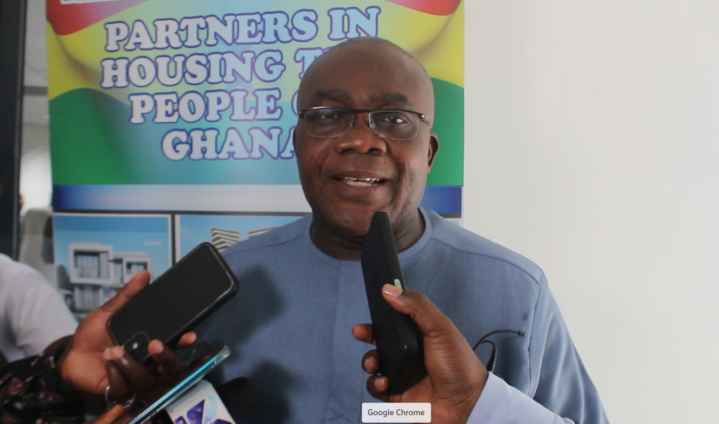
According to its President, Dr. James Orleans-Lindsay, the strengthening of the local currency should translate into lower costs for construction inputs such as cement, iron rods, and other essential materials.
He argues that the continued high prices of these items, despite favorable currency movement, place an undue financial burden on Ghanaians particularly prospective homeowners and developers.
Speaking to Joy Business on the sidelines of a stakeholder briefing session with the Ghana Revenue Authority (GRA), Dr. Orleans-Lindsay stressed the importance of market responsiveness to currency fluctuations.
“We are saying we will continue to price in the cedi equivalent, but prices of our component should be reduced. The developer is losing because we are still buying cement at the same high prices,” he bemoaned.
The real estate sector, which plays a critical role in addressing Ghana’s housing deficit, has faced significant challenges in recent years due to the rising cost of building materials.
Developers argue that price hikes, often driven by currency depreciation and import costs, have made it difficult to complete affordable housing projects.
With the cedi showing signs of strengthening against major international currencies, GREDA is calling for immediate action to reflect this positive development in the pricing of local and imported construction inputs.
“We are not asking for favors, we are simply asking for fairness. Let the strength of the cedi bring some relief to the ordinary Ghanaian trying to build or buy a home,” Dr. Orleans-Lindsay added.
The call from GREDA comes at a time when both government and private stakeholders are working to make housing more accessible and affordable in Ghana.
The association believes that realigning the prices of construction materials could be a significant step in the right direction.
The stakeholder briefing session with the Ghana Revenue Authority (GRA) on the government’s new 5% tax policy targeting landlords was aimed to clarify the implementation strategy, compliance expectations, and its impact on the real estate and rental sectors.
Latest Stories
-
Zonda Tec launches HOWO T3M truck to support agric and logistics
6 minutes -
Obuasi SHTS scandal: Eduwatch calls for sex offenders’ register and mandatory background checks for teachers
19 minutes -
GloMeF CEO urges intensified public education on new road traffic regulations
30 minutes -
‘Any tax on ChatGPT is an attack on education and innovation’- Akim Swedru, MP
33 minutes -
Obuasi SHTS sexual abuse scandal exposes systemic failure in child protection – Moving Masculinity
34 minutes -
Hubtel CEO calls for national data-sharing framework to boost AI development
37 minutes -
Twelve Golden Rules of real estate development in Ghana, Africa
41 minutes -
Five new telephony cell sites in Ashanti Region to be activated in October 2026 – Sam George
42 minutes -
Mahama cuts sod for Afienya Industrial Park, targets 120 enterprises
47 minutes -
Rush for fuel from accident tankers is stealing, punishable by law – NPA boss, Edudzi Tamakloe
52 minutes -
GhIG pushes for legislation to regulate geoscientists’ activities
58 minutes -
Mfantsipim @150: Ace Anan Ankomah leads project to preserve school’s musical heritage
1 hour -
Gov’t launches rCOMSDEP in Ahanta West, Mpohor Fiase to promote responsible community mining
1 hour -
AI is forcing professionals to rethink how they deliver value – Hubtel CEO
1 hour -
Daily Insight for CEOs: Strengthening the CEO’s Leadership Legacy
1 hour