

Audio By Carbonatix
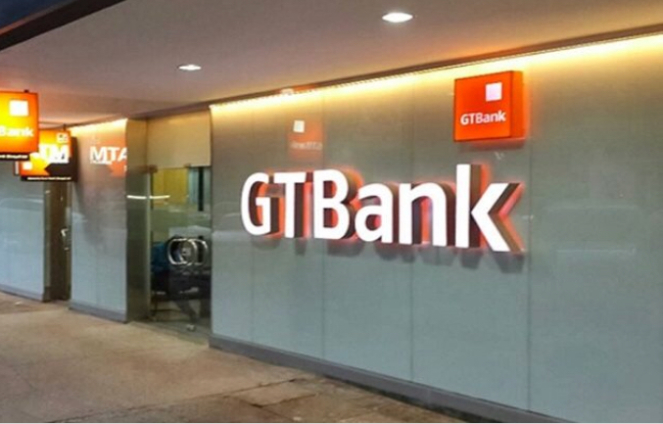
Rating agency, Fitch, has affirmed Nigeria-based Guaranty Trust Holding Company Plc's (GTCO) and its core banking subsidiary Guaranty Trust Bank Limited's (GTB) Long-Term Issuer Default Ratings (IDRs) at 'B-' with Stable Outlooks.
It also affirmed the National Long-Term Ratings at 'AA' and assigned Stable Outlooks to them. A full list of rating actions is below.
It stressed that the Long-Term IDRs of GTCO and GTB are driven by their standalone creditworthiness, as expressed by Viability Ratings (VRs) of 'b-'.
The VRs, it said, are constrained by Nigeria's Long-Term IDRs of 'B-' due to their high sovereign exposure relative to capital and the concentration of their operations in Nigeria. The 'b-' VRs are one notch below the 'b' implied VR, reflecting the operating environment/sovereign rating constraint.
Sizeable Franchise:
Fitch pointed out that GTCO is Nigeria's fifth-largest banking group, representing 7% of domestic banking system assets at end-2022.
Revenue diversification is also strong, with non-interest income representing 44% of revenues in 2022.
High Sovereign Exposure
It stated that single-borrower concentration is large, with the 20-largest loans representing 61% of gross loans at end-2022.
According to Fitch, the oil and gas exposure (end-2022: 37% of loans) and foreign-currency lending (57% of net loans) are materially higher than the banking system average. Sovereign exposure through securities and placements with the CBN, including cash reserves, is high (around 250% of FCC at end-2022).
Strong Profitability
Again, GTCO delivered stronger profitability than peers, with an operating return of 6.5% of risk-weighted assets (RWAs) in 2022.
Profitability was supported by a wide net interest margin, strong non-interest income, sound operating efficiency and moderate loan impairment charges.
Challenging operating environment
Fitch pointed out that banks in Nigeria continue to contend with US dollar shortages and the Central Bank of Nigeria's (CBN) highly burdensome cash reserve requirement.
It, therefore, expects reform progress under the new administration, including the elimination of fuel subsidies and gradual liberalisation of the naira.
“However, we see a risk of a sharp naira depreciation due to large disparities between the official and parallel exchange rates. The CBN has increased its policy rate by 700bp since April 2022 (currently 18.5%) due to rising inflation (22% in April 2023).
Latest Stories
-
Ghana risks EU gas market access over methane emissions – Expert warns
17 minutes -
Salt Pond’s $200m warning: Why Ghana cannot afford to exclude Fisheries Commission from future decommissioning
19 minutes -
Venezuela frees 39 political prisoners after post-Maduro talks
56 minutes -
EU unlocks humanitarian aid for crises worldwide
59 minutes -
Tenth woman’s body found as South Africa police probe killings
1 hour -
Black woman found hanging from tree was dead before body was ‘staged’, police say
1 hour -
Final day: 3rd Republic Bank-JoyNews Habitat Fair clinic underway at Junction Mall, Nungua
1 hour -
Nor’easter brings flooding as New York and New Jersey declare emergency
1 hour -
Africa’s richest man helps fund $660m fuel pipeline between Ethiopia and Djibouti
2 hours -
Security lapses at Utah campus where Charlie Kirk was killed, review says
2 hours -
White House bars CNN from travelling with Trump on Air Force One
2 hours -
Pope praises young people’s ‘energy and commitment’ at huge open-air Mass in Paris
2 hours -
Nyankamam residents benefit from free medical screening, healthcare outreach
2 hours -
Ghana, Boeing explore setting up regional aircraft maintenance hub
2 hours -
Bangkok roads submerged as flood disaster declared
2 hours