

Audio By Carbonatix
The Minister for Health, Kwabena Mintah Akandoh, has reaffirmed Government’s commitment to strengthening healthcare delivery and bringing quality services closer to communities through the rollout of the Free Primary Healthcare (FPHC) initiative.
According to a post shared on Facebook by the Ministry, the programme was officially launched during a working visit to the Volta Region, where the Minister also undertook engagements with traditional authorities, health officials, and local stakeholders as part of efforts to deepen understanding and support for the policy.

As part of the visit, the Minister paid a courtesy call on the Asogli State in the Volta Region. Traditional leaders welcomed the initiative and expressed appreciation that the region had been selected as one of the launch sites.
A representative speaking on behalf of the Agbogbomefia of the Asogli State described the intervention as a significant step that would improve access to healthcare, particularly for people in underserved and hard-to-reach communities.

Addressing stakeholders at the launch, Mr Akandoh explained that the Free Primary Healthcare initiative is intended to complement, rather than replace, the National Health Insurance Scheme (NHIS).
He said the policy forms part of a broader “health sector reset” agenda aimed at shifting Ghana’s healthcare system from a predominantly curative model to one that prioritises prevention, early detection, health promotion, and community-based services.

He added that all citizens with a valid national identification card would be eligible to access primary healthcare services under the programme.
However, referral cases requiring higher-level treatment would still depend on active membership of the National Health Insurance Scheme, National Health Insurance Scheme.

The Minister stressed that successful implementation of the initiative would require cooperation from a wide range of stakeholders, including traditional authorities, local government officials, civil society organisations, the media, and community leaders.
The Volta Regional Minister, James Gunu, commended the initiative, describing it as a timely intervention that prioritises the wellbeing of residents, particularly those in remote communities. He emphasised the need for strong inter-agency collaboration to ensure effective delivery.

Representing the Director-General of the Ghana Health Service, Caroline Reindorf Amissah, Deputy Director-General Dr Caroline Reindorf Amissah praised the Ministry’s leadership and outlined ongoing preparations for implementation.
She noted that the Ghana Health Service had already developed operational strategies at district and community levels, with nationwide training programmes underway for health workers.
According to her, the initiative would enable healthcare providers to work more closely with communities and tailor services to local needs.
She also called on Metropolitan, Municipal and District Chief Executives, traditional leaders, and community members to actively support the rollout.
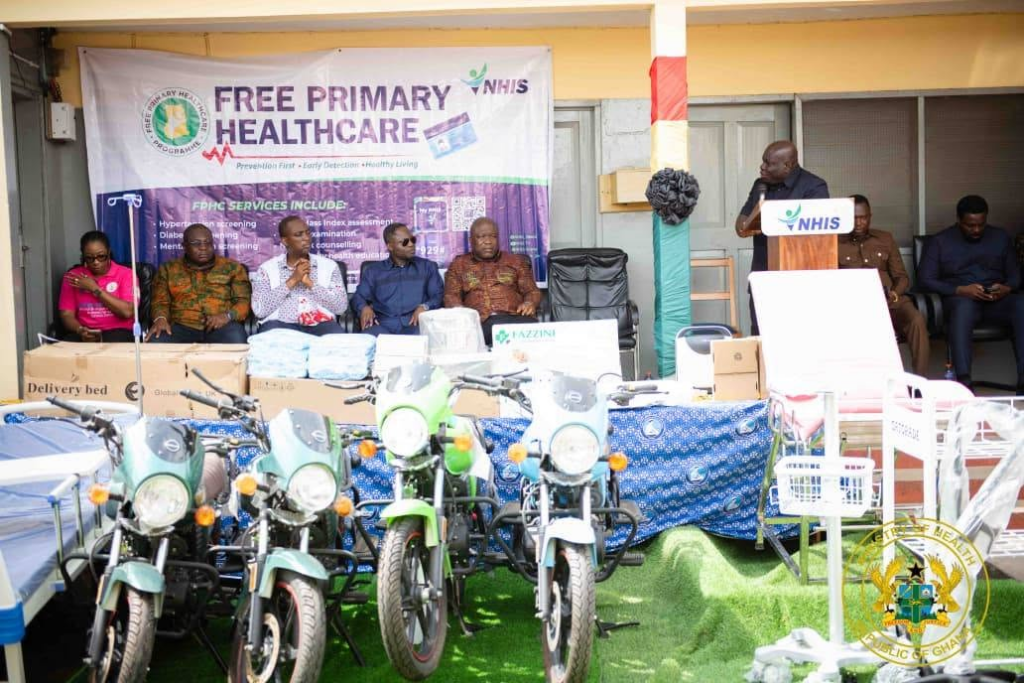
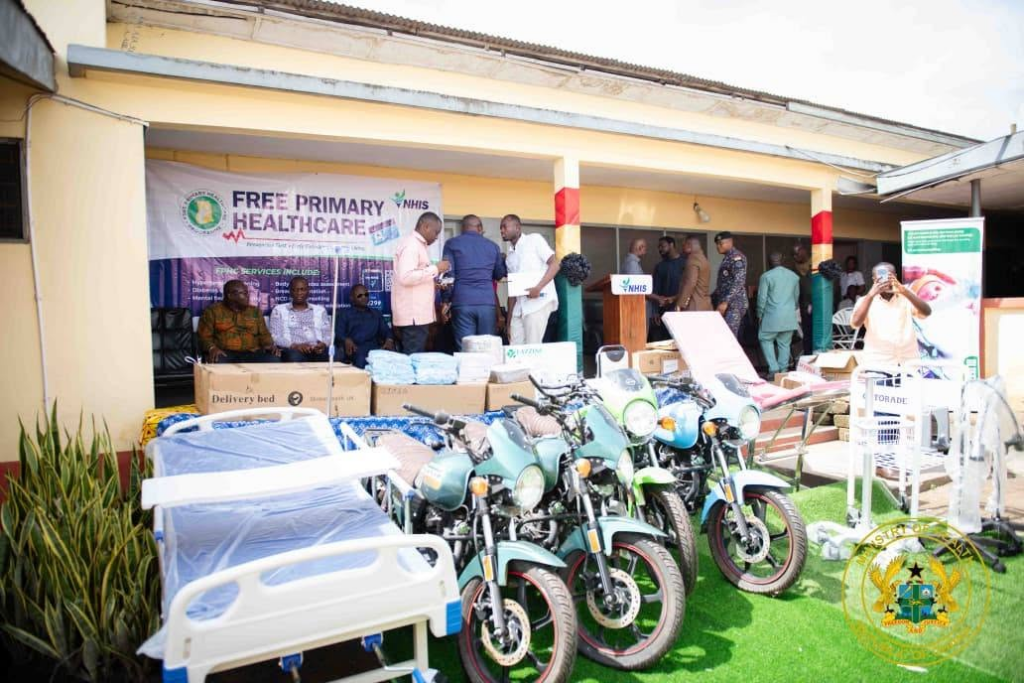
Dr Amissah disclosed that the Ministry of Health had provided additional logistics to support implementation, including motorbikes, tricycles, delivery beds, home-visit kits, and equipment for Community Health Officers.

She explained that health workers would conduct regular home and community visits to monitor health indicators, deliver preventive care, and engage residents directly.
During the tour, the Health Minister visited several health facilities, including the Kpetoe Health Centre, Agortime-Akpokorpe CHPS Compound, Ave-Dakpa Health Centre, and Dzodze, where he inspected a health post nearing completion.

The visits also provided an opportunity for direct engagement with frontline health workers and assessment of ongoing infrastructure projects aimed at improving service delivery.
The Minister was accompanied by senior officials, including representatives from the National Health Insurance Authority, the Christian Health Association of Ghana, and other divisions of the health sector.
Latest Stories
-
Beyond politics: Why Kwame Nkrumah’s ideals still matter for today’s leaders
36 minutes -
Top South African policeman charged with sexual offences
44 minutes -
More than 170,000 respiratory cases recorded in haze-choked Indonesia
55 minutes -
Narrowed space, intolerance – Sammy Crabbe says NPP is driving talented members away
1 hour -
We’re not analytical enough – Sammy Crabbe calls for data-driven decision-making
1 hour -
Tonto Dikeh celebrates Bobrisky as birthday tribute sparks online reactions
2 hours -
Peter Okoye tells court he received over $800,000 in P-Square royalties
2 hours -
I’ve never had problems with artistes – Rema addresses alleged fight with Davido
2 hours -
I was mocked for getting pregnant out of wedlock as pastor’s daughter – Davido’s baby mama
2 hours -
Young John rejects collaboration request from Blaqbonez over old tweet
2 hours -
Trump administration to admit primarily Afrikaners under new refugee proposal
2 hours -
They should have Ghana first – Ntim Fordjour warns MPs against politicising drug crisis
3 hours -
We got more than 15% – Ntim Fordjour confirms support for Parliament recall over cocaine scandal
3 hours -
Wherever there is money laundering, it is linked to terrorism – Ntim Fordjour warns over drug crisis
3 hours -
Parliament Recall: Ntim Fordjour expects emergency sitting over drug-trafficking crisis
4 hours