

Audio By Carbonatix
The mysteries of the ancient Egyptians are vast, but their beauty tricks are no secret.
Makeup might seem like a modern phenomenon -- one that has grown into a multi-billion-dollar industry -- but cosmetics were equally important to daily life in the ancient world.
From the earliest era of the Egyptian empire, men and women from all social classes liberally applied eyeliner, eyeshadow, lipstick and rouge.
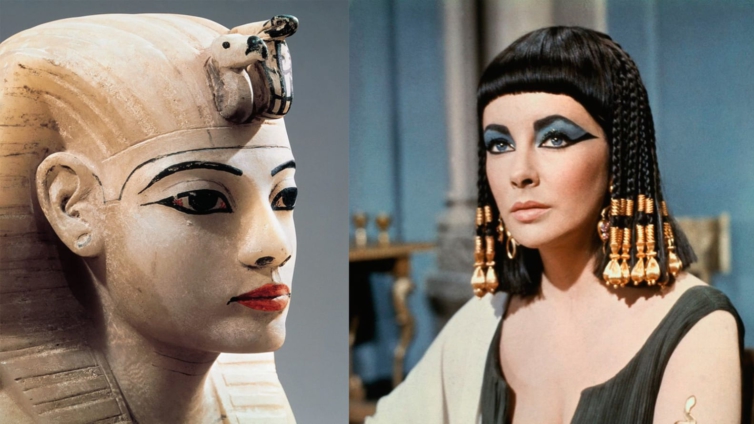
The perceived seductiveness of Egyptian civilization has a lot to do with how we've glamorized its two most famous queens: Cleopatra and Nefertiti. In 1963, Elizabeth Taylor defined the chic Egyptian look when she portrayed Cleopatra in the eponymous epic.
In 2017, Rihanna (herself a makeup magnate) perfected it when she paid tribute to Nefertiti on the cover of Vogue Arabia.
In their homages, both beauty icons wore saturated blue eyeshadow and thick, dark eyeliner.
Yet ancient Egyptians didn't only apply makeup to enhance their appearances -- cosmetics also had practical uses, ritual functions, or symbolic meanings.
Still, they took their beauty routines seriously: The hieroglyphic term for makeup artist derives from the root "sesh," which translates to write or engrave, suggesting that a lot of skill was required to apply "kohl" or lipstick (as anyone who has tried to emulate beauty tutorials on YouTube can attest).
The most refined beauty rituals were carried out at the toilettes of wealthy Egyptian women. A typical regimen for such a woman living during the Middle Kingdom (ca. 2030-1650 B.C.) would have been indulgent, indeed. Before applying any makeup, she would first prepare her skin.

She might exfoliate with Dead Sea salts or luxuriate in a milk bath -- milk-and-honey face masks were popular treatments. She could apply incense pellets to her underarms as deodorant, and floral- or spice-infused oils to soften her skin.
Egyptians also invented a natural method of waxing with a mixture of honey and sugar. "Sugaring," as it's called today, has been revived by beauty companies as a less painful alternative to hot wax.
After all this, a servant would bring in the many ingredients and tools necessary to create and apply her makeup.
These apparatuses, containers and applicators were themselves lavish art objects that communicated social status.
Calcite jars held makeup or unguents and perfumes and containers for eye paint and oils were crafted from expensive materials like glass, gold or semi-precious stones.
Siltstone palettes used to crush materials for kohl and eyeshadow were carved to resemble animals, goddesses or young women.
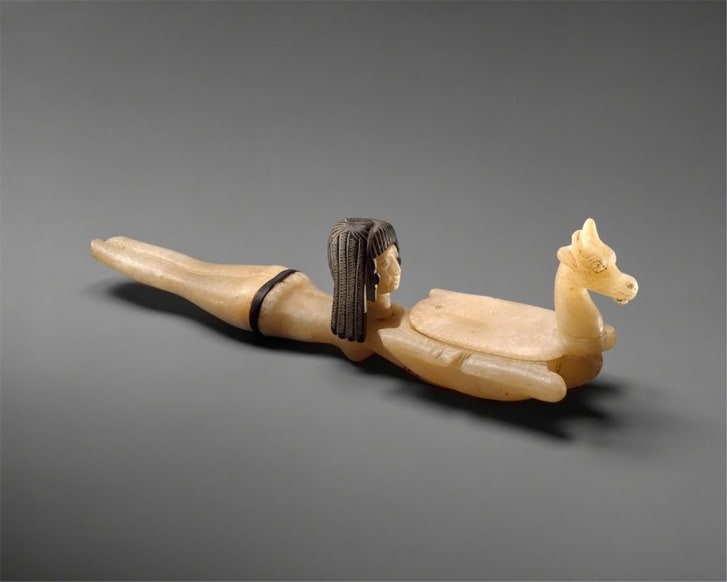
These symbols represented rebirth and regeneration, and the act of grinding pigments on an animal palette was thought to grant the wearer special capabilities by overcoming the creature's power.
(Members of the lower classes used more modest tools when applying their own makeup.)The servant would create eyeshadow by mixing powdered malachite with animal fat or vegetable oils.
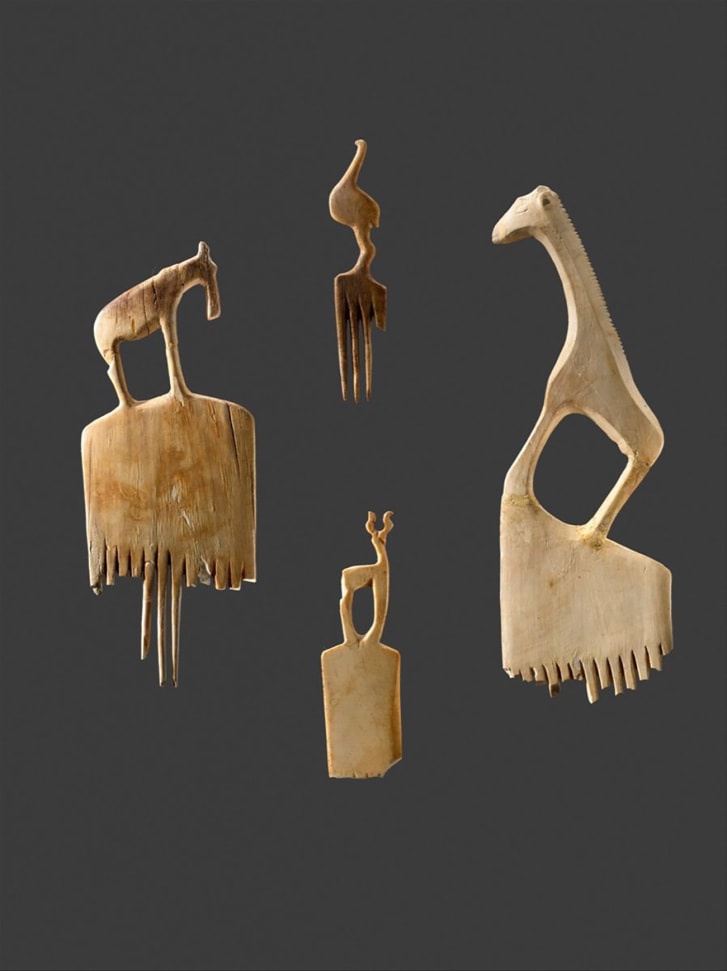
While the lady sat at her toilette, before a polished bronze "mirror," the servant would use a long ivory stick -- perhaps carved with an image of the goddess Hathor -- to sweep on the rich green pigment.
Just as women do today, eyeshadow would be followed with a thick line of black kohl around her eyes.
This part of the routine had practical purposes beyond beautifying the wearer. Kohl was used by both sexes and all social classes to protect the eyes from the intense glare of the desert sun.
The Egyptian word for "makeup palette" derives from their word meaning "to protect," a reference to its defensive abilities against the harsh sunlight or the "evil eye."
Additionally, the toxic, lead-based mineral that it was made from had antibacterial properties when combined with moisture from the eyes.
The final touches to this lady's makeup would, of course, be red lipstick -- a classic look even today.
To make the paint, ochre was typically blended with animal fat or vegetable oil, though Cleopatra was known to crush beetles for her perfect shade of red.
These highly toxic concoctions, often mixed with dyes extracted from iodine and bromine mannite, could lead to serious illness, or sometimes death -- possibly where the phrase "kiss of death" derives from.
In death, too, personal appearance was crucial to Egyptian identity.
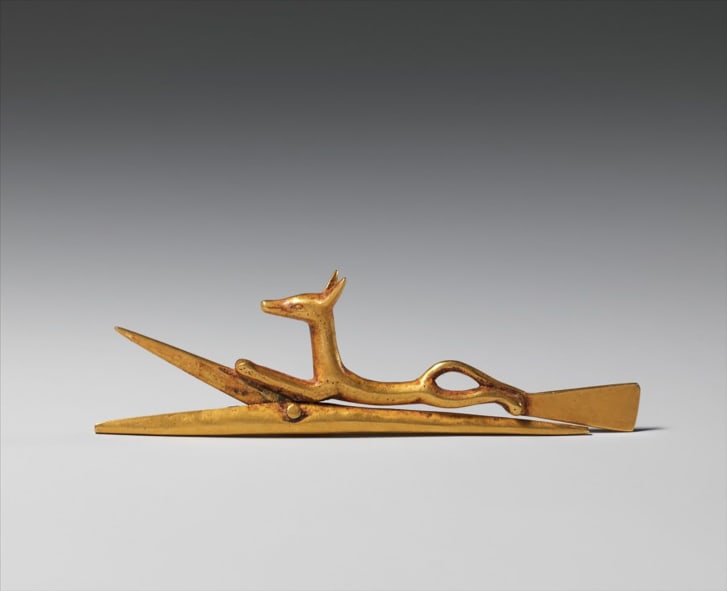
Burial sites uncovered from the very beginning of the society's history, in pre-dynastic times, show that it was common for Egyptians to include everyday items like combs, scented ointments, jewelry and cosmetics in the graves of men, women and children (many graves have been found with makeup still inside them).
We might closely associate the Egyptians with their dramatic beauty looks largely because of their prolific use on mummies and death masks.
Instead of depicting their subjects' real features, these cartonnage masks and wooden coffins portray idealized youths with smooth skin and kohl-rimmed eyes.

In fact, mummification itself followed many of the daily self-care rituals Egyptians followed while alive.
Unguents for softening the skin took on religious significance when they were used to anoint the body, and even cosmetics were sometimes applied.
The singular Egyptian aesthetic -- from architecture to art to makeup -- has captured the modern imagination for its elegance, exoticism and style.
Yet the ancient kingdom's influence on our beauty ideals is more direct through its inventions, down to the eyeliner and lipstick we still love to wear.
Latest Stories
-
Newsfile to tackle World Cup visa scandal, beach demolitions, education strikes, BRICS bid
2 minutes -
UK-Ghana Trade & Investment Summit: Trade Resource Centre to help businesses maximise UK-Ghana trade opportunities
17 minutes -
Embassy of Denmark celebrates World Maritime Day
25 minutes -
Linking LEAP to productive inclusion could cut extreme poverty by 2030 – UNICEF
2 hours -
Trade Ministry backs use of creative arts to rehabilitate prison inmates
2 hours -
Negotiations with government to continue despite strike suspension – GNAT
2 hours -
‘Ghana cannot afford to waste public resources; every cedi has a job’ – Ato Forson
2 hours -
Ghana expects economic boost as World Assemblies of God Congress brings 10,000 delegates to Accra
2 hours -
Joy in Nayilifong as Farouk Aliu Mahama donates 100kVA transformer to improve power supply
2 hours -
Chief Justice urges employers to tackle mental health stigma in workplaces
3 hours -
Analysis: Ghana’s yellow fever numbers reveal a gap between vaccination and protection
3 hours -
Education Ministry welcomes suspension of teachers’ strike
4 hours -
Vice Chancellors Ghana appeal to striking university administrators to resume work
4 hours -
KNUST postpones 2026/2027 academic year reopening indefinitely amid GAUA strike
4 hours -
Fire destroys mattress factory at Sokoban in Kumasi
4 hours