

Audio By Carbonatix
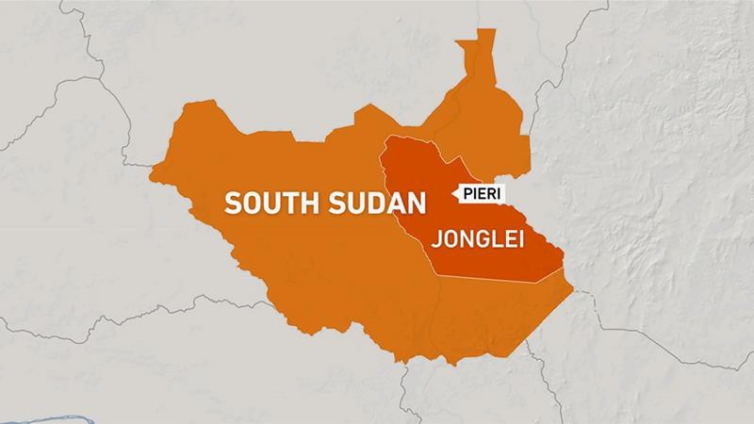
At least 287 people, including a Doctors Without Borders (MSF) staff member and two other aid workers, have been killed in the most recent spat of inter-communal violence in the eastern state of Jonglei in South Sudan, government authorities have told Al Jazeera.
At least 300 people were wounded in the violence, which broke out between the Murle and Lou Nuer ethnic communities on Saturday, according to the government. Many suffered gunshot wounds and other trauma, according to health workers.
Meanwhile, a patrol from the UN Mission to South Sudan has been sent to the town of Pieri to interview survivors, the organisation said in a statement on Wednesday.
"The team is investigating reports that many people were killed, injured and lost their homes," the statement said, adding that "many" huts were burned to the ground.
The UN mission said it had not independently verified the death toll, saying, "it is difficult to verify the number of casualties given conflicting reports and claims".
Government officials told Al Jazeera the figure was expected to rise.
MSF confirmed that one member of its staff had been killed in the fighting. The UN Humanitarian Coordinator in South Sudan said two other aid workers for other groups were also killed.
"We have a primary healthcare centre in the town of Pieri that was active at the time the fighting broke out," Steve MacKay, the deputy head of the MSF mission in South Sudan said. "One of our colleagues who lives in that area was killed during that incident over the weekend."
The organisation has resumed its work in the region after briefly pausing following the attack, he said.
'Power vacuum'
The Uror county commissioner, John Dak Gatluak, told the DPA news agency that heavily armed men from the Murle ethnic group had attacked six villages in Saturday's violence.
Local authorities believe the attack was carried out in revenge for a similar incident in February, when men from the Lou Nuer ethnic group had raided cattle and abducted children from the Murle.
South Sudan is emerging from a brutal six-year civil war that left 380,000 dead and millions displaced.
President Salva Kiir and Vice President Riek Machar, the former rebel leader, reached a deal to form a unity government in February but remain at odds over issues including who will govern the country's 10 internal states.
While political violence has calmed in the country since that agreement, the lack of state governors has created a "vacuum of power" that fosters the inter-communal violence, David Shearer, the UN Special Representative to South Sudan told Al Jazeera.
"The governor is a very, very important person in the state because they bring together many of the tribes. They also have the authority to reconcile and take action where there's non-compliance," Shearer said.
The tensions have also been inflamed by flooding in August that killed thousands of cattle.
"These societies are very much focused in and around cattle and their survival is dependent on cattle," he said. "The fact that so many cattle have died has put real economic pressure on the societies."
Latest Stories
-
Morocco strike late to overcome 10-man Black Starlets
4 minutes -
Nyaho-Tamakloe calls on Kurt Okraku to resign amid Black Stars struggles
9 minutes -
Societe Generale Group agrees to sell Ghana subsidiary to Attijariwafa Bank
18 minutes -
Accra: Fire breaks out in North Industrial Area at Avenor
24 minutes -
Measure food systems progress not only by productivity but also ability to deliver healthy diets – AGRA
39 minutes -
Black Stars: Seven years of decline while hashtagging love
51 minutes -
Today’s front pages: Thursday, October 1, 2026
51 minutes -
Gov’t to suspend GH¢1 D-Levy on diesel for October and November
1 hour -
Fire destroys belongings in Akweteyman apartment
2 hours -
Baffour Awuah to turn himself in to EOCO today – JoyNews sources
2 hours -
Government identifies payment discrepancy holding up teachers’ strike resolution
2 hours -
BoG signals no FX intermediation for October as GoldBod plans $1bn support for banks
2 hours -
When share ownership becomes personal: The African mindset of the Dangote IPO
3 hours -
Why MFWA Legal Fund matters to Ghana’s democracy
3 hours -
Fuel prices to rise from October 1; diesel could hit GH¢19.60 – COMAC
3 hours