

Audio By Carbonatix
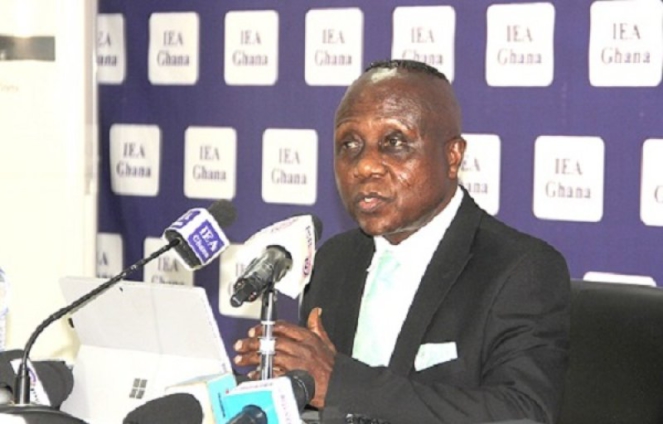
The Institute of Economic Affairs (IEA) has welcomed Bank of Ghana’s (BoG) endorsement of its proposal to cap government borrowing to help rein in the public debt.
According to the IEA, the Governor of the BoG, Dr. Ernest Addison as part of his press briefing on 6th October, 2022 said that he “supports discussions on capping borrowing”.
The institute argued that the endorsement couldn’t have come at a better time after the World Bank released a report stating that Ghana’s debt-to-GDP ratio could hit 104.6% by the end of the year.
“As the B&FT correctly reported, the IEA first made the call for the imposition by Parliament of a cap on borrowing (or debt) in the Institute’s Comments on the 2022 Budget in November 2021” the IEA said in a statement.
“The cap, the IEA suggested, could be incorporated into the Parliamentary Appropriations Act, which approves Government’s annual total spending, or introduced as a rule in the Fiscal Responsibility Act in addition to the deficit rule”.
The IEA said in making this proposal, it expressed concern that the borrowing implied by budget deficits seem to be invariably breached with impunity.
“Thus, it was necessary to tie the hands of the Finance Minister and insist that, any additional borrowing by him beyond the budget estimates or the new ceiling should be subject to the approval of Parliament just as pertains in the United States. This is the only way to rein in our debt and keep it at a sustainable level on a durable basis so as to avoid the debt service, which currently absorbs over 40% of tax revenue, from overwhelming the budget”.
Since first making the suggestion in November 2021, the IEA has repeated the call in various subsequent communications.
“The Institute wishes it to be further known that, as part of the CSO Economic Governance Platform, it has made this suggestion available for consideration by the IMF Team currently negotiating a possible financial programme with the Ghanaian authorities”.
In that submission, the IEA also called for strict enforcement of both the ceiling of 5% of GDP on the fiscal deficit as well the ceiling of 5% of the previous year’s revenue on Bank of Ghana’s lending to government, both of which have debt implications.
Latest Stories
-
National Peace Council urges investment in youth to sustain Ghana’s peace
3 minutes -
Afenyo-Markin urges youth to speak up against injustice
14 minutes -
CAF annuls Edo Queens victory, orders WAFU B final to resume from extra time
36 minutes -
Interior Minister urges traditional authorities to enforce anti-bushfire bye-laws
37 minutes -
3rd Republic Bank-JoyNews Habitat Fair Clinic ends on a high note after three days of strong patronage
39 minutes -
Ten climbers missing after avalanche hits Himalayan base camp
1 hour -
NPP had more permanent fuel relief measures than current GH¢2 diesel cut – Amin Adam
2 hours -
Photos from the 3rd Republic Bank-JoyNews Habitat Fair Clinic
2 hours -
Ethiopia’s army promises restraint amid fears of new civil war
2 hours -
Amin Adam calls for review of fuel taxes as diesel prices remain above GH¢18
2 hours -
World Vision Ghana, Ahafo districts sign MoU for universal WASH coverage
3 hours -
When the gold engine stutters: What Ghana’s Cedi and reserves are telling us about the new economic architecture
3 hours -
Two reportedly die after being trapped in mining pit at Juaboso
3 hours -
Petrosol cleans up Wa Municipal Hospital, to donate medical equipment
3 hours -
‘If NPP was ‘insensitive’ over fuel prices, NDC must accept same description now’ — Amin Adam
4 hours