

Audio By Carbonatix
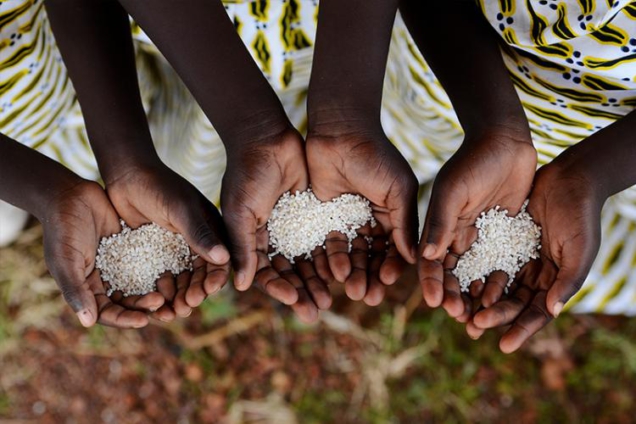
The International Monetary Fund (IMF) is warning of impending food security issues for Ghana and other African countries due to the ongoing war between Russia and Ukraine.
The Fund said Russia’s invasion of Ukraine has pushed food and energy-related commodities to record levels on the global market.
The captured concern is in the IMF’s Regional Economic Outlook Report released on Thursday. The Fund was worried that development could hurt economies in the region already struggling.
IMF on food security concerns
IMF, in the report, maintained that food prices, which account for about 40 per cent of consumer spending in the region, are rising rapidly.
Around 85 per cent of the region’s wheat supplies are imported. Higher fuel and fertiliser prices also affect domestic food production.
The Fund added, “Together, these factors will disproportionately hurt the poor, especially in urban areas, and will increase food insecurity.”
On fuel prices, the IMF noted that higher oil prices will boost the import bill for the region’s oil importers by about $19 billion, worsening trade imbalances and raising transport and other consumer costs.
Oil-importing fragile states will be hit hardest, with fiscal balances expected to be disrupted.
Impact on Economies
The shock makes an already delicate fiscal balancing act more difficult: increasing development spending, mobilising more tax revenues, and containing debt pressures.
Fiscal authorities generally aren’t well-positioned for additional shocks after the pandemic. Half of the region’s low-income countries are already in or at high risk of distress.
Rising oil prices also represent a direct fiscal cost for countries through fuel subsidies, while inflation will make reducing these subsidies unpopular.
Spending pressures will only increase as growth slows, while rising interest rates in advanced economies may make financing more costly and harder to obtain for some governments.
What Ghana and other Sub Saharan governments should do
The increase in commodity prices due to the war in Ukraine, especially for food and energy, has compounded recent inflationary pressures in many countries.
Since output levels remain well below pre-pandemic trends in most countries, central banks face a difficult balancing act between curbing inflation and supporting growth.
To navigate this trade-off, central banks will need to monitor price developments carefully, stand ready to increase rates if inflation expectations drift up, guard against the financial stability risks posed by higher interest rates, and maintain a credible policy framework underpinned by strong central bank independence and clear communication.
Some have already started to increase interest rates, and more tightening may be needed in many cases.
Latest Stories
-
US, Iran fail to reach peace agreement after marathon talks in Pakistan
55 minutes -
Port crises loom as 11,000 drivers threaten four-day strike
2 hours -
A source of excellence across generations – Vice President Opoku-Agyemang lauds Mfantsipim
2 hours -
(Photos) Mfantsipim School launches historic 150th anniversary
3 hours -
Knights and Ladies of Marshall group backs Catholic Bishops’ stance on anti-LGBTQ+
3 hours -
Bright Simons writes: All the Filla in the Ibrahim Mahama/E&P – Gold Fields Saga
4 hours -
Monetise Idiocy In Ghana
4 hours -
ECG kicks off Phase Two of transformer upgrades at Lashibi; brief outages expected
5 hours -
The Ghanaian prophet and the mysterious death of his scottish wife Charmain Speirs
5 hours -
Nearly 400 sentenced in Nigeria for links to militant Islamists
5 hours -
Ghana’s recovery supported by gold strength despite global oil price pressures – Standard Bank Research
5 hours -
Methodist Church hails Mfantsipim@150; calls for “fresh consecration” to excellence
6 hours -
‘Excellence is our inheritance’ – Nana Sam Brew-Butler hails Mfantsipim’s 150-year reign in leadership
6 hours -
Kwaku Azar writes: A-G vs OSP
6 hours -
Mfantsipim–Adisadel rivalry built excellence, not division – Sam Jonah
6 hours