

Audio By Carbonatix
Ebenezer Okletey Terlabi, the Deputy Minister for the Interior, has called for the urgent passage of the Legislative Instrument (LI) to operationalise the Narcotics Control Commission Act, 2020 (Act 1019).
He said Ghana must move beyond policy commitments to fully implement reforms that treated drug use as a public health and human rights issue.
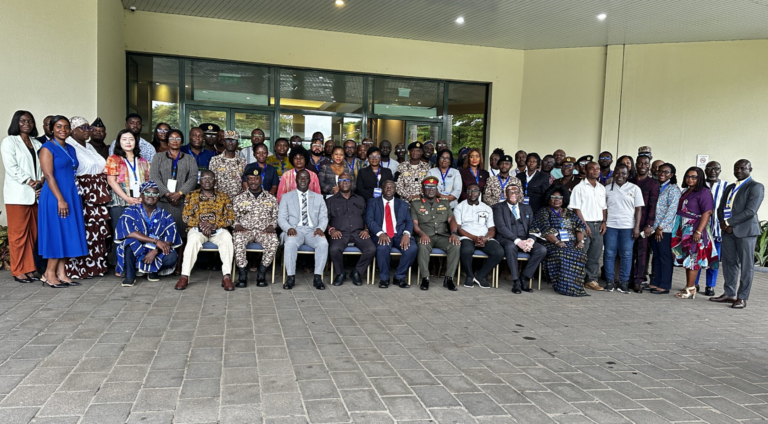
The Deputy Minister was speaking at the Second National Dialogue on Drug Policy, Human Rights and Public Health, organised by the Narcotics Control Commission (NACOC) and partners in Accra, on the theme: “Advancing from Law into Implementation.”
Mr. Terlabi said although Ghana had taken a bold step by passing Act 1019, its full promise had not been realised because of inconsistencies in implementation, with some people still entering the criminal justice system for minor drug-related offences where alternative interventions should exist.
He said the country now had credible evidence showing that thousands of people were living with substance use disorders without access to the health and social services they needed, while HIV testing remained low, preventable infections continued to spread and overdose had become an increasing concern.
“Fear of arrest, stigma and discrimination continue to discourage many people who use drugs from seeking healthcare. When individuals feel safer staying away from health services than seeking them, then we must acknowledge that something in our system is not working as it should,” he added.
Mr. Terlabi stressed that tackling stigma must become a national priority through the implementation of existing strategies, institutional reforms, training across sectors and greater accountability.
He said adopting a health-centered approach did not weaken law enforcement but rather strengthened it by allowing authorities to focus on organised criminal networks while directing people with substance use disorders to appropriate care and support.
He described the absence of the LI needed to implement Act 1019 as a major obstacle to effective service delivery, explaining that the regulations would provide the legal clarity, coordination and accountability required for drug demand reduction and harm reduction interventions.
The Deputy Minister indicated that the proposed Narcotics Control Commission (Drug Demand and Harm Reduction) Regulations, 2026 had already been submitted to the Office of the Attorney General for consideration.
“Let me acknowledge the contributions of civil society organisations and researchers in advancing drug policy reforms and urge for the continued collaboration to ensure policies reflect the realities of affected communities,” he said.
He called on stakeholders to move beyond dialogue and commit to concrete actions that would translate policy into practice, saying the country owed it to affected individuals, institutions and communities to fully implement the reforms envisioned under Act 1019.
Major General Maxwell Obuba Mantey, the Director-General, NACOC, called for stronger collaboration among government, civil society, development partners and healthcare professionals to fully implement Ghana’s drug policy reforms and address emerging drug threats.
He said while the passage of the Narcotics Control Commission Act, 2020 (Act 1019) established a modern legal framework that balanced law enforcement with prevention, treatment, rehabilitation and social reintegration, the country’s immediate priority should be its effective implementation.
Major General Mantey said the first national dialogue marked a turning point in Ghana’s approach to drug policy by bringing together government, civil society, academia, international partners and affected communities to rethink the country’s response to substance use and drug trafficking.
“Act 1019 recognises substance use disorders as a public health issue while maintaining a firm stance against drug trafficking and organised crime. Passing legislation is only the beginning; our priority now is the implementation,” he stressed.
Major General Mantey said the dialogue assessed progress made since the first meeting, examined emerging threats such as synthetic drugs, addressed stigma and discrimination, strengthened collaboration between the justice and health sectors, and identified practical actions to advance Ghana’s harm reduction and treatment agenda.
He noted that the evolving global drug problem, characterised by the rise of synthetic drugs, changing patterns of substance use and increasingly sophisticated criminal networks, required innovative, coordinated and adaptive responses.
The Director-General said lasting reforms could not be achieved by the government alone, but required sustained partnerships with development partners, civil society organisations, healthcare professionals, academia, community leaders and people with lived experience.
He expressed confidence that through collective action, Ghana would remain at the forefront of implementing a balanced drug policy that protects public safety, promotes public health and upholds human rights.
Latest Stories
-
Teacher unions strike: Gov’t presents fresh proposals as talks end inconclusively
41 minutes -
51,000 teachers’ promotion arrears to be validated for October payment – Education Minister
1 hour -
Kwabena Boamah appointed Board Chair for Impact Investing Ghana
1 hour -
Striking teacher unions to meet Fair Wages and Salaries Commission on October 6
2 hours -
EOCO working with AG to arraign Nana Baffour Awuah before weekend court
2 hours -
Duraplast reassures customers after fire, announces October 5 reopening
2 hours -
Call off strike, gov’t will not renege on promotion arrears pledge – Haruna Iddrisu appeals to teacher unions
2 hours -
Committee set up to validate teachers eligible for 20% deprived-area allowance – Education Minister
2 hours -
Five-member committee to search for new Black Stars coach after Sports Ministry-GFA meeting
2 hours -
Pinktober: Breast cancer survival exceeds 90% when detected early – Breast Society of Ghana
3 hours -
TCDA to adopt Upper West’s MATCO mango farm as northern prototype, issues warning against felling shea trees
3 hours -
‘Fear delegates’ tag: Afoko touts genuineness among delegates ahead of NPP delegates conference
3 hours -
John Boadu: The leader our party needs at this time – Amb. Edward Akwasi Boateng
3 hours -
Baffour Awuah: EOCO arrested, detained MP after hours of waiting, questioning – Afenyo-Markin
3 hours -
EOCO court warrant authorised search of Baffour Awuah’s law firm, not residence – Afenyo-Markin
3 hours