

Audio By Carbonatix
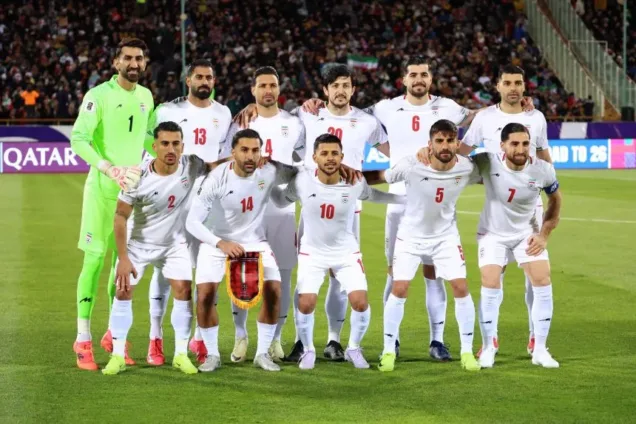
The Iranian national soccer team must depart the United States within hours of completing their remaining World Cup group stage matches. This policy applies to upcoming games in Los Angeles and Seattle. United States officials confirmed the requirement on Tuesday following scrutiny regarding the team's swift exit after their opening match against New Zealand.
Administrative Requirements and Recovery Concerns
The Iranian delegation left the United States late Monday evening, shortly after their draw at SoFi Stadium in Los Angeles. The team immediately returned to their base camp in Tijuana, Mexico. This forced departure prevented the squad from utilising a standard post-match recovery period.
Iran coach Amir Ghalenoei expressed frustration regarding the logistical constraints placed upon his players. "After the game today, they said to us, 'You have to leave immediately.' It’s very important for us to have time for recovery, [but] we are asked to get on a plane and return to our camp in Tijuana, and we are really troubled by that," Ghalenoei stated.
Government Stance on Team Access
Andrew Giuliani, the executive director of the White House FIFA Task Force, defended the handling of the team’s presence. He maintained that the government followed established procedures intended to facilitate the team’s participation while upholding national security protocols.
"We were clear this was the process," Giuliani told The Associated Press. Regarding the specific schedule, he noted that players are permitted to enter the country the day before a match but must exit on the evening of the competition. "The team will be allowed to come in, match day minus one, so the day before the match. They’ll be asked to leave the day that the match wraps up, so the evening of the match. And they’ll be able to do that again in Los Angeles. They’ll be able to do it again in Seattle," Giuliani said.
Giuliani previously characterised the early arrival for the opening match as a "goodwill gesture." He noted that while all players and coaches were granted entry, certain support staff were denied visas due to their professional backgrounds. He referred to Secretary of State Marco Rubio’s directive regarding individuals with links to the Islamic Revolutionary Guard Corps. "Secretary Rubio said very clearly: Anybody with direct ties to the IRGC is not coming into the United States of America, and they’re not going to let the World Cup be the reason why they can come in. So I think it’s very clear why," Giuliani explained.
Resolution of Visa Issues
Concerns recently arose regarding the status of Iranian winger Mehdi Torabi, whose visa expired following the initial match. The United States Department of State confirmed on Tuesday that a new, multiple-entry visa had been processed to ensure the athlete could compete in future matches. "This issue has been resolved," the department stated. "As soon as we became aware of the issue, we worked to ensure that the player could participate in every game."
Player Perspectives and Operational Hurdles
Despite the travel challenges, the Iranian squad highlighted the enthusiastic support they received from fans in Southern California. The match at SoFi Stadium drew a significant crowd from the large Iranian-American community residing in the Los Angeles area.
Captain Mehdi Taremi acknowledged the emotional boost from the supporters but emphasised that the travel schedule creates physical strain. He noted that the team endured extensive security and travel procedures before the opening game and that the forced return to Mexico disrupts their routine.
"I think FIFA has to help us more than this," Taremi said. Reflecting on the stadium environment, he added, "It was an incredible atmosphere in the game, all 90 minutes. It was like at home for us."
Contextual Challenges for the Delegation
Beyond the primary squad, the team's administrative operations have faced additional setbacks. Iranian football officials confirmed that multiple members of the media and support staff were denied entry, which the team stated has complicated their ability to provide real-time updates and maintain standard tournament communications. These denials occur against a backdrop of regional volatility, as the 2026 tournament proceeds during an active period of diplomatic and military tension between Washington and Tehran.
The team is scheduled to face Belgium in their next fixture before concluding group play against Egypt in Seattle on June 26. As the tournament progresses, the intersection of high-stakes international diplomacy and global athletics remains a defining feature of Iran’s participation in the 2026 World Cup.
Latest Stories
-
Interest payments to average a high 20% of government revenue over next 4 years
9 minutes -
Strategy of accumulating foreign reserves, gold carries high fiscal cost – S&P Global
24 minutes -
Weak institutional arrangements, high debt servicing constrain Ghana’s rating – S&P
30 minutes -
Bond market: Turnover declined by 28% to GH¢1.56bn
59 minutes -
Volta Region National Public Speaking contest advances drug prevention conversation
1 hour -
New health training facility at Ampoma-Jema to address admission shortfalls, but Minister flags missing amenities
1 hour -
Black Challenge unveiled with sights set on Amputee World Cup glory
2 hours -
Pay striking teachers before expressway spending, Dr Kingsley Agyemang tells government
3 hours -
Customs intercepts assault rifle, two pistols and 610 rounds of ammunition at Tema Port
3 hours -
PKO boxers secure wins at Odwira Festival
3 hours -
South Tongu Records Rise in Teenage Pregnancy
3 hours -
Cabinet threw out US health compact faster than anything I’ve seen – Mahama
3 hours -
MoFA urges Finance Ministry to reverse World Bank food programme withdrawal over GH¢643m commitments
3 hours -
NAGRAT demands signed timelines before calling off strike
4 hours -
National Investment Quiz: West Africa SHS, St. Louis SHS advance to semi-finals
4 hours