

Audio By Carbonatix
Walk through any bustling street in Accra, Lagos, or Nairobi, and you will see two worlds stitched together like uneven fabric. On one side, enterprise hums, vendors negotiating with sharp wit, startups sprouting from modest rooms, ambition crackling like static in the air. On the other hand, a quieter struggle unfolds, missed opportunities, constrained choices, and the heavy silence of survival mode. This contrast invites a difficult question: Is poverty merely the absence of money, or does it also live in the architecture of the mind?
At first glance, the answer appears obvious. Poverty is material. It is empty pockets, limited access to quality education, fragile healthcare systems, and restricted opportunities. Without capital, doors remain shut; without networks, ladders vanish. A farmer without tools cannot multiply yield, just as a student
without resources cannot fully compete. In this sense, poverty is undeniably structural, a consequence of economic ecosystems that often favor the already advantaged.
Yet, stopping here tells only half the story. Beneath the surface, poverty can also manifest as a subtle psychological framework, a mindset shaped by years of scarcity, unpredictability, and constrained horizons. When survival becomes the daily objective, long-term thinking often fades into the background. Risk-taking feels dangerous, innovation appears distant, and the future shrinks into a narrow corridor of “what is possible?” This is not a flaw of character but an adaptation to hardship. Still, it has consequences.
Consider two individuals with similar starting points. One views setbacks as temporary detours; the other sees them as permanent roadblocks. One experiment fails, recalibrates. The other hesitates, constrained by fear of loss. Over time, these invisible scripts shape visible outcomes. Mindset, then, becomes a silent multiplier or limiter of opportunity.
But here lies a critical nuance: mindset alone cannot dismantle systemic barriers. It is not a magic wand. Telling someone to “think differently” while ignoring structural inequities is like asking a bird to fly with one wing clipped. Financial capital, policy support, infrastructure, and education remain foundational. Without them, even the most resilient mindset will struggle to gain traction.
However, when resources and mindset converge, something remarkable happens. Opportunity meets preparedness. Access meets action. A microloan becomes a thriving business. A scholarship transforms into generational change. The difference is not just the resource itself, but how it is perceived, managed, and expanded. So perhaps the real question is not whether poverty is about resources or mindset but how these forces interact. Poverty is both a condition and a perception, both external constraint and internal narrative. It is a web, not a single thread.
Breaking this cycle requires a dual approach. Policymakers must design systems that expand access to fair financing, inclusive education, and robust social safety nets. At the same time, communities and individuals must cultivate adaptive thinking: financial literacy, resilience, and a willingness to reimagine possibilities beyond immediate circumstances.
The conversation, then, shifts from blame to balance. From “either/or” to “both/and.” Because in the end, poverty is not just about what is missing in the wallet, it is also about what is possible in the mind. And when both dimensions are addressed with equal seriousness, transformation stops being a distant dream
and begins to look like a tangible, unfolding reality. And perhaps the deeper question for all of us is this: If we changed the way we build systems, and the way we see ourselves, what new futures might suddenly
come within reach?
*****
Writer:
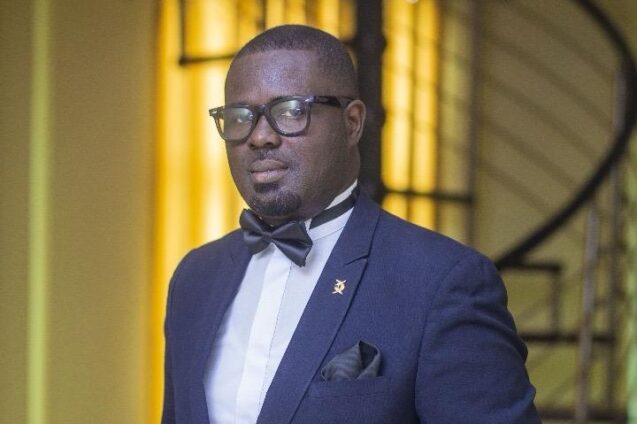
Kwame Addo-Buahing (PhD Candidate)
Latest Stories
-
Daily Insight for CEOs: Building customer-centric leadership
6 minutes -
Democracy must deliver food, jobs and healthcare, not just elections – Mahama
7 minutes -
Capacity constraints must never be a barrier to restitution – Mahama
8 minutes -
COMAC pushes for suspension of sections of Customs Act 2026
10 minutes -
Mahama calls for Great African Museum to anchor continent’s heritage revival
12 minutes -
Mahama cites return of Mpomponsuo sword as model for restitution
13 minutes -
Mahama: Africa must inherit more than the story of what it lost
16 minutes -
Mahama pushes for permanent UN system for restitution of African artefacts
17 minutes -
Ghana is arguably Africa’s most stable democracy, says Mahama
18 minutes -
Mahama calls for investment in Africa’s cultural infrastructure
19 minutes -
‘Africa’s cultural heritage story must continue with its return’ – Mahama insists
22 minutes -
Some reporters denied White House access despite judge overturning Trump media ban
23 minutes -
Mahama urges Netherlands, Germany and France to deepen restitution efforts
26 minutes -
Mahama demands unconditional return of African artefacts and human remains
35 minutes -
‘Gov’t doesn’t understand our plight; 8% fare hike is too small’ – Kumasi drivers
35 minutes