

Audio By Carbonatix
More than 200 defendants in one of Italy's biggest mafia trials for generations have been sentenced to a total of more than 2,200 years in jail.
The three-year trial saw individuals allegedly linked to the 'Ndrangheta sentenced for crimes ranging from extortion to drug trafficking.
Those sentenced included a former Italian senator, though the verdicts can still be appealed.
The 'Ndrangheta is one of Europe's most influential criminal organisations.
The case illustrated the mob's broad influence over the politics and society of southern Italy. Experts said the convictions of white collar workers, including local officials, businessmen and politicians, showed the far-reaching impact of organised crime on Italian institutions.
Among the most notable people to be sentenced was Giancarlo Pittelli, a lawyer and former senator for ex-premier Silvio Berlusconi's party Forza Italia. Pittelli received an 11-year sentence for collusion with a mafia-type organisation.
Others convicted included civil servants, professionals across various industries and high-ranking officials, who were critical to the 'Ndrangheta's success in infiltrating the legitimate economy and state institutions.
More than 100 defendants were acquitted.
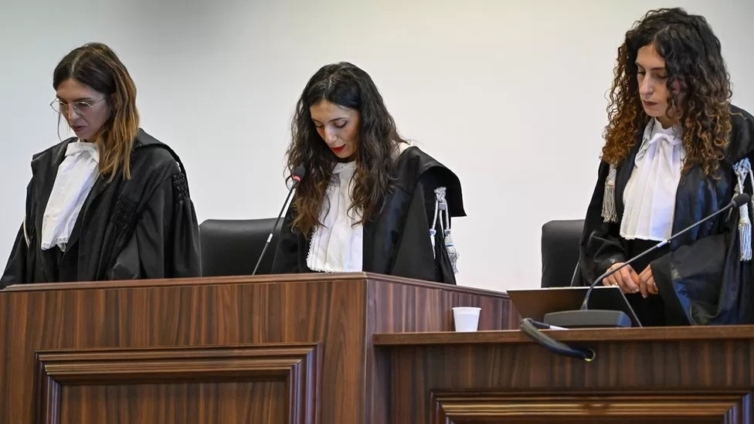
The judges presiding over the case were put under police protection over fears for their safety.
Originating in the impoverished region of Calabria, the 'Ndrangheta is considered one of the world's most dangerous criminal organisations. It is estimated to control as much as 80% of Europe's cocaine market.
The gang boasts an estimated annual turnover of around $60bn (£49bn).
The trial was held in a call centre on the outskirts of the town of Lamezia Terme, converted into a high-security courtroom equipped with cages to hold the defendants and large enough to hold some 600 lawyers and 900 witnesses. Charges included murder, extortion, drug-trafficking, loan sharking, abuse of office and money laundering.
Over three years, proceedings demonstrated how the Calabrian syndicate extended its reach across continents, eventually operating as far afield as South America and Australia. Its members infiltrated the local economy, public institutions, and even the health system, rigging public tenders and bribing local officials.
The trial, the largest of its kind since the 1980s, saw judges examine thousands of hours of testimony. Former mobsters turned collaborators with the justice system testified about the activities of the Mancuso family and their associates, who wield extensive control over the province of Vibo Valentia.
The Mancuso family, from the town of Limbadi, are one of the most powerful of the 150 clans which make up the 'Ndrangheta.
Anna Sergi, a professor of criminology at the University of Exeter, said: "This trial confirms convictions of classic mafiosi, sentenced for offences traditionally more associate with criminal activities, such as extortion or drug trafficking."
She added: "However, it is important to note how the different types of people involved, including white collar workers, provide a more comprehensive view of the entire province and the connections between various mafia clans."
Most of the defendants were arrested in December 2019, following an extensive investigation spanning at least 11 Italian regions, which began in 2016. Approximately 2,500 officers took part in raids targeting suspects in Vibo Valentia, an area primarily controlled by the 'Ndragheta's Mancuso clan.
More than 50 former mafia members agreed to cooperate with the trial, among them Luigi Mancuso's nephew, Emanuele.
Their testimony shed light on the inner workings of one of Italy's most powerful mobs. The trial revealed that 'Ndrangheta members allegedly concealed weapons in cemetery chapels, used ambulances for drug transportation and diverted public water supplies to grow marijuana.
Those who opposed the organised crime group faced grim consequences, including finding dead puppies and goat heads left in front of their houses, torched cars and vandalised shop windows.
"This first round of sentences demonstrates how challenging it is to combat the 'Ndrangheta due to its political, economic, and financial connections," Antonio Nicaso, a writer and organised crime expert, said.
Latest Stories
-
Gender Ministry supports Harriet Amuzu in ongoing abuse case
10 seconds -
AG joins plaintiff to scrap OSP ?: We should be mindful of the mischief in this – Bobby Banson
6 minutes -
Samson Lardy Anyenini questions willingness of Attorneys-General to prosecute political colleagues
9 minutes -
It is only fair the OSP is heard in Supreme Court case – Bobby Banson
15 minutes -
Asiedu Nketia resumes Ashanti tour, second leg kicks off on Sunday
23 minutes -
NLA denies salary cut claims, threatens legal action over reports
27 minutes -
BoG Governor honoured for stabilising cedi, improve inflation
29 minutes -
Trade Minister applauds GUTA as a pillar of economic growth; Prez Mahama honoured
1 hour -
President’s brother’s takeover of Damang Mines is ‘untidy’ – Alhassan Tampuli
2 hours -
It’s not true that gov’t decided not to renew the lease for Gold Fields – Bobby Banson
2 hours -
Ghana to boost tomato production with 60-hectare irrigated farms and processing initiatives
2 hours -
E&P’s takeover process of Damang Mines was very clean – Inusah Fuseini
2 hours -
Damang takeover: There is not going to be any job loss; it is a lease change – Bobby Banson
2 hours -
Gold Fields didn’t stop mining at Damang mines; such claims are untrue – Bobby Banson
3 hours -
Engineers and Planners currently operate only in Ghana – Bright Simons
3 hours