

Audio By Carbonatix
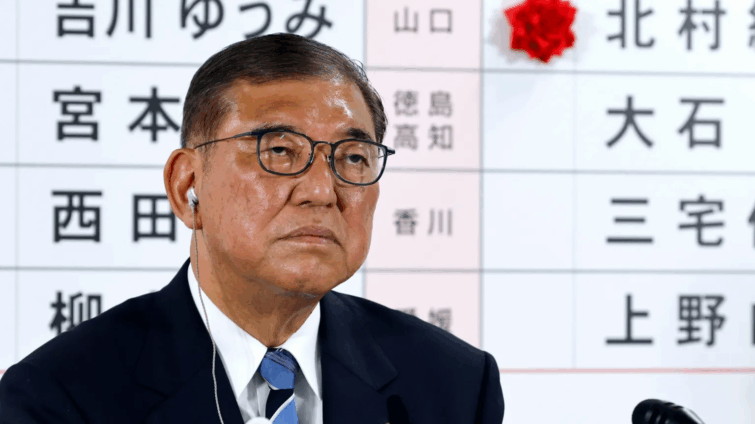
Japan's ruling coalition has lost its majority in the country's upper house, but Prime Minister Shigeru Ishiba has said he has no plans to quit.
Voters went to the polls on Sunday for the tightly-contested election, being held at a time of frustration at the coalition of the Liberal Democratic Party (LDP) and its junior partner Komeito over rising prices and the threat of US tariffs.
Speaking after polls closed on Sunday, the prime minister said he "solemnly" accepts the "harsh result" but that his focus was on trade negotiations.
Having already lost its majority in Japan's more powerful lower house last year, the defeat will undermine the coalition's influence.
The ruling coalition needed 50 seats to retain control of the 248-seat upper chamber. It ended up with 47.
The Constitutional Democratic Party, the main opposition, came in second with 22 seats.
Half of the seats in the upper chamber were being voted on in Sunday's election, with members elected for six-year terms.
Jeffrey Hall, a lecturer in Japanese Studies at Kanda University of International Studies, told BBC News support for more right wing parties had cut into the LDP's conservative support base.
"Prime Minister Ishiba is considered not conservative enough by many supporters of the former Prime Minister [Shinzo] Abe," he said.
"They think that he just doesn't have the nationalistic views on history, he doesn't have the strong views against China that Abe had."
Shinzo Abe was formerly the leader of the LDP and was Japan's longest-serving prime minister, in office twice between 2006 and 2007, and 2012 and 2020.
Mr Hall said some of the party's support had gone towards the Sanseito party - who would now be saying things which "haven't been said in public before by members of the upper house," - noting the party's pull towards "conspiracy theories, anti-foreign statements, [and] very strong revisionist views about history".
Ishiba's centre-right party has governed Japan almost continuously since 1955, albeit with frequent changes of leader.
The result underscores voters' frustration with Ishiba, who has struggled to inspire confidence as Japan struggles against economic headwinds, a cost-of-living crisis and trade negotiations with the United States.
Many are also unhappy about inflation - particularly the price of rice - and a string of political scandals that have beleaguered the LDP in recent years.
The last three LDP premiers who lost a majority in the upper house stepped down within two months, and analysts had predicted that a significant loss in this election would yield a similar outcome.
This would open the field for a potential run at the leadership by other notable LDP members, including Sanae Takaichi, who finished second to Ishiba in last year's leadership election; Takayuki Kobayashi, a former economic security minister; and Shinjiro Koizumi, the son of former Prime Minister Junichiro Koizumi.
In any case, a change of leadership within the ruling party would almost certainly unleash political drama and destabilise Japan's government at a pivotal moment in US-Japan trade negotiations.
On Monday, the Tokyo Stock Exchange was closed for a public holiday, but the yen strengthened on global markets against other major currencies as the results appeared to have been expected by investors.
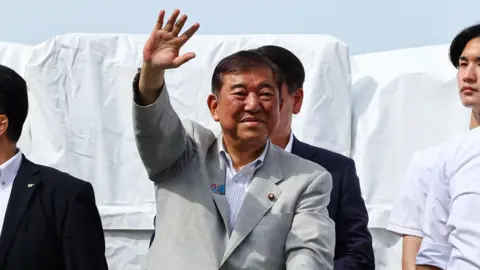
Support for the ruling coalition appears to have been eroded by candidates from the small, right-leaning Sanseito party, led by Sohei Kamiya, who has been compared to Trump by some media outlets.
The party, which is known for its "Japanese First" policy, drew conservative votes with its anti-immigration rhetoric. On Sunday, it won 14 seats - a big addition to the single seat the party won in the last election.
Sanseito rose to prominence during the pandemic, as it peddled conspiracy theories on YouTube such as the "deep state" and warned people not to wear masks or vaccinate themselves.
The fringe party's nativist rhetoric widened its appeal ahead of Sunday's vote, as policies regarding foreign residents and immigration became a focal point of many parties' campaigns.
Famous for its isolationist culture and strict immigration policies, the island nation has experienced a record surge in both tourists and foreign residents in recent years.
The influx has further driven up prices for Japanese people and fuelled a sentiment among some that foreigners are taking advantage of the country, aggravating discontent.
Against that same backdrop, Ishiba last week launched a task force aimed at tackling "crimes or nuisance behaviours committed by some foreign nationals", including those relating to immigration, land acquisitions and unpaid social insurance.
Latest Stories
-
‘It’s not a matter of evidence; it was a metaphor’ – Afenyo-Markin defends ‘drug lab’ comment
3 minutes -
Borrowing costs cut by more than half – Finance Minister
7 minutes -
KNUST students urged to look beyond Ghana for AI and robotics opportunities
10 minutes -
Odeibea Foundation extends energy equity initiative with solar streetlights in Akpato and Worwonyo
10 minutes -
Customs increases surveillance at ports, warns importers against concealing restricted items
13 minutes -
WERise urges women entrepreneurs to scale businesses, increase revenue and create jobs
14 minutes -
POWA calls for end to gendered attacks on Lordina Mahama, Samira Bawumia
19 minutes -
Zigx Foundation supports 50 vulnerable mothers in Akwapim North
19 minutes -
Nhyiramma Foundation calls for greater support for widows and single mothers
21 minutes -
Ghana must stop turning rivers into gutters through encroachment – Kwadwo Poku
23 minutes -
‘We’ll never compromise on quality’ – Agbodza tells Accra-Kumasi bypass supervisors
29 minutes -
Roads Minister urges motorists to drive cautiously on Accra-Kumasi Highway
29 minutes -
Hohoe MCE appeals for more relief supplies as flooding displaces residents
30 minutes -
‘Free Salomey now!’ – Women march to EOCO over Salomey Awitey Baffoe’s continued detention
32 minutes -
GES appeals to teachers to rescind strike and return to class as efforts to resolve concerns intensify
32 minutes