

Audio By Carbonatix
Japan and the US have confirmed that they jointly intervened last week to halt a slide in the yen after it weakened to a fresh 40-year low.
The joint intervention is the first since 2011, when both countries took coordinated action to weaken the yen after the devastating earthquake and tsunami that hit eastern Japan.
Both Japan's finance ministry and US Treasury Secretary Scott Bessent have said that they will not hesitate to conduct joint interventions in the future.
It highlights both countries' efforts to prevent a sell-off in the yen and Japanese government bonds from affecting the global economy, including potentially pushing up borrowing costs for Washington.
"The United States agreed to participate in the coordinated intervention because it serves its national interests by offering the prospect of significant benefits at a low cost," Shigeto Nagai, head of Japan economics at Oxford Economics, told the BBC.
The two countries are expected to continue to intervene "intermittently in a coordinated manner for some time", he added.
"Even if the actual amount of intervention is not particularly large, the prolonged sense of vigilance regarding intervention will be effective in deterring speculators."
The yen has historically been weak mainly because Japan has maintained much lower central bank interest rates than other major economies like the US. That makes the Japanese currency less attractive to international investors.
The Bank of Japan last raised interest rates in June, as it increased its main rate to 1% - the highest level since September 1995. In comparison, the US Federal Reserve's benchmark rate is in a range of 3.50% to 3.75%.
Japan also faces a decades-long decline in its working-age population, low productivity, and a heavy reliance on energy imports priced in US dollars.
On Monday, Japan's finance ministry said Friday's intervention with the US Treasury Department "countered excessive volatility and disorderly movements in the Japanese yen in recent months".
The "coordinated foreign exchange actions countered disorderly yen movements," Bessent said in a social media post.
"We strongly support Japan's decisive market and monetary steps to correct the substantial undervaluation of the yen," he added.
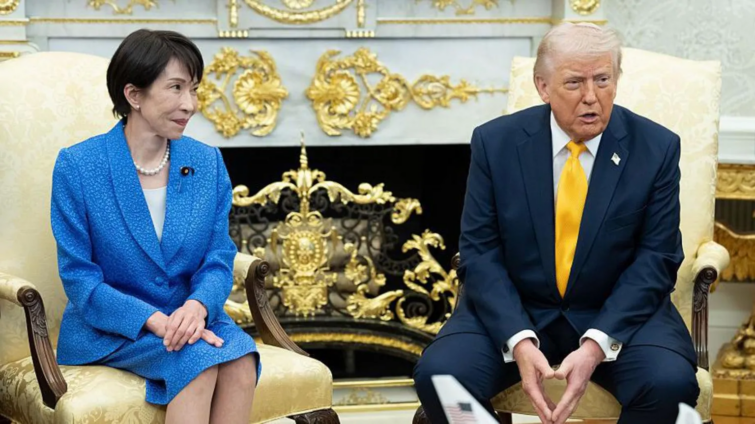
"They have a weakening yen, and they wanted a little bit of help. And we're always there for Japan," US President Donald Trump told reporters on Sunday.
The dollar fell by 0.2% to 157.07 yen after Trump's comments, well off the 40-year high of 164 last month, but rose back to 157.70 yen after the Japanese finance ministry's statement.
Bank of Japan data indicated that Tokyo may have sold almost $59bn of US dollar to buy yen when it intervened in New York markets on Thursday, before Friday's confirmed joint intervention with Washington.
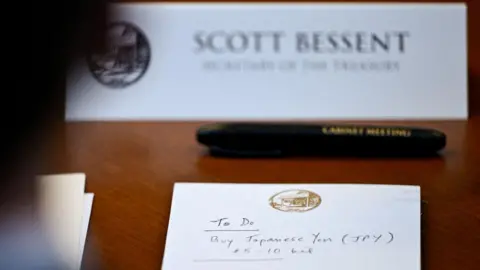
The US has not confirmed the size of its intervention but a Reuters photograph of a notepad in front of Bessent during a a cabinet meeting on Friday read: "To Do: Buy Japanese Yen $5-10 bil".
Latest Stories
-
Police blur the line between invitations and arrests – Reindorf Twumasi Ankrah
26 minutes -
Turning invitations into arrests is making citizens reluctant to assist police – Twumasi Ankrah
59 minutes -
The Traffitech-GH SMS spot-fine system: The good, the sad, and the funny – Bright Simons writes
1 hour -
Hawa Koomson pledges experienced and mature leadership of NPP women’s wing
2 hours -
Young woman found dead at Kasoa Peace Town
3 hours -
Playback: The Law examined lawful arrest in Ghana
3 hours -
Mahama urges African governments to treat healthcare as an investment, not budget cost
4 hours -
Bawumia congratulates John Boadu and new NPP executives, pledges support ahead of 2028
4 hours -
Aksa Energy delegation pays courtesy call on GRA Commissioner-General
4 hours -
‘No talent should be left out’ – Bawumia pledges inclusive NPP campaign for 2028
4 hours -
Prof. Mike Oquaye recounts how he blocked the Special Prosecutor’s attempt to arrest Bawku Central MP
4 hours -
Make health sovereignty a priority for Africa – Mahama
4 hours -
Dorimon Naa, Wa West DCE lead massive clean-up exercise; threaten sanctions against recalcitrant residents
5 hours -
Photos from Adom FM Y2K Jam
5 hours -
Praye Tiatia steals the show at Adom FM Y2K Jam [Watch]
5 hours