

Audio By Carbonatix
The Japan International Cooperation Agency (JICA) has through the “CHPS for Life Project” initiated a two-day training programme on Covid-19 for a total of 1,500 Community Health Officers (CHOs) across five regionsn of the north.
The CHOs are drawn from the various Community-based Health Planning and Services (CHPS) zones across all 55 districts of the Northern, Upper East, Upper West, Savannah and North East Regions.
They are to be taken through various topics including Infection Prevention and Control (IPC), risk communication and social support, screening and triaging, and contact tracing and psychological support among others.
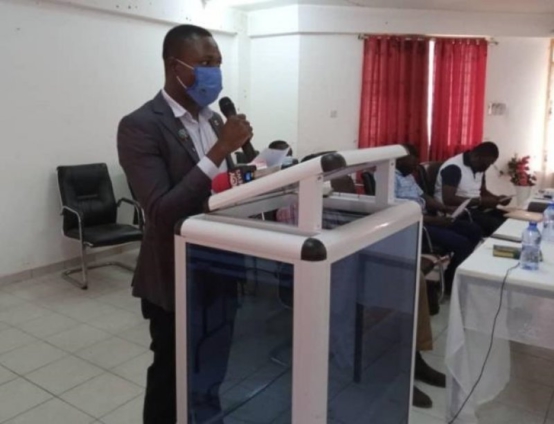
The Wa Municipal Director of Health, Dr Kingsley Pascal Mwin, addressing a press conference in Wa on behalf of the Regional Director of Health Services, Dr Damien Punguyire, stated that Covid-19 was spreading rapidly not only in urban settings but also in rural areas which was a threat to community people.
According to him, the CHOs were responsible for providing interventions such as: surveillance, health education, immunization among others to break the chain of transmission against the spread of Covid-19, adding that the training was, therefore, to enable them work safely and be able to provide useful information about the disease to community members.
“They live in the communities and are expected to build trust in relating to the community members, which predisposes them to community infection of Covid-19”, the Municipal Director of Health added.
On the “CHPS for Life Project”, Dr. Mwin explained that it was the third phase of a technical cooperation project between Ghana and Japan through the Ghana Health Service (GHS) and JICA.
He said the first and second phases were implemented between 2006 and 2016 respectively, adding that whilst the first phase focused on scaling up CHPS, the second phase targeted the improvement of maternal and neonatal health care services in the Upper West Region.
He pointed out that the current phase was using “life course approach”, an approach to access health for all age cohorts by promoting healthy lifestyles and early detection of non-communicable diseases, by building capacity of health workers such as CHOs and other health workers to implement the initiative.
Dr Mwin said the project spanned from June 2017 to June 2022 and the goal was to promote Universal Health Coverage (UHC) by improving access and utilization of primary health care through CHPS.
The main purpose, he said, was to ensure that CHPS services focusing on the life-course approach, were strengthened in the five regions of the north.
Latest Stories
-
GPL 2026/27: Medeama ease past Basake Holy Stars
7 minutes -
Appiah Adomako writes: Why DVLA must stop treating every expired licence holder as delinquent
10 minutes -
Localization must transfer decision-making power, not just project responsibilities
20 minutes -
Modernising Ghana’s traditional markets through the 24-Hour Economy markets initiative
22 minutes -
New economy will boost local production and create jobs – Finance Minister
28 minutes -
Real-Time VAT on cross-border digital services – not a new tax and does not violate double taxation principle
1 hour -
Digitalisation, AI key to Ghana’s tourism transformation – GHATOF
2 hours -
Stronger GTA-private sector partnership needed to grow tourism – GHATOF
2 hours -
Amazon eyes Ghana for broadband expansion after talks with Mahama
2 hours -
National Investment Quiz 2026: Six schools qualify for quarter-finals
3 hours -
‘Do not let Russia pay for its madness with lives of your people’ – Zelensky to Ghana, 46 other countries
3 hours -
6,079 promotion cases fully processed and paid – CAGD says amid nationwide teachers’ strike
3 hours -
Teacher unions to meet government Monday over nationwide strike
4 hours -
Photo story: Republic Bank-JoyNews Habitat Fair clinic wraps up after three days of housing solutions, expert engagement
4 hours -
National Peace Council urges investment in youth to sustain Ghana’s peace
4 hours