

Audio By Carbonatix
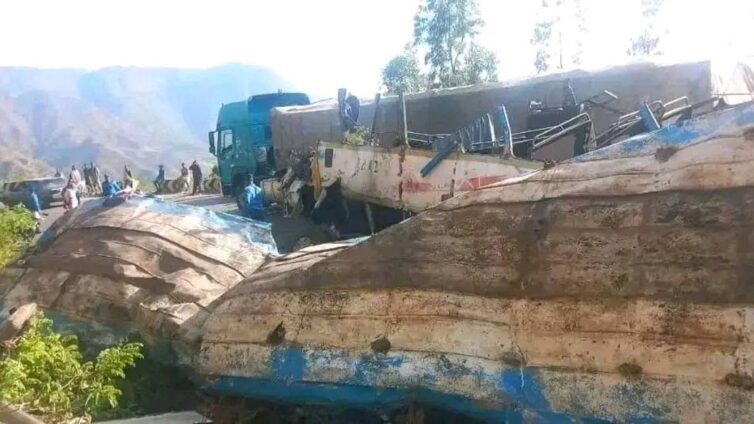
An overcrowded passenger bus veered off a hazardous mountain road and plunged into a deep ravine in northern Ethiopia early Monday morning, killing at least 31 people and injuring 33 others.
The vehicle was travelling from the Dessie area toward the capital city of Addis Ababa when the driver lost control in the conflict-hit Amhara region. Local authorities confirmed that the bus was severely overloaded when it went off the cliff side, complicating initial rescue operations.
Delayed Emergency Response Fatal for Survivors
The Kombolcha Town Administration Police Division reported that the death toll rose significantly due to a critical lack of emergency infrastructure in the immediate area. Survivors faced lengthy delays before receiving medical attention because the rural district lacks basic ambulance services.
First responders and local residents were forced to transport critically injured passengers to regional hospitals using private cars and public transit vehicles. Investigators stated that many victims died at the scene from injuries that could have been treated with prompt medical intervention.
Regional Roads Known for Extreme Hazards
The stretch of highway where the vehicle plunged remains a notorious transit point due to its winding, hilly terrain and steep drops. While the Kombolcha police continue to investigate the exact mechanical or human cause of the morning crash, regional transport operators have long classified the route as uniquely dangerous.
The disaster mirrors a similar mass casualty transit accident in December 2024, when a bus plunged into a river in Ethiopia’s southern Sidama region and left 66 people dead. Monday's crash renews scrutiny on both public transit enforcement and the stark absence of trauma care networks along major Ethiopian shipping corridors.
Ongoing Conflict Compounds Regional Transit Risks
The tragedy highlights the compounding crises facing northern Ethiopia, where persistent regional instability heavily restricts public resources. Ongoing conflict within the Amhara region continues to hamper infrastructure development, stalling vital highway repairs and isolating rural communities from centralised emergency medical networks.
Continental Crisis Sparks Push for Strict Enforcement
The lethal combination of overloaded commercial vehicles and a lack of post-crash emergency medical care mirrors a deadly trend felt across sub-Saharan Africa. The World Health Organisation notes that the African region maintains the highest road fatality rate globally, with traffic deaths rising significantly over the last decade.
To combat this crisis, the African Union officially enacted the legally binding African Road Safety Charter in March 2026. The framework forces signatory nations, including Ethiopia, to establish strict policy enforcement against vehicle overloading and to invest heavily in rural pre-hospital trauma infrastructure.
Shared Toll Echoes Across West African Corridors
The structural failures contributing to the Ethiopian disaster deeply resonate in West Africa, where commercial transport safety has sharply deteriorated. Ghana recently recorded its deadliest year on the road in over three decades, with the National Road Safety Authority reporting a record 2,949 fatalities in 2025.
Similar to the emergency response failures in Kombolcha, West African transport data reveals that transit deaths are rising twice as fast as the accident rate itself. Regional policy experts attribute this expanding lethality directly to highway coverage gaps and the inability to transport victims to critical care units within the life-saving first hour.
Latest Stories
-
Interest payments to average a high 20% of government revenue over next 4 years
3 hours -
Strategy of accumulating foreign reserves, gold carries high fiscal cost – S&P Global
3 hours -
Weak institutional arrangements, high debt servicing constrain Ghana’s rating – S&P
3 hours -
Infantino makes bigger cash pledge to Fifa members
3 hours -
Bond market: Turnover declined by 28% to GH¢1.56bn
3 hours -
Volta Region National Public Speaking contest advances drug prevention conversation
4 hours -
New health training facility at Ampoma-Jema to address admission shortfalls, but Minister flags missing amenities
4 hours -
Black Challenge unveiled with sights set on Amputee World Cup glory
4 hours -
Pay striking teachers before expressway spending, Dr Kingsley Agyemang tells government
5 hours -
Customs intercepts assault rifle, two pistols and 610 rounds of ammunition at Tema Port
5 hours -
PKO boxers secure wins at Odwira Festival
6 hours -
South Tongu Records Rise in Teenage Pregnancy
6 hours -
Cabinet threw out US health compact faster than anything I’ve seen – Mahama
6 hours -
MoFA urges Finance Ministry to reverse World Bank food programme withdrawal over GH¢643m commitments
6 hours -
NAGRAT demands signed timelines before calling off strike
6 hours