

Audio By Carbonatix
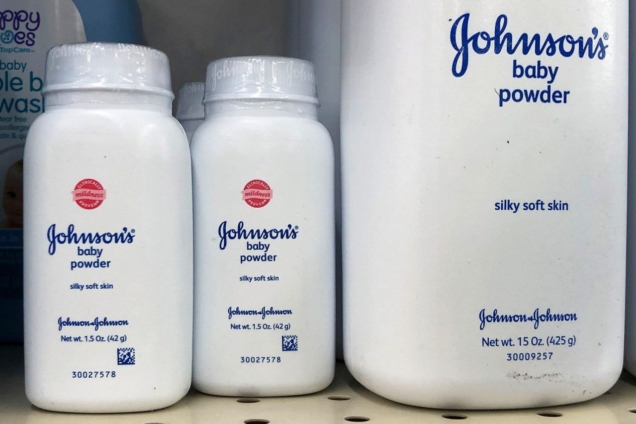
Healthcare giant Johnson & Johnson says it will continue to sell its talc-based Johnson's Baby Powder in the UK and the rest of the world, despite stopping sales in the US and Canada.
It said North American sales had shrunk partly because of a "constant barrage" of advertising by lawyers seeking clients to claim against the company.
J&J has been at the centre of claims for years that its talc causes cancer.
It has always strenuously defended the product's safety.
Johnson & Johnson has been ordered to pay out billions of dollars in compensation, but has so far always successfully appealed against these verdicts.
Almost 20,000 people in the US have so far lodged claims against the company.
Talc is mined from the earth and is found in seams close to that of asbestos, a material known to cause cancer.
The company said in a statement: "Johnson & Johnson remains steadfastly confident in the safety of talc-based Johnson's Baby Powder."
It said "decades" of study by medical and legal experts around the world supported its view, and all verdicts against the company that had gone against it had been overturned on appeal.
Dampened demand
It will continue to sell its talc-based products in the US and Canada until stocks have sold out.
It also sells a cornstarch-based powder which it will continue to sell in North America.
It said both types of Johnson's baby powder, talc-based and cornstarch-based, will continue to be sold in other markets around the world where there is "significantly higher" consumer demand for the product.
The firm said changes in consumer behaviour had also dampened demand for the powder.
The firm added that the move was also part of a reassessment of its consumer products prompted by the coronavirus pandemic.
It said in October that its testing had found no asbestos in its baby powder after tests conducted by the US Food and Drug Administration discovered trace amounts.
The firm is appealing against a 2018 order to pay $4.7bn (£3.6bn) in damages to 22 women who alleged that its talc products caused them to develop ovarian cancer.
Latest Stories
-
Conflicts among care providers linked to maternal, neonatal deaths – Expert
1 hour -
GIS marks 10th TIME conference, champions improved teaching practices
2 hours -
BRICS Or Balance? What Ghana’s bid really means
2 hours -
GPRTU wants full TRAFFITECH-GH implementation to start in 2027
2 hours -
Mahama announces plans to import electric wheelchairs for PWDs
2 hours -
KGL U17 Colts 2026: Western beat Prempeh Elite Academy to set up final final with Greater Accra Region
3 hours -
Late Solanke strike salvages 10-man Spurs draw at Man United
3 hours -
Gender Ministry to monitor welfare of Nana Akua Addo’s children amid domestic violence case
3 hours -
Benedict Okyere Yeboah: Ghana’s football problem goes beyond sacking a coach
3 hours -
GPL 2026/27: Darkwah Wiafe’s winner sees All Blacks beat Kotoko
3 hours -
ITF World Tour : Patel Wins Boys’ Singles Final at J100 Accra
3 hours -
Ghana must pursue BRICS partnership if it brings economic benefits – Kpebu
3 hours -
Success and Wright Claims J100 Accra Girls’ Doubles Championship
4 hours -
ITF J100: America’s Wright wins J100 Accra Girls’ Singles Title
4 hours -
Expedition hopes to find aviator Amelia Earhart’s plane on remote island
4 hours