

Audio By Carbonatix
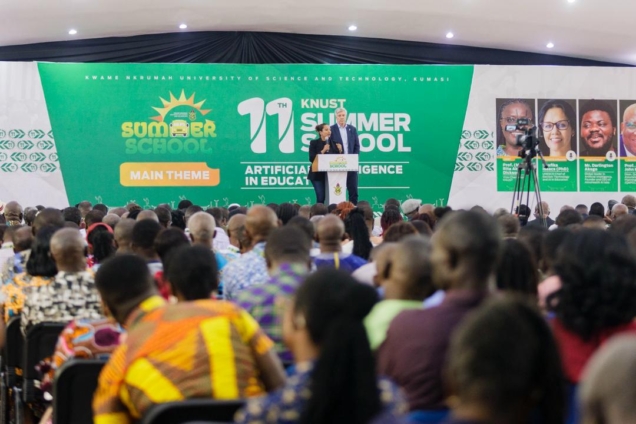
Students at the Kwame Nkrumah University of Science and Technology are expected to take courses in Artificial Intelligence (AI) starting next academic year, as the university resolves to incorporate the tenets of technological advancement in its operations.
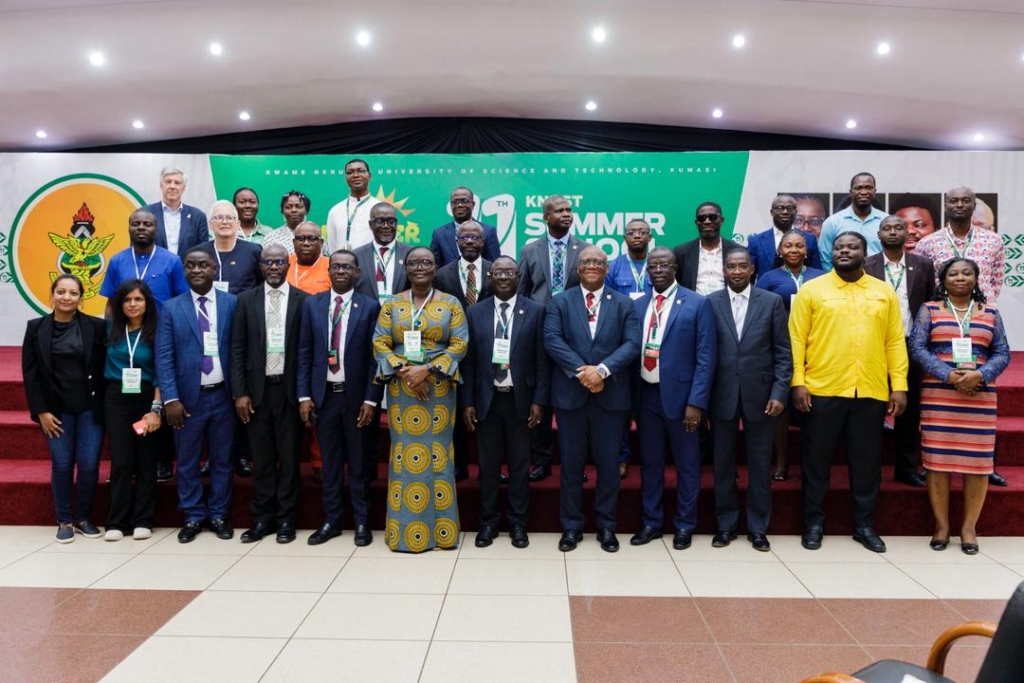
This was revealed by the Vice-Chancellor, Prof. Rita Akosua Dickson during the 11th Summer School of the University held on the theme “Responsible AI in Education”.
Speaking at the opening of the 3-day event, Prof. (Mrs.) Dickson emphasized that the students will be credited for the course while equipping them with the needed skills for the technological revolution.
“This micro-credential course, which will have 1 credit hour will equip graduates with the knowledge and ethical grounding needed to apply AI responsibly across all disciplines,” Prof. Dickson said.
The VC emphasized the University’s commitment to ethical and inclusive technology education as she highlighted that universities must guide AI development to reflect local realities and foster sustainable learning.
She further stressed that academia plays a central role in ensuring AI serves humanity, not just technological advancement.
The Vice-Chancellor also underscored the importance of interdisciplinary research and partnerships in preparing students and faculty for emerging technologies.
A keynote speaker at the event, Darlington Ahiale Akogo, who is the founder and CEO of MinoHealth AI Labs, emphasized academia’s moral responsibility in AI innovation.
“Academia must not only teach AI but guide its conscience, and if we want AI systems that understand our classrooms and cultures, then the research and data must come from our own academic spaces,” Mr. Akogo said.
He called for stronger collaboration between universities, industry, and policymakers to ensure AI solutions are ethical and contextually relevant.
Senior representative from UNESCO’s Section for Technology and AI in Education, Dr. Shafika Isaacs, reinforced the need for ethics in AI.
“Universities must become the testing ground for ethical innovation the space where we ask, ‘What kind of intelligence are we really building, and for whom?’” she quizzed.
She emphasized that global AI guidelines are only effective when adapted to local educational contexts, languages, and cultures.
Dr. Isaacs urged African universities to create AI ecosystems that are inclusive and culturally relevant, ensuring no learner is left behind.
The Summer School highlighted that academia’s role extends beyond innovation, with universities acting as guardians of ethical AI.
Latest Stories
-
At least 30 feared dead in crush at Haitian tourist site
53 minutes -
Four arrested over murder of Scottish businessman in Kenya
1 hour -
New Mainoo deal closer, says Man Utd boss Carrick
1 hour -
Sinner beats Alcaraz to return to world top spot
1 hour -
An inappropriate joke nearly ended his career. Now he’s back with more humour
2 hours -
GPL 2025/26: Dreams FC stage stunning comeback to hammer Eleven Wonders
3 hours -
Livestream: The Probe examines Kumasi’s looming water crisis
3 hours -
MTN Ghana gears up to lead Africa’s AI revolution
3 hours -
Philanthropist Alhaji FuZak donates Da’wah bus to Ambariya Sunni community
3 hours -
GUTA calls for suspension of Publican AI system over trade disruptions
3 hours -
TTAG raises alarm over proposed recruitment of 7,000 teachers, demands national posting roadmap
4 hours -
Civilians feared killed after reports of air strike on Nigerian market
4 hours -
Bishop Simon Kofi Appiah installed as new Jasikan Diocese Bishop
4 hours -
Trump’s Strait of Hormuz blockade threat raises risks and leaves predicaments unchanged
4 hours -
US Court backs extradition of former MASLOC CEO Sedina Tamakloe-Attionu to Ghana
4 hours