

Audio By Carbonatix
Like many other African countries, Ghana is still dearly paying for the unfortunate events of the 1970s. These events were generally characterised by chaotic military regimes, unsustainable debt accumulations the incessant appetite for state-run businesses with some being fallouts from Cold War machinations. The earlier socialist development agenda of Dr Kwame Nkrumah was focused on building and maintaining state-owned enterprises.
Subsequent policies were also targeted at import substitution-based manufacturing which in many cases failed because of their heavy reliance on imported raw materials. Some of these state-run institutions had become burdens to the state since they were not efficiently run hence unprofitable. They constantly needed budgetary support to survive.
Since the implementation of the structural adjustment and the economic recovery programs in the 1980s, evidence shows that the private sector has not significantly responded to government policies as intended with donor partners i.e., IMF & World Bank.
Even though these programs achieved some significant macroeconomic successes like keeping inflation under control and opening up our economy to foreign trade, many microeconomic imperatives have largely failed to respond.
Successive governments before the fourth republic didn’t see the need to actively encourage the expansion of the private sector. Most of them rather saw the private sector as a threat to the state’s power. Evident of which was the closing down of businesses of some prominent Ghanaian Entrepreneurs. These unfortunate incidences reduce confidence in the private sector. A situation where entrepreneurs were careful not to grow their businesses beyond certain levels so as not to draw the attention of certain political actors
Conventionally, economic development goes through three stages; primary agriculture leads the way for manufacturing and then the services sector follows. Manufacturing is essential because it has the potential to significantly increase employment, improve productivity and also tremendously expand the export base of the country.
Unfortunately, the story of Ghana has been different where from primary agriculture we generally leapfrogged into the services sector. This has denied us the ability to take the full advantage of manufacturing. Our services sector represents more than 50% of GDP whiles manufacturing represents just about 30%. Agriculture employs more than 50% of our total workforce but its contribution to GDP is consistently falling to about 17%.
Education births Innovation
Innovation is key to the birth of entrepreneurial development of every economy. This innovation is driven by the quest by men and women (mostly young) who either want to improve on existing products and services or create totally new ones. Education and innovation are positively corelated because the logics, patterns and theories that support the innovative process are largely acquired through education and skills training. Unfortunately, our educational systems over the yearsmainly focuses or churning out graduates in the social sciences with courses designed by colonial masters to prepare them for civil service and not for analytical problem solving.
Financing the risk.
The challenge with financing for entrepreneurial projects in Ghana cannot be overstated. History has shown that Ghanaian banks have become very comfortable charging larger spreads (risk premium) above the risk-free rates, they attribute it to risk. It is however perplexing why a country like Nigeria (131th) with a higher risk of “Doing Business” has lower lending rates than Ghana(118th).
Unfortunately, no entrepreneur can sustainably build a business with a 25% interest loan in Ghana whilst our counterparts in Kenya are paying 11.7%. These loans are short-termed and mostly need collateral with three years of financial statements, etc. The promise of equity financing is gradually becoming a mirage to the average entrepreneur in Ghana. They are either non-existent or insignificant to drive the industrial growth Ghana truly needs through its entrepreneurs.
Taxes and the Taxman
News about revenue shortfalls by the Ghana Revenue Authority (GRA) does not excite entrepreneurs like myself. This is because this news only gives us a signal that tax officers will be harsh with us in the following year. GRA officials are handed targets from policymakers that must be raised even if it means overburdening small businesses with discretionary tolls and levies. One would have thought that the GRA would rather publish news about the improved profits of small-scale businesses and how that contributed to the taxes they have collected.
In Conclusion:
History has taught us that state-run businesses are unsustainable in the long-term and that private entrepreneurs can drive the growth of this country by creating jobs and helping eradicate poverty. Our educational system which is essential to tooling our entrepreneurs needs an urgent reform to conform with 21stcentury realities. The financial sector’s appetite for short-term debt needs modification through government incentives and the tax authorise need a new approach especially to SMEs to encourage them grow sustainably.
Fortunately, the African Continental Free Trade Area (AfCFTA) presents the potential for a huge market to support our businesses but failure to ensure that we get our basics right could make AfCFTA’s advantages elude us.
****
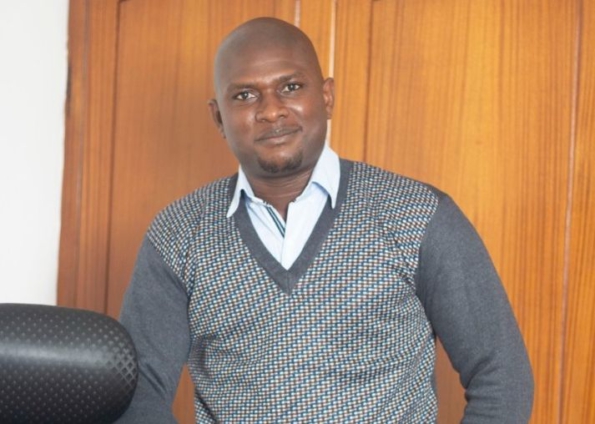
The writer is a serial entrepreneur, a consultant and a philanthropist. His passion is for the development of Africa through aggressive entrepreneurial initiatives. He runs a blog and video series called Consider. www.kcamese.com/consider and can be reached via email: kc@kcamese.com
Latest Stories
-
Republic Bank JoyNews Habitat Fair to connect prospective homeowners with exhibitors in Ho from October 16 to 18
9 minutes -
Obaasima Summit: ‘AI is not a spiritual attack’ — Rev. Dr. Ofori-Boateng urges young women to embrace technology
19 minutes -
GHS to distribute 80,000 pairs of locally-made protective footwear to health workers
26 minutes -
GoldBod boosts local jobs as 90% of gold undergoes refining in Ghana – Sammy Gyamfi
28 minutes -
The search for the politically unblemished: Are we asking the impossible of public appointees?
30 minutes -
Ghana seeks climate finance access for debt-restructuring countries
40 minutes -
Afenyo-Markin urges stronger media scrutiny of public institutions
40 minutes -
GoldBod recovers GH¢38.7m in legacy PMMC debts, targets remaining arrears
42 minutes -
62 out of every 100 commercial meters inspected missing from Ghana Water database – MD
43 minutes -
GoldBod gets BoG authorisation to sell forex, Sammy Gyamfi tells PAC
46 minutes -
Ghana Water revenue mobilisation below 50% of potential – MD
52 minutes -
Ghana’s democracy must accommodate dissent and constructive criticism – Haruna Iddrisu
53 minutes -
Fact check: Trump posts fake quote of Denzel Washington supposedly praising him
54 minutes -
UPSA students lament high fees at private hostels, call for government intervention
1 hour -
We will upgrade Ghana’s credit ratings if government maintains fiscal discipline, policy effectiveness – Moody’s
1 hour