

Audio By Carbonatix
The British-born wife of deposed Syrian president Bashar al-Assad is not seeking a divorce, a Kremlin spokesman has said.
Reports in Turkish media had suggested Asma al-Assad wanted to end her marriage and leave Russia, where she and her husband were granted asylum after a rebel coalition overthrew the former president's regime and took control of Damascus.
Asked about the reports in a news conference call, Dmitry Peskov said, "No, they do not correspond to reality."
He also denied reports that Assad had been confined to Moscow and that his property assets had been frozen.
Russia was a staunch ally of the Assad regime and offered it military support during the civil war.
But reports in Turkish media on Sunday suggested the Assads were living under severe restrictions in the Russian capital, and that the former Syrian first lady had filed for divorce and wanted to return to London.
Mrs Assad is a dual Syrian-British national, but the UK foreign secretary has previously said she would not be allowed to return to Britain.
Speaking in parliament earlier this month, David Lammy said: "I want it confirmed that she's a sanctioned individual and is not welcome here in the UK."
He added he would do "everything I can in my power" to ensure no member of the Assad family "finds a place in the UK".
In a statement attributed to Bashar al-Assad last week, he said he had never intended to flee Syria, but he was airlifted from a Russian military base at Moscow's request.
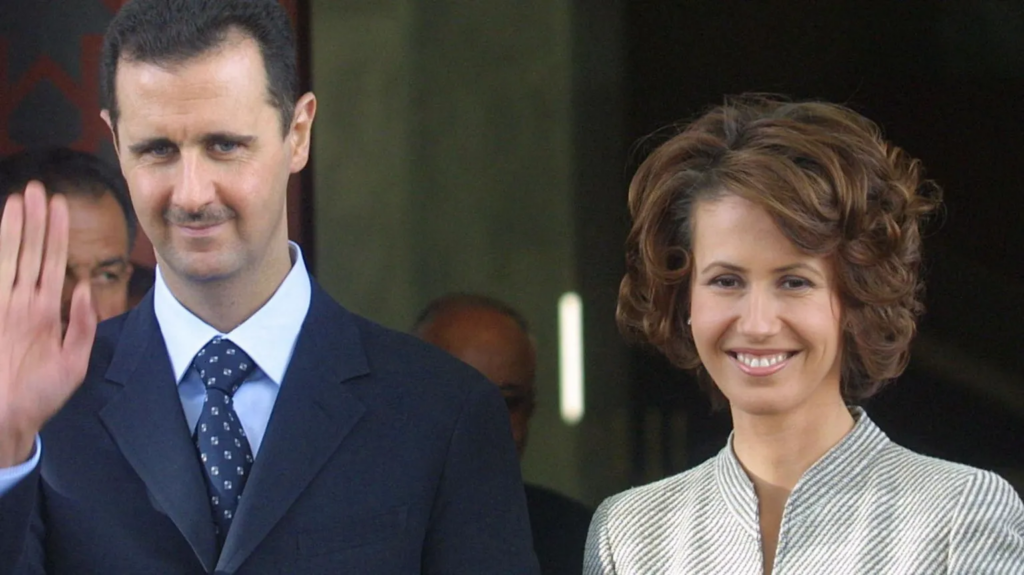
Asma al-Assad, 49, was born in the UK to Syrian parents in 1975 and grew up in Acton, west London.
She moved to Syria in 2000 at the age of 25 and married her husband just months after he succeeded his father as president.
Throughout her 24 years as Syria's first lady, Mrs Assad was a subject of curiosity in Western media.
A controversial 2011 Vogue profile called her "a rose in the desert" and described her as "the freshest and most magnetic of first ladies". The article has since been removed from the Vogue website.
Just one month later, Mrs Assad was criticised for remaining silent while her husband violently repressed pro-democracy campaigners at the start of the Syrian civil war.
The conflict went on to claim the lives of around half a million people, with her husband accused of using chemical weapons against civilians.
In 2016, Mrs Assad told Russian state-backed television she had rejected a deal to offer her safe passage out of the war-torn nation in order to stand by her husband.
She announced she was being treated for breast cancer in 2018 and said she had made a full recovery one year later.
She was diagnosed with leukaemia and began treatment for the disease in May this year, the office of then-President Assad announced.
A statement said she would "temporarily withdraw" from public engagements.
Latest Stories
-
Nzema East launches Responsible Cooperative Mining Programme to tackle environmental destruction
5 minutes -
Ghana included in WHO lead-testing programme as questions remain over local exposure risks
14 minutes -
2026 Amputee World Cup: We will win the trophy – Samson Deen
22 minutes -
Controller and Accountant-General pays promotion arrears to 56,003 GES teachers ahead of deadline
22 minutes -
2026 Amputee World Cup: We want to make the continent proud – Black Challenge coach
27 minutes -
International Day of the Girl: Central Region Education Directorate calls for action to tackle child marriage, teenage pregnancy
33 minutes -
The Eyes of Ghana: iShowSpeed joins Obamas as producers of Chris Hesse documentary
44 minutes -
FirstBank Ghana pledges action on customer feedback at service week forum
1 hour -
Sahara Group urges journalists to look beyond fuel prices in energy reporting
1 hour -
Today’s front pages: Friday, October 16, 2026
1 hour -
Ashanti Region: ECG urges customer cooperation with franchise officers
2 hours -
Ghana’s research fund faces a test of turning funding promises into scientific breakthroughs
2 hours -
Dîner en Blanc Accra returns on December 28 for second edition
2 hours -
20% digital tax: Government hiding behind technicalities to cheat Ghanaians – Dr Boako
3 hours -
David Selassie Anthony declares bid for NDC Deputy National Organiser
3 hours