

Audio By Carbonatix
Residents in the Central Region are grappling with the heavy consequences of illegal mining, with many forced to spend between GH¢120 and GH¢150 a month on sachet and borehole water after the shutdown of the Kwanyako water treatment plant.
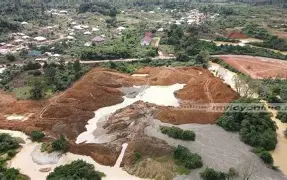
The plant, which once supplied safe drinking water to thousands, was shut down by the Regional Security Council and the Ghana Water Company Limited after dangerously high turbidity levels were recorded in local rivers and streams due to mining pollution.
With tap water no longer safe, households have turned to costly alternatives for cooking, bathing and cleaning, worsening the financial struggles of many families.
One resident described the struggle, saying the tap water is dirty, flows irregularly, and cannot be used for cooking or bathing, forcing her to rely on sachet water and spend about GH¢120 to GH¢150 cedis a month.
Another resident, a meat pie seller, said she buys borehole water at one to two cedis per bucket, spending about 20 to 30 cedis a month.
A Silent Health Emergency
Beyond the financial burden, scientists are warning of an unfolding health crisis linked to illegal mining (galamsey).
Experts say toxic chemicals used in mining, including mercury, are seeping into soil and rivers, leading to widespread health risks.
Histoforensic pathologist Professor Paul Sampene revealed that his research shows alarming effects on pregnant women and children.
“I have examined about 4,500 placentas from different regions in Ghana. In some hospitals, there are about 500 cases where women have gone to the hospital and aborted their babies because of concentration of these heavy metals in their placenta,” he said.
He added, “These toxic substances seep into rivers and soil, finding their way into the food we eat and the water we drink. Heavy metals go deep into destroying the cells, causing what we call systemic inflammation, leading to chronic diseases. Hypertension, diabetes, kidney diseases, asthma – all these can be caused by heavy metals.”
Professor Sampene also warned that children exposed to these substances risk long-term brain damage. “If care is not taken, there comes a point where you see a human being walking, but the cognitive impairment is so high. This autism and all those things that are coming up, inhalation of mercury affects your brain,” he explained.
Government Response
The government has admitted the crisis requires urgent action. Energy analyst Kwadwo Poku has urged President Mahama to take personal responsibility for decisive action, while Vice President’s economic policy advisor Sharif Mahmud Khalid insisted that the fight cannot be left to the president alone.
“If we are resigning only this to the president, then I think we are all going to fail.” Mr. Khalid said. “It’s a matter of national emergency. We, as a listening government, take the feedback of the stakeholders; we take the feedback of the scientists. It is roaring, and the voice of the people is roaring in Ghana that we really need to curb this. We are going to curb this.”
Meanwhile, Minister for Lands and Natural Resources Emmanuel Armah-Kofi Buah has deployed the National Anti-Illegal Mining Operations (NAIMOS) Task Force to intensify the clampdown on galamsey.
Addressing the Task Force before their deployment over the weekend, the Lands Minister said illegal mining demands urgent and decisive action.
“When those unseen faces knock at your door to try to compromise you, remember every day that you have legs to be faithful and loyal to Ghana, your motherland,” he said. “The children who are having deformities, the innocent women and villagers who have no water because the forest is being destroyed—it’s in your hands. My friends, the people of Ghana are saying to you, you cannot fail, and we will not fail.”
Latest Stories
-
GRA recovered GH¢1.3bn out of about GH¢1.4 bn unpaid VAT from ECG – Anthony Sarpong
2 minutes -
KMA to extend daily toll collection to nights and weekends
4 minutes -
Ghana secures second consecutive term on UN Human Rights Council
8 minutes -
KATH Catheterisation lab targets December completion amid specialist staffing concerns
8 minutes -
Government working to address economic challenges driving youth into galamsey – Mahama
19 minutes -
Domestic Capital Africa campaign targets US$600bn pension funds for SME growth
19 minutes -
Women leaders’ wisdom and work deserve recognition – Mahama
29 minutes -
NRSA to refund surplus from auctioned vehicles of non-subscribers after deducting towing costs
31 minutes -
Ghana must integrate AI into mainstream education – DigiMarkt Project Board
31 minutes -
Armwrestling: Ghana unveils World Armwrestling Championship squad, appeals for travel support
31 minutes -
NPRA cites pensions college, data bank to justify 10-storey building project
37 minutes -
16 arrested as security team recovers guns, ammunition at Gbane mining site
37 minutes -
African group demands action on climate finance and adaptation ahead of COP 31
38 minutes -
GFA to receive $700,000 a year from CAF as continental body announces 33% increase in annual funding to member associations
44 minutes -
We must account for every cedi entrusted to us as public officials – Ato Forson
1 hour