

Audio By Carbonatix
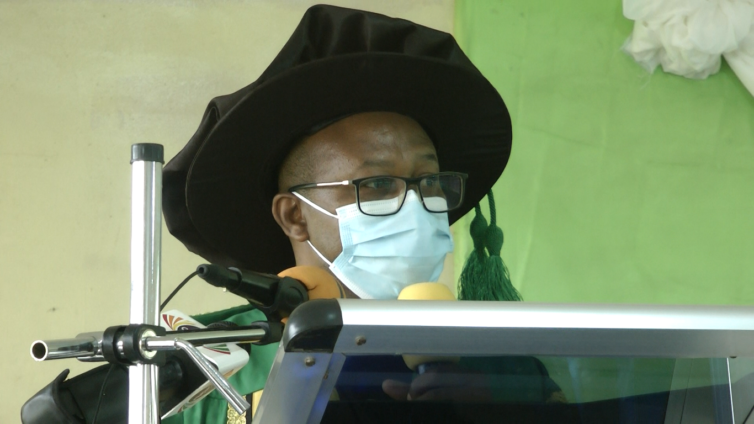
The principal of St. Ambrose College of Education in the Dormaa East District of the Bono Region, Rev. Fr. George Kyeremeh, has bemoaned the infrastructure deficit in the school which continues to affect enrollment.
The situation, he said, stresses the few facilities available in the college.
Established in 2009, the College was absorbed by the government of Ghana in 2016 but remains saddled with many challenges including the lack of lecture halls and accommodation for both students and teachers.
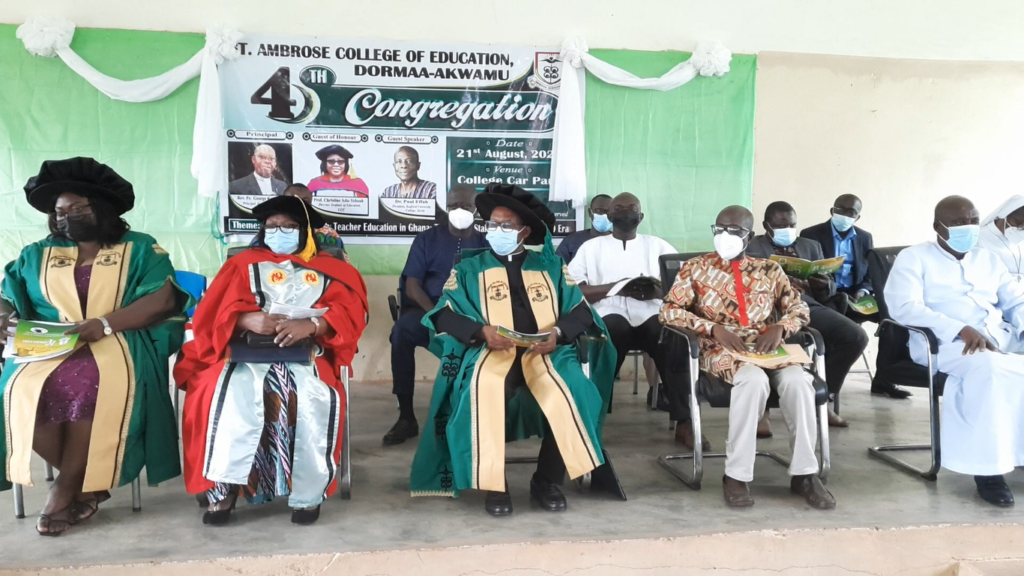
Rev. Fr. George Kyeremeh said this at the 4th congregation of the college which was held under the theme; “Delivering quality teacher education in Ghana: The role of stakeholders in a Covid-19 era”.
"This year, for instance, I can only admit one-third of first-choice applicants. Last year I could only admit less than half of the applicants who chose St. Ambrose College of education due to the infrastructure challenges", he said.
With all 4-year groups coming to campus next year, he said they still do not know how to accommodate them.
"Even though they continue with the shift system and the hybrid teaching and learning, the students will still come on campus to write exams, and we will face the reality of inadequate space during the examination”.
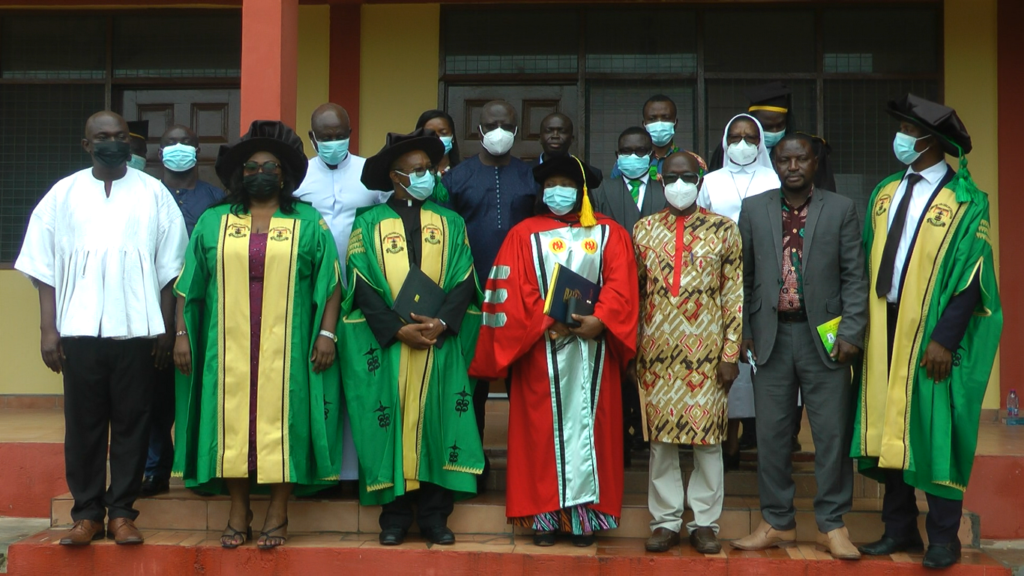
The first government project, funded by GETfund, was inaugurated by the Dormaa East District Chief Executive, Emmanuel Kofi Agyemang after the ceremony. The first phase of the project, a dormitory block, which started in 2016 will provide accommodation for over 160 students who were occupying classrooms as hostels.
More students, according to the principal, could be admitted if they have enough buildings for use as lecture halls and halls of residence. Therefore, he appealed to the government to come to their aid to narrow the infrastructure deficit.
The Rev. Fr. also said teachers commute from Asuotiano, Wamfie, and Berekum to the school on a daily basis, a situation he described as worrying.
He, however, thanked the government for the project and assured of its proper maintenance to serve the intended purpose.
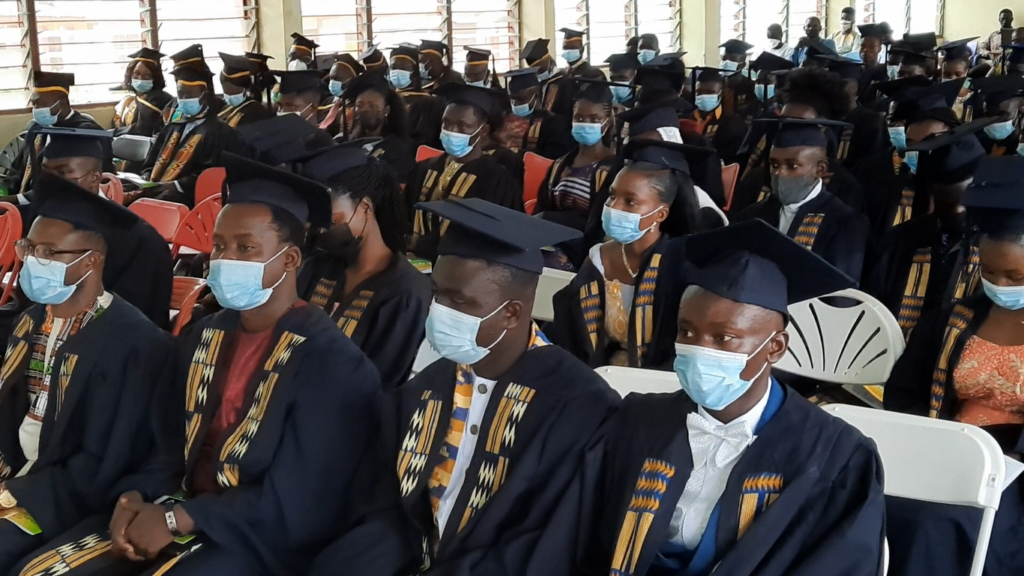
The graduates are the last batch of graduating students in Diploma in Basic Education in line with the directive of the colleges of education in Ghana.
346 students graduated, comprising 158 for 2019 and 188 for the 2020 year group. One student graduated with a first-class honour, 72 with 2nd class upper, 110 on 2nd class lower, 95 3rd class, and 68 passes.
The principal, Rev. Fr. George Kyeremeh, said they have ended the academic year without their feeding grant and appealed to the government to release the grants to enable them to honour their obligations to the students, suppliers, and service providers.
He also appealed to the government to take a critical look at the conditions of service of staff of the colleges of education to salvage the situation of staff leaving for greener pastures elsewhere.
The guest speaker, Dr. Paul Effah, President of Radford University College, said many challengers are militating against the delivery of quality education, and the magnitude of the problem requires commitment and collaboration by all stakeholders to address them.
Prof Christine Adu-Yeboah, Director, Institute of Education, University of Cape Coast, also said Covid-19 has forced educational institutions to implore technology in teaching and learning, therefore there is the need to provide technological innovation and infrastructure to aid teacher education.
She entreated the graduating teachers to learn to conduct themselves professionally and appropriately, while they develop the minds, character, and patriotic spirit of the children.
She also advised them to grow their profession by taking advantage of the numerous opportunities to seek higher education to add value to themselves.
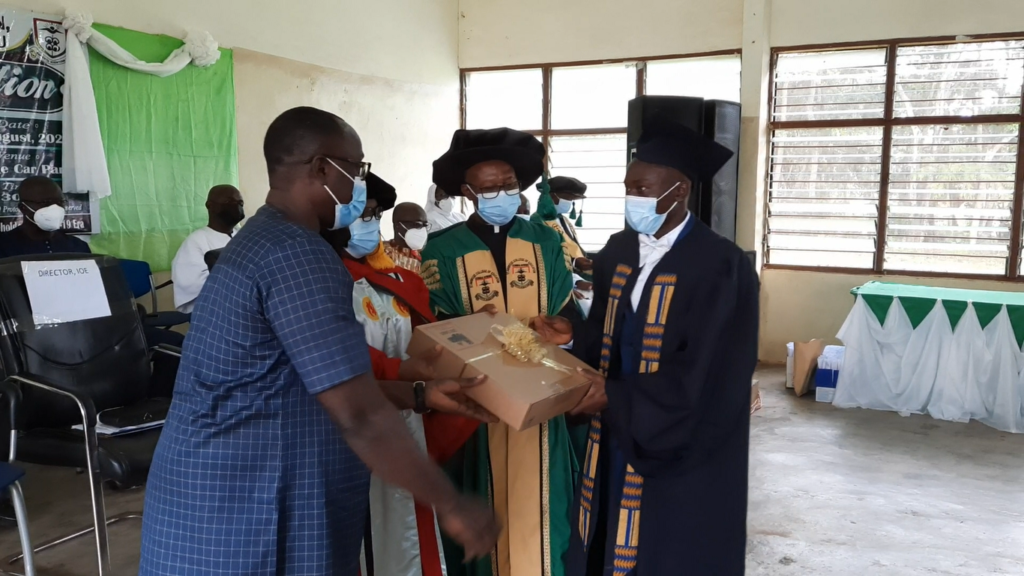
The first class graduate, Prince Fofie, expressed his profound gratitude to both teaching and non-teaching staff for their roles well played in shaping them with an assurance to contribute to the society’s well-being and commit them to the greater good of the country.
He, however, appealed to the government to honour its promise of regularly paying the allowance for the students as it remains their main source of finance in their training.
Meanwhile, St. Ambrose College of Education cultivates maize for the consumption of the Dormaa Akwamu community. Over 50 bags were cultivated last year, and a piggery will soon be added to help generate internal funds to support the development of the schools.
Latest Stories
-
Ghana needs a law to sustain constitutional reforms – CDD-Ghana
2 hours -
COVID fumigation audit: Auditor-General has a lot of questions to answer – Akwatia MP
2 hours -
Stranded Ghanaian medical graduates in Cuba appeal to Mahama for immediate return
2 hours -
GNFS contains fire outbreak at Teshie Lekma Road near Lekma Hospital
8 hours -
Samia Nkrumah rejects the narrative that Ghanaians were happy after Nkrumah’s overthrow
9 hours -
A Mother’s pain: Tribute by Ivan Baidoo’s mother
9 hours -
‘Forgive us for staying away’ — Samia Nkrumah leads family back to Nkroful, pledges to preserve Nkrumah’s legacy
9 hours -
Ernest Nuamah scores twice as Lyon beat Rennes
9 hours -
‘My dear Ivan’ – A father’s tribute to a son tragically killed
10 hours -
GNPC Explorco advances Voltaian Basin drilling preparations with 13.5km access road
10 hours -
Cabinet approves facility manager for Borteyman Sports Complex – Kofi Adams
10 hours -
Sanitation is improving; critics may be ‘living in another world’ – Salaga South MP replies Bekwai MP
11 hours -
Government must do more to tackle sanitation crisis – Bekwai MP
11 hours -
World Cleanup Day: GFF begins sanitation education in local communities
11 hours -
EU Ambassador, IGP discuss stronger cooperation on policing and security
11 hours