


Audio By Carbonatix
Two weeks after a devastating landslide in Santrokofi, a farming community in the Guan District of the Oti Region, residents are still grappling with the aftermath.
The slide, which occurred in the early hours of 10th July 2025 after torrential rains, destroyed several hectares of farmland, triggering a looming famine.
Hundreds have lost their livelihoods due to the landslide along the Tondza mountain range, which washed away food crops and endangered tree species, among others.
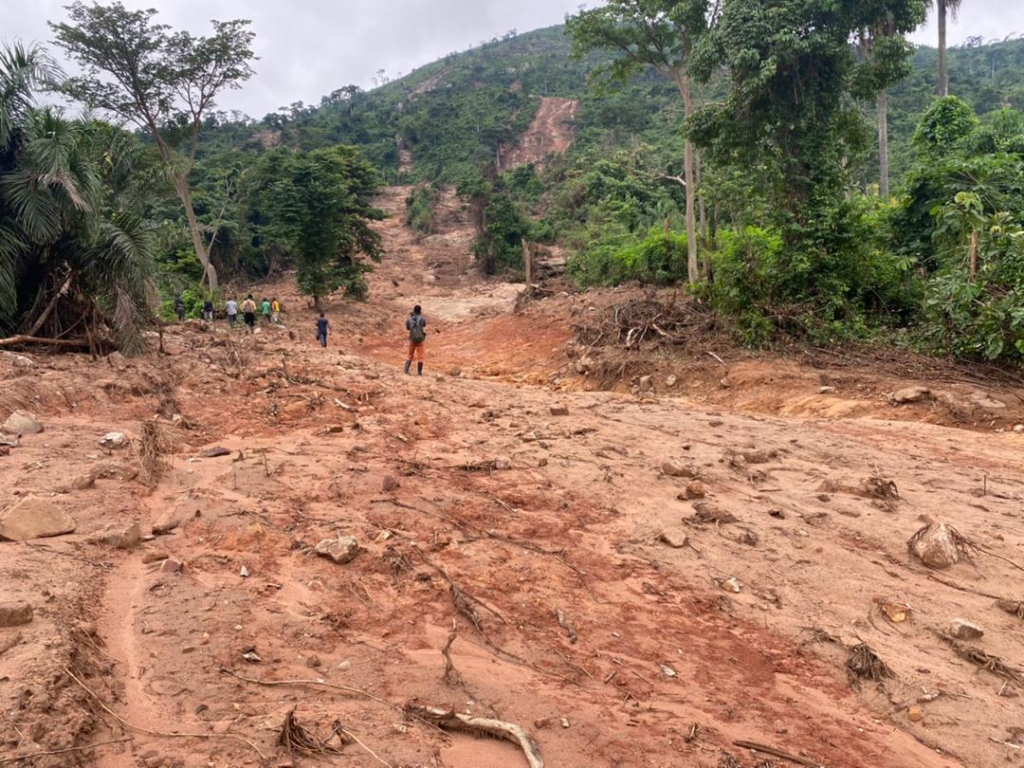
The four-hour downpour triggered one of the worst disasters recorded in the area, with massive landslides occurring in about five sections along the mountain.
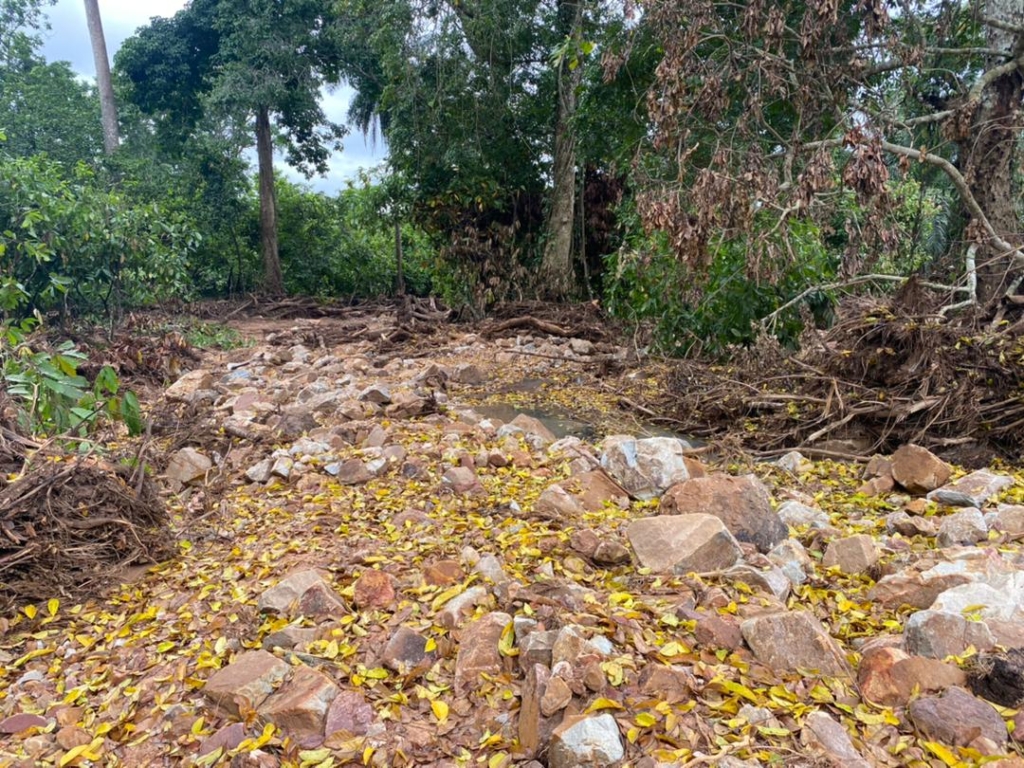
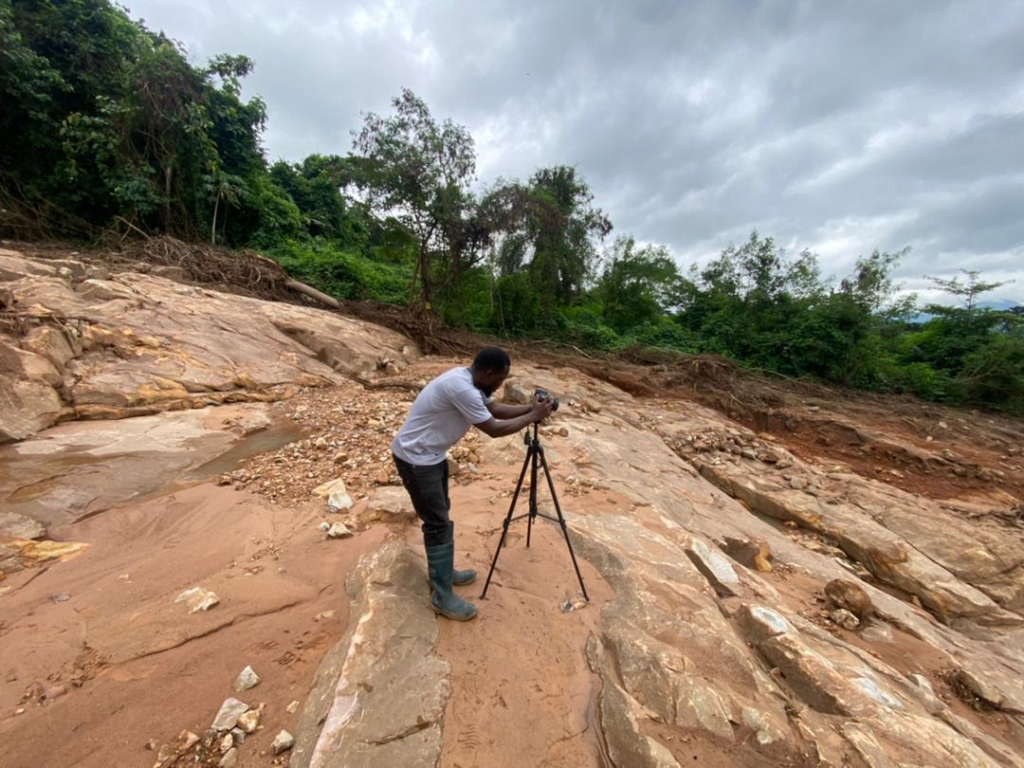
It cleared the topsoil, uprooted near-extinct tree species, and created deep gullies, depositing huge rocks in its wake.
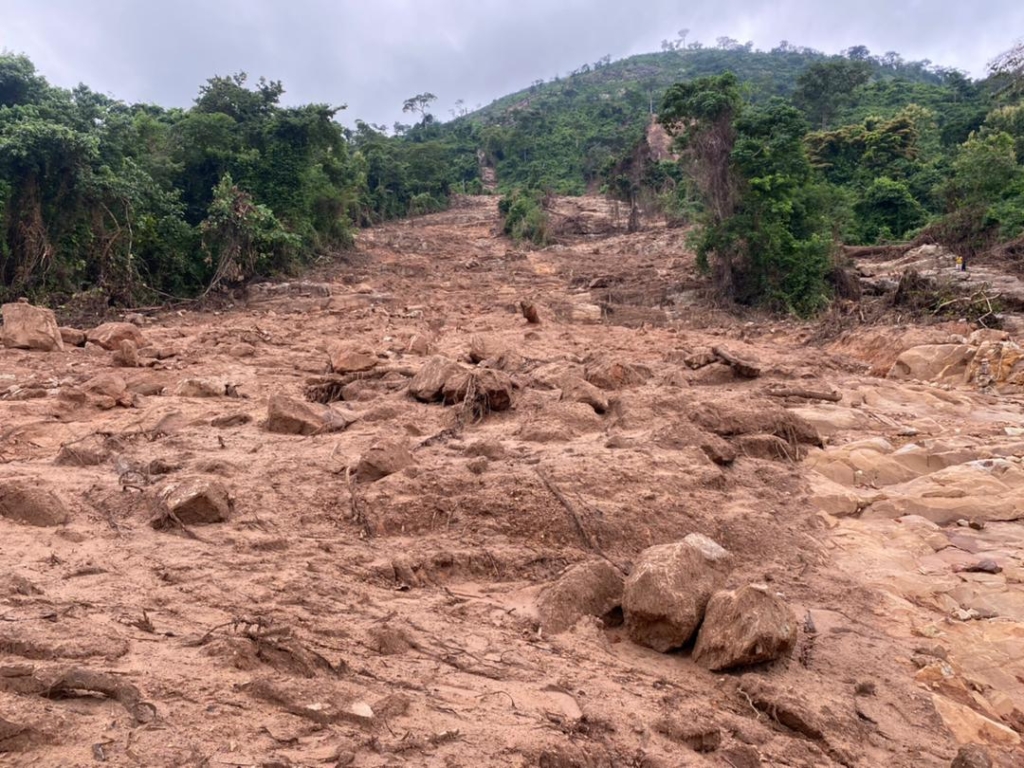
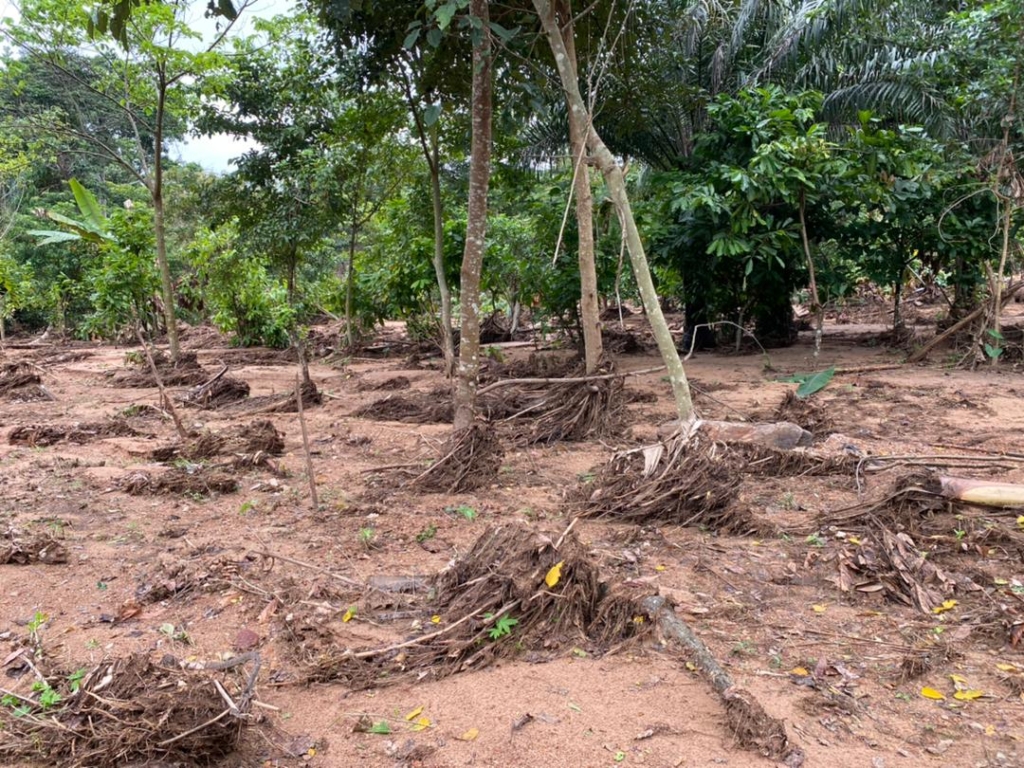
Several hectares of cocoa, maize, plantain, cassava, yam, coconut, pineapple and other crops were swept away. Some farms were completely covered with sandy soil washed down from the mountain, with deposits as high as four feet above the normal farmland level.
“The rains started in the night, but we didn’t realise anything had happened until morning when those who slept on the farms told us the road had been cut off by floods. That’s when we heard our farms had been destroyed by a landslide. It was a devastating moment for us,” Enoch recounted.
Dzidzor Amevor, one of the affected farmers with farmlands along the mountain, is yet to recover from the shock.
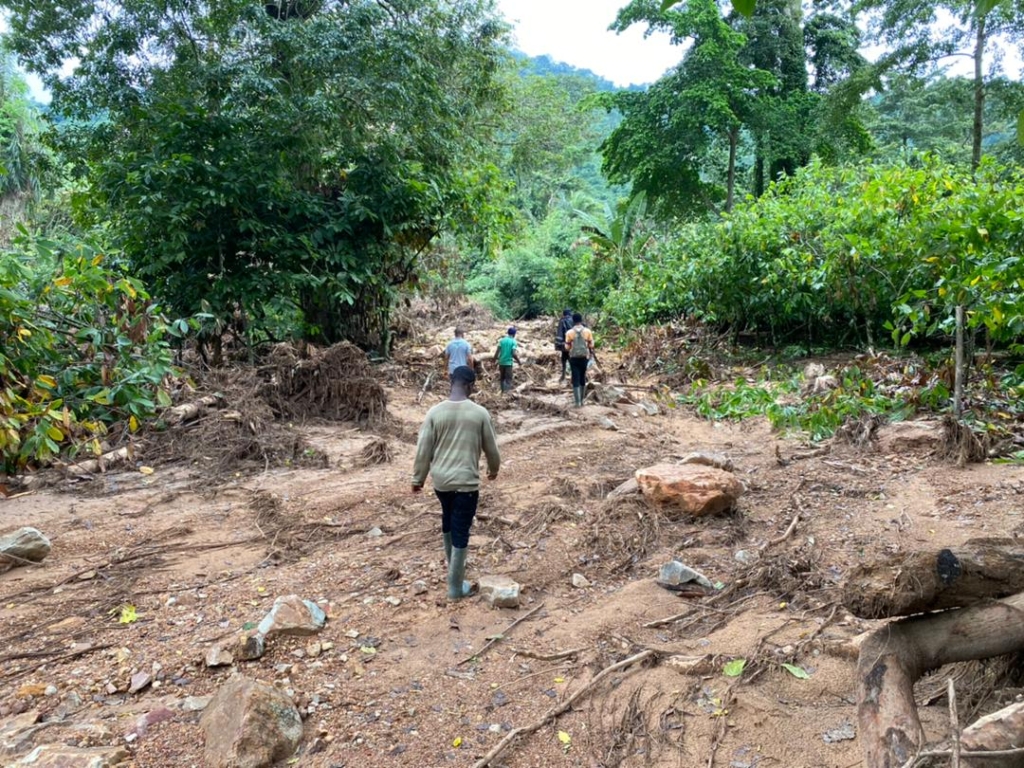
The landslide destroyed most of her cassava, pineapple and plantain farms, leaving her with only a patch measuring less than 10 square metres.
She had to return to the farm just to dig out a few cassava tubers to feed her grandchildren.
“I was at home when it happened. I came days later and saw the damage caused. I’m pleading for financial support and a piece of land to cultivate so my grandchildren can eat,” she said.
Intensive work is underway at the foot of the mountains to clear debris from affected areas.
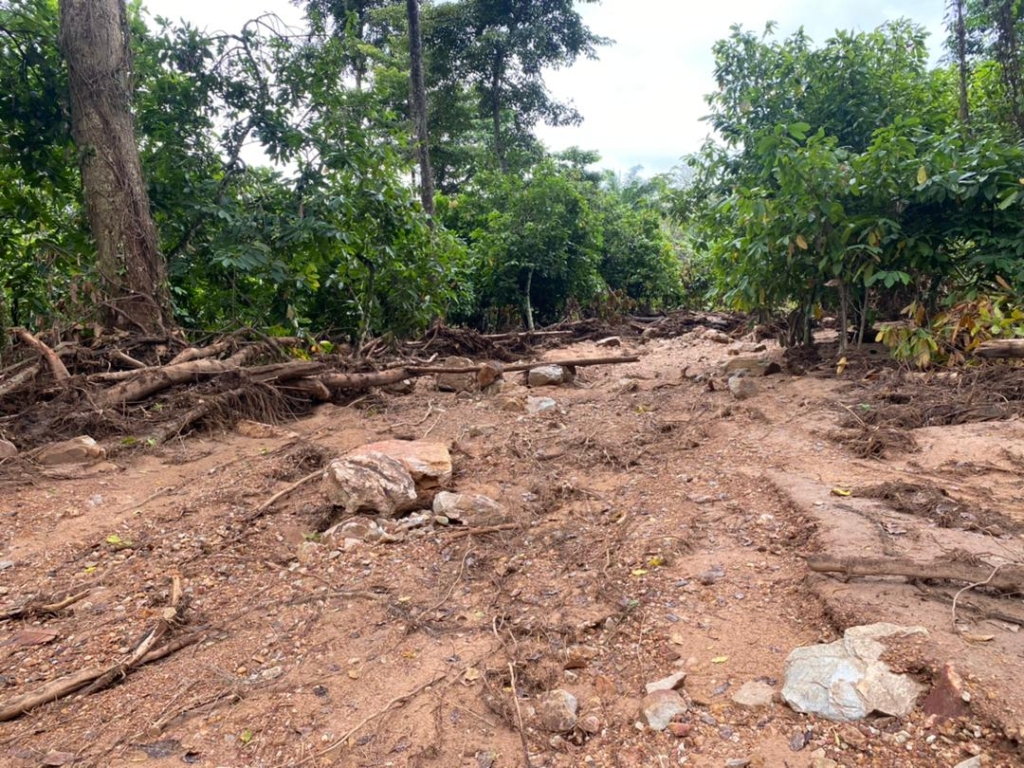
Poultry and goats were also reported to have been washed away by the landslide, which Simon described as the most terrifying incident he had ever witnessed.
His 15-year-old cocoa farm was not spared, as floodwaters and debris swept through the north-eastern part, destroying about an acre.
“Eleven years ago, there was a similar incident, but nothing was destroyed. It only flowed through a stream. This one created its own path, destroying my cocoa and maize. Gallons of palm wine were also washed away,” he said.
The impact of the landslide is enormous for the Santrokofi community. It is now recorded as the greatest crop loss in the area since the 1983 wildfire and drought that led to famine.
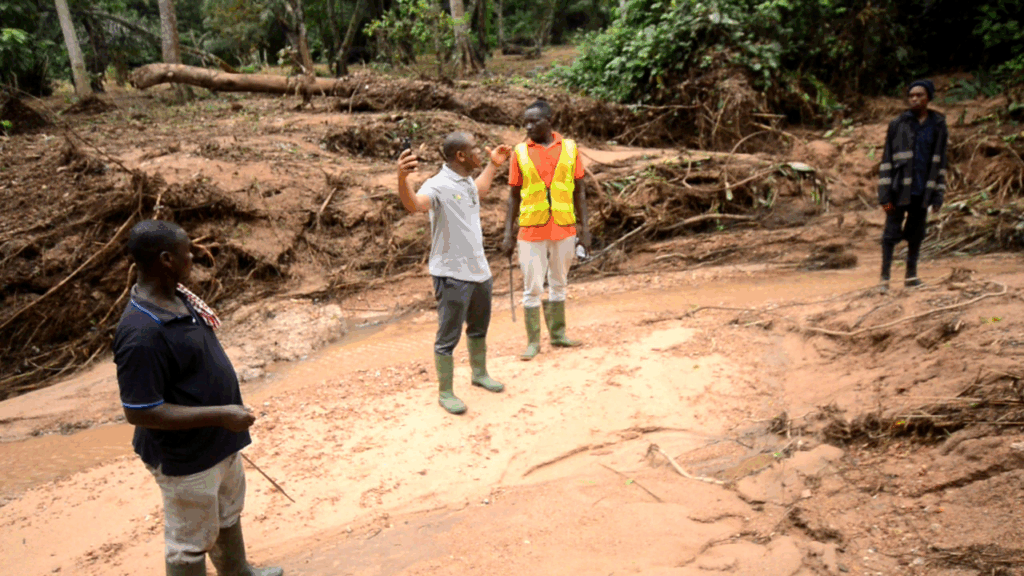
Executives of the Accelerated Rural Development Organisation (ARDO) visited the area to assess the damage. ARDO promotes sustainable environmental practices aimed at protecting natural resources, promoting biodiversity, and integrating traditional ecological knowledge to foster climate resilience.
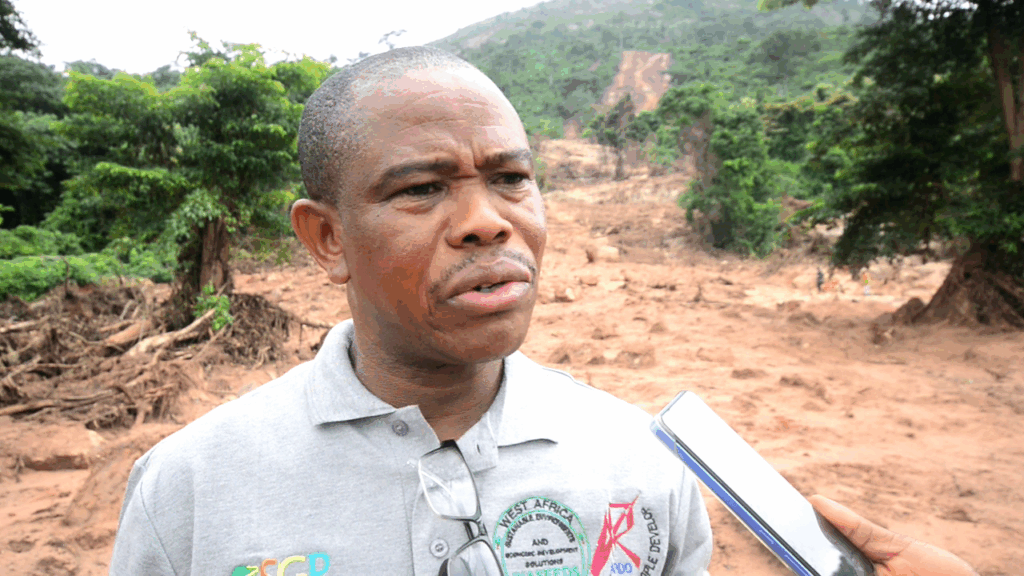
ARDO’s Executive Director, Pascal Benson Atiglah, attributed the disaster to climate change and called on government and international organisations to step up climate mitigation efforts, especially across Africa.
He warned that more disasters may occur due to continuous carbon emissions and global warming.
“Though we blame lumbering, the main culprit is carbon emissions. The big emitters are enjoying while Africa bears the brunt without any support,” he said.
He urged the Ministry of Lands and Natural Resources to resource the Forestry Commission and the Environmental Protection Agency to intensify sensitisation on environmental impact and climate change.
“For us at ARDO, we’ll always advocate for the people. Government must come to the aid of these farmers who lost their livelihoods through no fault of theirs. We also appeal to international partners to join in supporting the affected communities,” he concluded.
Latest Stories
-
Baffour Awuah has shown willingness to cooperate, qualifies for self-recognisance bail – Kofi Bentil
9 minutes -
NPP national officers’ elections 2026: Who is contesting the nine national positions?
15 minutes -
EOCO is only carrying out its mandate, not violating Baffour Awuah’s rights – Dzimegah
23 minutes -
Heavy security at Baba Yara Stadium as NPP elects national officers today
29 minutes -
Horticulturists call for dedicated authority, irrigation and tomato factory revival
48 minutes -
Nakpayili E-Block opens, admits first batch of 650 students after nearly a decade of neglect
49 minutes -
Ethel Cofie writes: You need board experience to get board experience
53 minutes -
Baffour Awuah expected in court as EOCO moves to meet bail deadline
1 hour -
Happy 76th Birthday to the Daily Graphic!
1 hour -
Weija Children’s Hospital now operational with 120-bed capacity – Health Minister
1 hour -
Health Minister orders deployment of 40 additional health workers to Weija Children’s Specialist Hospital
1 hour -
Greater Accra teacher unions back nationwide strike over three key demands
2 hours -
Bawumia promises leases and redevelopment for businesses affected by La Beach demolition
2 hours -
Bawumia condemns La Pleasure Beach demolition, questions destruction of movable assets
2 hours -
Livestream: Newsfile discusses EOCO arrest of Manhyia South MP, drug trafficking, teachers’ strike and Ghana’s sports crisis
2 hours