

Audio By Carbonatix
The Alliance to End Plastic Waste has announced a partnership with the ASASE Foundation to support women entrepreneurs working to reduce plastic litter in the community.
The initiative called 'Closing the Loop' uses a circular economy model, to enable local communities to benefit from discarded plastic waste by collecting, reprocessing, and reselling it.
Launched by ASASE Foundation in 2018, the 'Closing the Loop' initiative seeks to provide seed money to equip plastic waste reprocessing plants as well as provide technical and business management training for women entrepreneurs to run the recycling plant for profit.
The project has already created eight jobs within the community as well as diverted 35 (metric) tons of plastic from wastes in the first twelve months.
By partnering with the Alliance, the capacity of the processing plant is expected to increase to divert 2,000 (metric) tons of plastic waste per year and create even more jobs.
“A key pillar of ending plastic waste in the environment is the sustainable impact it will bring to the well-being of local communities.
This is why our partnership with ASASE is especially meaningful because 'Closing the Loop' is the right step towards a circular economy model. It directly benefits those living in areas which don’t have access to plastic waste collection and sorting systems.
"This initiative is a simple but scalable action that benefits the environment but supports the inspiring women of Ghana who are building their communities on the path towards ending plastic waste in the environment, ” President and CEO of Alliance to End Plastic Waste, Jacob Duer said.
Adding to this view, Founder and Managing Director of ASASE Foundation, Dana Mosora said “what we value most in our partnership with the Alliance to End Plastic Waste is the access to the expertise in waste management which we can leverage now in our project, effectively multiplying the impact of the funding provided by the Alliance to our project.”
The partnership has also opened the possibility to bring in expertise from an academic partner, the Swiss Federal Institute of Technology.
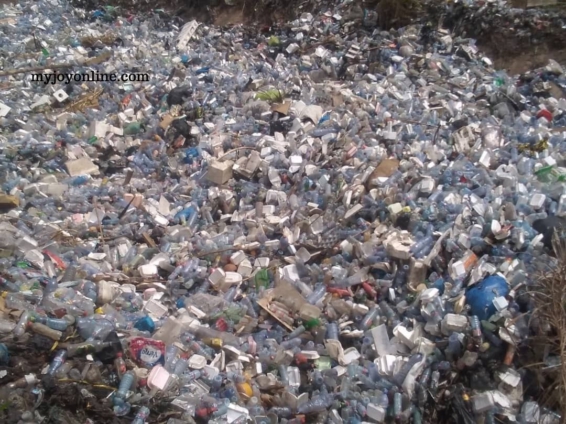
The newly established recycling plant processes a range of plastic waste from water sachets to shampoo and detergent bottles and large cooking oil containers; converting them into regrinds.
The regrinds are then sold to recyclers to make items such as pavement blocks, sheets for construction, basins and liners, most of which goes back into the community.
Latest Stories
-
Government’s dismissal of my cocaine intelligence emboldens traffickers – Ntim Fordjour
5 minutes -
Video: Immunity should be exercised without creating classism – Inusah Fuseini on cocaine bust
19 minutes -
Ghana Air Force passes out 293 recruits after six months of intensive training
27 minutes -
EOCO vrs Baffour Awuah: EOCO should have secured warrant before arrest attempt at court – Inusah Fuseini
30 minutes -
Triple fibre cuts disrupt telecom services across Northern, Oti regions – Sam George
34 minutes -
Politicisation could undermine parliamentary probe into cocaine seizures – Dr Osae-Kwapong
40 minutes -
EOCO chases MP: Can Section 41 cure lacuna in EOCO Act? – Inusah Fuseini asks
43 minutes -
GNFS, GWL inspect fire hydrants in Ministries enclave; 23 found faulty
48 minutes -
Gov’t directs release of 50,000 bags of grain to ECOWAS
50 minutes -
Ghana, Germany deepen cooperation on railways, labour mobility
55 minutes -
Huge crowds greet Pope in Paris for open-air Mass
1 hour -
‘I never said I’ll declare a state of emergency’ – President Mahama on galamsey
2 hours -
Bobby Banson condemns EOCO’s attempted arrest of Nana Agyei Baffour Awuah
2 hours -
When Kumasi begins to look like somebody is in charge
2 hours -
Parliamentary probe into cocaine seizure would be a waste of time – Inusah Fuseini
2 hours