

Audio By Carbonatix
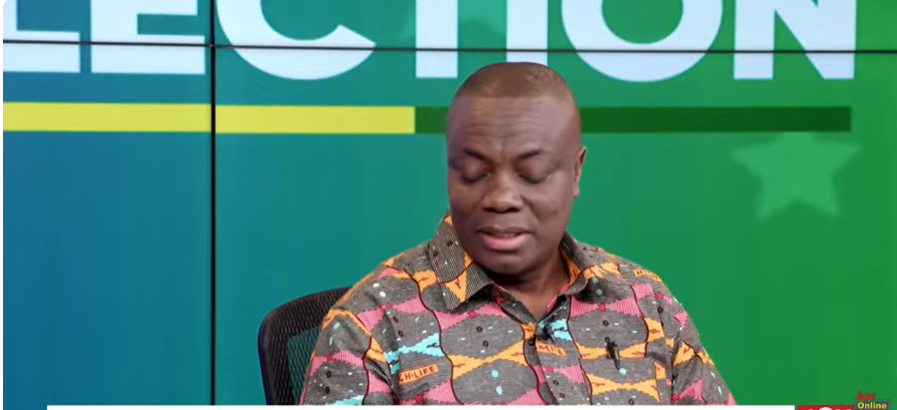
Executive Director of Global InfoAnalytics, Mussa Dankwah, says the low voter turnout recorded in the Ayawaso East by-election should not come as a surprise, stressing that by-elections traditionally attract far fewer voters than general elections.
According to him, the reduced participation is consistent with historical patterns and is unlikely to significantly alter the overall outcome of the race.
Speaking on JoyNews on Tuesday, March 3, Mr Dankwah explained that turnout levels in by-elections rarely match those of national polls.
“Low turnout for by-elections is not unusual. You will never get the same turnout in a general election that you get in a by-election,” he said.
He noted that in many instances, turnout in by-elections ranges between 35% and 50%, adding that even a 50% participation rate would be considered high.
“If you look at the last election, what was the turnout nationally? The by-election this time will be drastically lower than that,” he stated.
The Ayawaso East by-election has drawn national attention, with polls closing and sorting and counting underway. The contest is seen as a key political test in a constituency widely regarded as a stronghold of the opposition National Democratic Congress (NDC).
Mr Dankwah also pointed to the timing of the election, noting that the ongoing Ramadan fast may have contributed to the low morning turnout.
“The month of Ramadan is also playing an important role. Mostly in the morning, people are asleep, frankly. They are relaxing and they get out in the afternoon. So that could also affect turnout,” he explained.
Despite the lower voter participation, he said his outfit does not expect a dramatic shift in the final outcome.
“In terms of the impact of turnout overall numbers, I didn’t see it changing the outcome as to who wins,” he said, though he suggested there could be slight variations in vote margins among candidates.
Global InfoAnalytics’ data, based on a 500-sample survey in the constituency, indicates a strong partisan leaning toward the NDC.
“It is heavily partisan. The sample is about 75% NDC, and that is not different from what we saw in November 2023. When you have a heavy partisan constituency, they tend to vote the party way,” he noted.
He added that unless there is a major internal division or significant political upset, it is difficult for another candidate to swing the seat away from the NDC.
“The kind of numbers we see in Ayawaso East is too huge to swing the seat to another candidate besides the NDC,” he said.
Addressing concerns about the survey’s sample size, Mr Dankwah explained that the 500 respondents were scientifically selected to achieve a 95% confidence level with a margin of error of plus or minus 3%.
“The sample size is determined by the confidence level and the margin of error you want to attain. We can’t go and sample 5,000 just because there are 50,000 voters,” he clarified.
With counting ongoing, observers are watching closely to see whether the final results will align with the projections and whether the winning margin will meet expectations.
Latest Stories
-
Philanthropist Alhaji FuZak donates Da’wah bus to Ambariya Sunni community
1 minute -
GUTA calls for suspension of Publican AI system over trade disruptions, demands temporary halt in import activities
4 minutes -
TTAG raises alarm over proposed recruitment of 7,000 teachers, demands national posting roadmap
37 minutes -
Civilians feared killed after reports of air strike on Nigerian market
47 minutes -
Bishop Simon Kofi Appiah installed as new Jasikan Diocese Bishop
48 minutes -
Trump’s Strait of Hormuz blockade threat raises risks and leaves predicaments unchanged
51 minutes -
US Court backs extradiction of former MASLOC CEO Sedina Tamakloe-Attionu’s to Ghana
1 hour -
Seven arrested as NAIMOS dismantles illegal mining camp, seizes firearms at Boin River
1 hour -
Fire erupts at Madina Ritz Junction, destroys multiple wooden structures and containers
1 hour -
Daniel-Kofi Kyereh returns from long-term injury, registers assist for Freiburg U23
2 hours -
Knifeman calling himself ‘Lucifer’ slashes three at NYC’s Grand Central
2 hours -
Brands are built from within to without
2 hours -
Matriculants urged to pursue excellence as gov’t reaffirms support for Maritime education
2 hours -
See the areas that will be affected by ECG’s planned maintenance on Monday, April 13, 2026
2 hours -
GPL 2025/26: Salim Adams double fires Medeama back to summit after Kotoko rout
2 hours