

Audio By Carbonatix
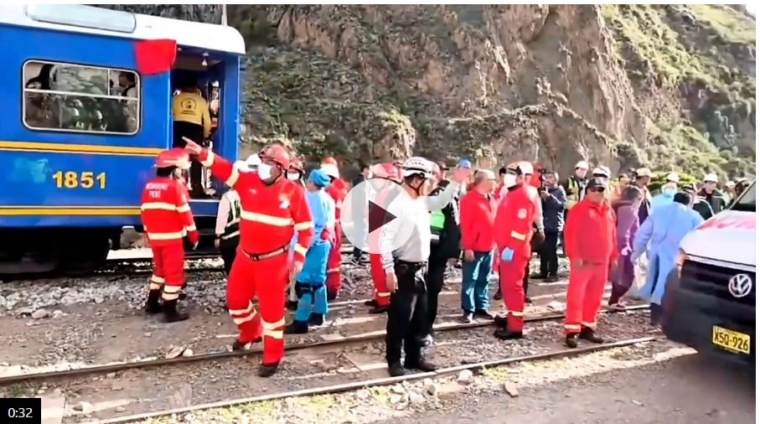
A train driver has died and at least 40 people have been injured in a head-on rail collision near Peru's most popular tourist attraction, Machu Picchu.
Two trains collided on the single track leading to the ancient Inca town on Tuesday, according to a statement from the local government.
It said that 20 ambulances had attended the scene and that injured people had been transferred to medical facilities in the nearby city of Cusco.
The US embassy in Peru said that US citizens were injured in the crash, while the UK Foreign Office said it was "supporting a number of British nationals involved".

Local media outlet Peru21 reports that "hundreds" of tourists remain at the scene awaiting evacuation, which has been "hampered" by difficult terrain around the crash site.
At least 20 of the injured are in a serious condition, a health official told the Reuters news agency.
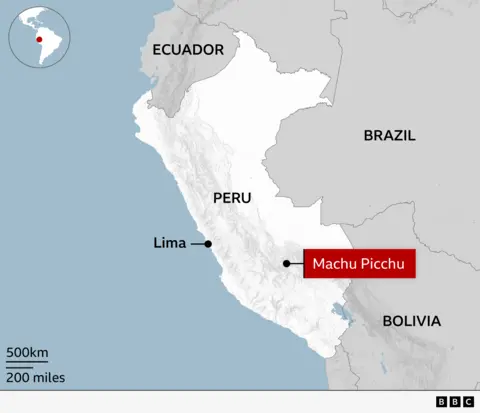
The collision occurred on the track linking Ollantaytambo Station and Aguas Calientes, the closest town to Machu Picchu. The journey between the two stations usually takes around 90 minutes.
The two trains involved in the accident were operated by PeruRail and Inca Rail respectively.
"We deeply regret what has happened," PeruRail said in a statement, adding that its staff had "immediately" provided first aid to the train driver, the train conductor and the passengers involved in the incident.
The cause of the accident has not yet been made clear.
The crash comes amid an ongoing dispute between providers of transport to the UNESCO World Heritage Site, with local communities unhappy with what they say is an insufficiently open bidding process.
The trains and buses that take tourists to the ancient town have steep ticket prices and can be highly lucrative due to their limited accessibility.
Built in the Peruvian Andes in the 15th Century, the Incan city of Machu Picchu is one of the Seven Modern Wonders of the World.
Visitors can take a series of trains and buses to reach the site, or hike along the Inca trail with a registered tour operator.
In 2011, officials implemented a daily cap on visitors to protect and preserve the site, but concerns remain about overtourism.
Latest Stories
-
TTAG raises alarm over proposed recruitment of 7,000 teachers, demands national posting roadmap
30 minutes -
Civilians feared killed after reports of air strike on Nigerian market
40 minutes -
Bishop Simon Kofi Appiah installed as new Jasikan Diocese Bishop
41 minutes -
Trump’s Strait of Hormuz blockade threat raises risks and leaves predicaments unchanged
43 minutes -
US Court backs extradiction of former MASLOC CEO Sedina Tamakloe-Attionu’s to Ghana
1 hour -
Seven arrested as NAIMOS dismantles illegal mining camp, seizes firearms at Boin River
1 hour -
Fire erupts at Madina Ritz Junction, destroys multiple wooden structures and containers
1 hour -
Daniel-Kofi Kyereh returns from long-term injury, registers assist for Freiburg U23
2 hours -
Knifeman calling himself ‘Lucifer’ slashes three at NYC’s Grand Central
2 hours -
Brands are built from within to without
2 hours -
Matriculants urged to pursue excellence as gov’t reaffirms support for Maritime education
2 hours -
See the areas that will be affected by ECG’s planned maintenance on Monday, April 13, 2026
2 hours -
GPL 2025/26: Salim Adams double fires Medeama back to summit after Kotoko rout
2 hours -
Two robbery suspects convicted following violent gold dealer attack in Obuasi
2 hours -
Supreme Court @150: Fanfare meets reflection as nationwide activities roll out
2 hours