

Audio By Carbonatix
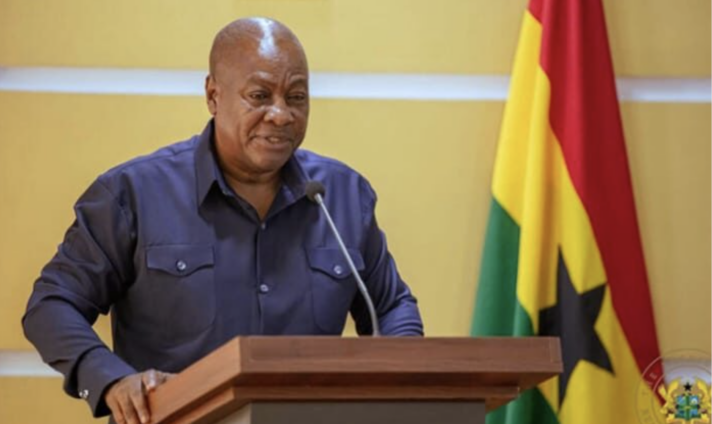
The Chief Executive Officer of the Centre for Citizenship, Constitutional and Electoral Systems (CenCES), James Kwabena Bomfeh, has said he is not surprised by reports of declining approval ratings for President John Dramani Mahama, attributing the trend to growing public frustration over economic conditions and unmet expectations following the 2024 general elections.
His comments come in response to a recent Institute of Economic Affairs (IEA) survey, which reportedly shows a dip in public approval of the President’s performance.
Although Bomfeh said he had not reviewed the full study, he noted that the outcome aligns with prevailing public sentiment.
“I would not be surprised. A lot has taken place within the period, and it would be surprising if the President’s approval rating went up,” he said.
He argued that while statistical indicators of the economy may show improvement in some areas, they do not always reflect the lived experiences of ordinary citizens.
“You have the cedi doing very well against the major currencies, particularly the dollar, and yet prices of items on the market have not come down in response. What is happening? Why is there that dichotomy?” he questioned.
According to him, this disconnect between macroeconomic performance and household realities is a key factor shaping public perception of government performance. He added that rising utility costs and stagnant wages have further compounded public dissatisfaction.
Mr Bomfeh stressed that citizens are more influenced by the cost of living than technical economic indicators such as exchange rate stability or inflation trends.
He further pointed to expectations set during the 2024 election campaign, arguing that unmet promises have also contributed to declining public confidence in the administration.
Despite the concerns, Mr Bomfeh said the government still has an opportunity to reset its image and improve performance through a cabinet reshuffle.
He suggested that repositioning key officials could inject renewed energy into governance and improve responsiveness to public concerns.
“At the end of the day, it’s about who you put in fixed positions. People get too comfortable in office, and that affects performance,” he noted.
He urged the Presidency to take lessons from the IEA findings and broader public feedback, warning that failure to respond decisively could deepen dissatisfaction in the months ahead.
Latest Stories
-
327 entries submitted for 30th GJA Media Awards
6 minutes -
Mahama proposes rent-to-own scheme for unfinished houses
8 minutes -
Mahama wants banks to introduce affordable housing loans within six months
9 minutes -
Photos from National Conference on Housing Finance
13 minutes -
Italy, Ghana unite 40 artists for ‘Beyond Creation’ exhibition at Accra Art Centre
31 minutes -
Premature to call for Sports Minister’s removal while CID probe is ongoing – Ernest Norgbey
51 minutes -
NPP mourns Samuel Arthur Odoi-Sykes
1 hour -
Stay out of World Cup visa probe to avoid interfering with CID investigations – Ernest Norgbey to politicians
1 hour -
Bono East Minister inspects ‘Big Push’ roads; contractor on Tankor-Fiema-Busunya road ahead of schedule
1 hour -
Scrutiny is not disloyalty – Chief of Staff defends serious journalism at 30th GJA Awards launch
1 hour -
Abuse case: Nana Akua’s husband Harold unable to appear in court after hospital admission – Police
2 hours -
Mahmud Kabore picks NDC Ashanti Regional Communication Officer nomination forms
2 hours -
KNUST Career Services pioneer Selina Doe Angmor named among 2026 40 Under 40 honourees
2 hours -
Nana Akua domestic abuse case: Police to arraign husband after hospital discharge
2 hours -
NHIS coverage rises to 70% after government uncaps levy – Health Minister
2 hours