

Audio By Carbonatix
Health experts are urging that the country’s Covid-19 vaccination drive is sustained as any delays in the process would derail gains made in reaching herd immunity.
This comes as they say 90% of the country’s population is still at risk of contracting a third wave of the virus if they are not vaccinated in the next 2 to 3 weeks.
As at April 15, a little over 750,000 Ghanaians had received the covid-19 vaccines.
This number, according to health experts, is of concern as it represents only about 5% of the population.
Speaking on the AM Show, a member of the covid-19 team at the University of Ghana medical centre Dr Chris Owoo, said the vaccination drive must be speeded.
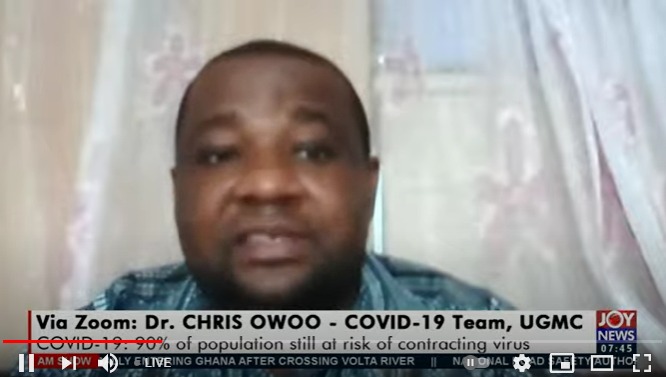
"We are not where we should actually be and that means we have that period of the next 1-2 months to have a significant critical population vaccinated like the UK and Israel had that is differentiating them from what is happening in Europe at the moment,’’ he told JoyNews.
With the country currently facing a shortage of vaccines, Dr Owoo urged stakeholders to look elsewhere so that the vaccination drive can be sustained.
"Actually most of the places that we can procure even if we were buying are in trouble at the moment, a significant one being in India. So I would recommend that those who are responsible for this look at different sources of vaccine with respect to targeting what we have already targeted for our vaccination," he said.
Mr Owoo was concerned that any delay would negatively affect the country so far in its quest to handle the spread of the virus.
‘We would need to get more vaccines, much more rapidly. If we don’t have than 50 to 70 per cent of our population getting the vaccine to arm, we are at risk but pray we don’t get there," he added.
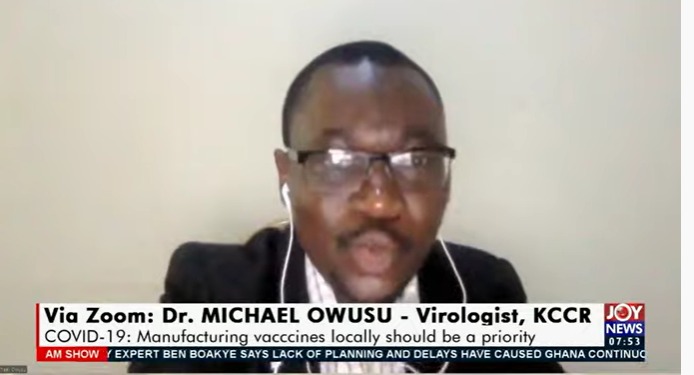
Also on the show was Dr Micheal Owusu of the Kumasi Center for Collaborative Research (KCCR) who revealed, 700 variants of the covid-19 virus have been detected worldwide but only 5 of them are of concern.
"What is most important is whether these variants are of concern. In Ghana, we have the B117 in close to about 60 percent of those who have signs and symptoms. About 20 percent of them are from the South Africa strain. And then there are other few ones which may not cause much harm’’
Dr Owusu, however, warned, if the current situation is not well managed, the dormant variants would become prominent and difficult to deal with.
"It looks like what we have are things that we can deal with. What it means is that, if we do not manage this well and we allow them to have in grounds then, of course, they may contribute to becoming more of the dominant ones."
Latest Stories
-
Mobile Money Fintech LTD, UMB train hairdressers and beauticians
2 hours -
Asylum votes show people want help, says Kemi Badenoch
3 hours -
Badenoch welcomes expanded grooming gangs inquiry
3 hours -
GACL MD sues Samuel Buabeng over alleged Facebook defamation
3 hours -
Christa Pike in critical condition after surviving two lethal injections, lawyer says
3 hours -
Kemi Badenoch backs face covering ban at protest
3 hours -
Man City not ‘above the rules’, says No 10 after backlash to Burnham remarks
3 hours -
Real Madrid submit ‘substantial’ dossier in Barca payments case
3 hours -
Messi completes purchase of second Spanish club
4 hours -
Government must engage horticulturists on tomato crisis – GhIH
4 hours -
King Promise’s ‘Can’t Tame Us’ becomes official Chelsea anthem
4 hours -
Afenyo-Markin demands Baffour Awuah’s release from EOCO’s custody, end to alleged political intimidation
4 hours -
Rapper Rick Ross arrested on domestic violence charges
4 hours -
Minority demands security review of Ghana-Colombia visa waiver and port deals
4 hours -
Pursue drug kingpins, not persecute political opponents – Afenyo-Markin tells EOCO
4 hours