

Audio By Carbonatix
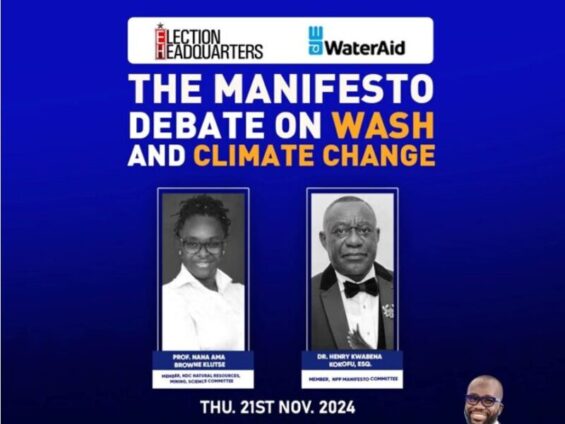
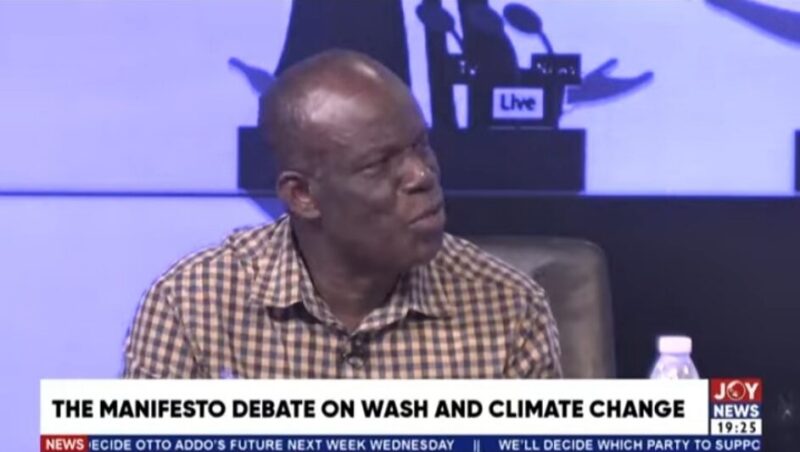
In a spirited debate on Thursday evening on Joy News, two prominent members from both the New Patriotic Party (NPP) and the National Democratic Congress (NDC), presented sharply contrasting visions for tackling water, hygiene, and sanitation (WASH) and climate change issues as part of their party’s manifesto in the upcoming elections.
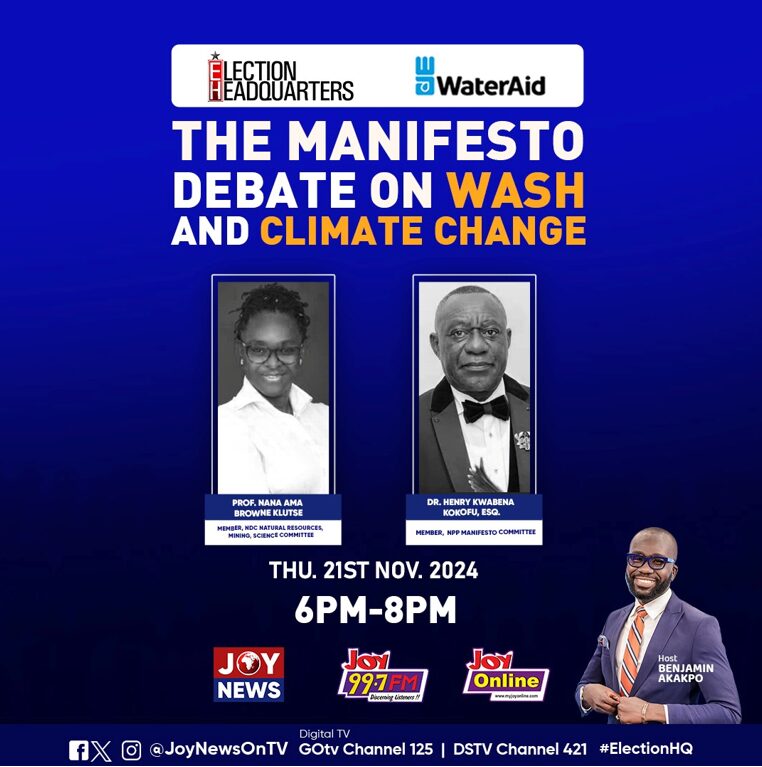
The debate, sponsored by WaterAid, was held in the Joy Prime studios and streamed live online, highlighting the urgency of addressing interconnected challenges that have been exacerbated by water pollution, urbanization and the intensifying impacts of climate change in Ghana.
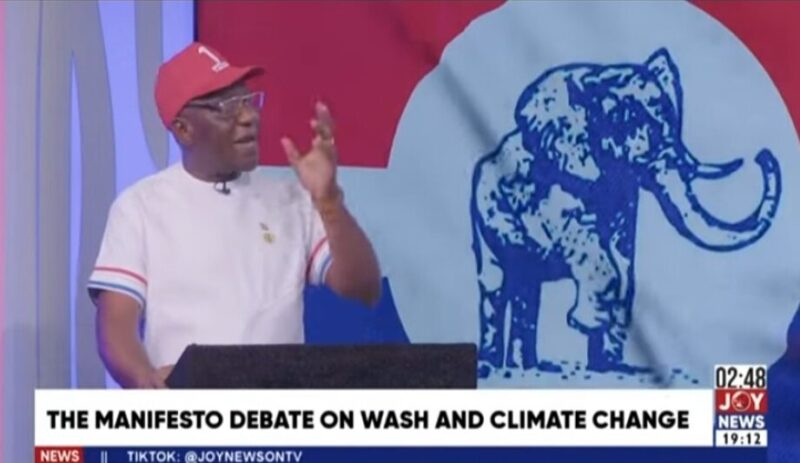
Dr. Henry Kwabena Kokofu Esq., Member of the NPP Manifesto Committee and Former Chief Executive of the Environmental Protection Agency, argued that his party plans to undertake a rehabilitation, and restoration of water bodies through distillation and planting of trees along water course to curb water resources challenges and protect water resources in the next administration of government.
'This would be done in a form of business running where the private sector companies would be encouraged to assist in restoring the degraded water bodies as well as encouraging tree planting along water bodies to get water sources back to life,” he explained.
This is to be in addition to the solutions to the policies that have already been developed in the NPP manifesto such as the Ghana Climate Change Policy Master Plan.
He also proposed an initiative to vigorously protect both surface and underground water sources by enforcing provisions of water use regulations. This is to strengthen the Water Buffer Zones Policy for implementation to secure trans-border water resources notably the Volta River and effectively manage all major water basins in the country.
In contrast, Prof. Nana Browne Klutse, NDC Member of the Natural Resources, Mining Science Committee advocated the party’s commitment to WASH and their aim to expand urban and rural water supply and distribution, improve drainage and irrigation systems and the health facility infrastructure as part of their plans in their administration.
She stated “We are mindful of the UN Sustainable Development Goal (SDG) 6 and water is a basic need for every citizen and in achieving the SDG 6, the NDC will provide portable water to all communities, expand and extend water distribution network. The NDC did it in the past under John Mahama’s administration such as the Wa Water Supply project.”
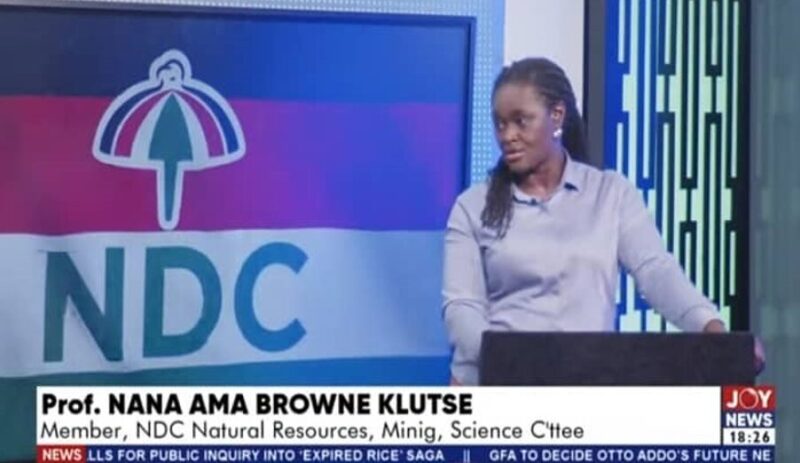
“One key point under this initiative is to equip the 48 engineer’s regiment of the Ghana army to provide potable water to rural communities. This would be done by constructing water storage facilities, especially for rainwater storage for distribution,” she added.
In terms of the implementation of the climate change agenda, Prof. Nana Browne Klutse highlighted the decision made by John Dramani Mahama to scrap the Ministry of Sanitation and merge it with the Ministry of Environment Science and Technology and Innovation.
“Sanitation doesn’t stand on its own therefore we’re going to work with the Environment, Science, Innovation, and Technology Ministry. We need science, we also need technology, to implement the WASH agenda to strengthen it."
Dr. Henry Kwabena Kokofu however urged a different implementation strategy of promulgating and establishing a national sanitation authority that will align with all sectors and also fortify the existing community water sanitation agency in providing water for rural communities.
The debate sparked mixed reactions from the panelists and audiences. Engineer Oduro Donkor of ProNet Accra who served as a co-judge to the debate, praised both parties WASH policies but questioned them on their commitment to ensure that the WASH initiatives are fulfilled in partnership with NGOs who are interested in such initiatives.
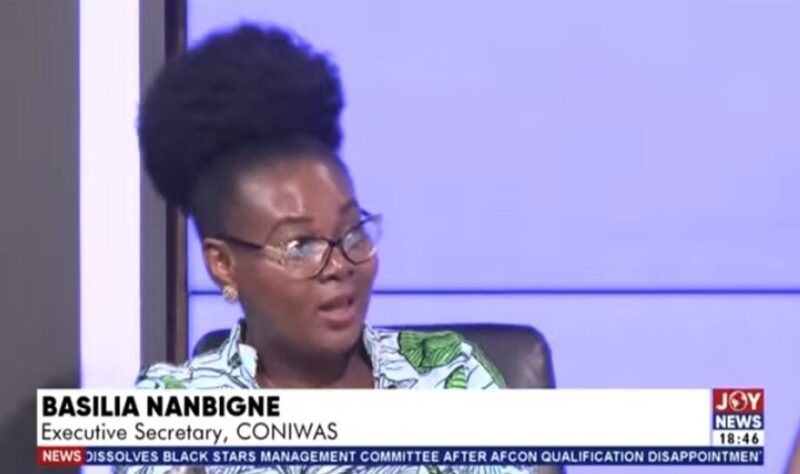
Meanwhile, Mrs. Basilia Nanbigne, Executive Secretary of the Coalition Of NGO’s in Water and Sanitation (CONIWAS) also admired the currency of both parties’ manifesto on WASH and later expressed her concern over the funding of NGOs to assist in matters concerning the WASH initiative.
With the general elections drawing closer, the debate underscored the increasing importance of water, hygiene, sanitation and climate change in shaping the nation’s future and the challenges of crafting policies that are both visionary and practical.
Latest Stories
-
Two-week strike will not derail academic calendar – GNAT President
6 minutes -
Headmaster detained after BBC investigation into alleged sexual abuse of students
16 minutes -
GNAT pushes for clear implementation procedures of teachers’ conditions of service
35 minutes -
Recurrent strikes threaten quality of education and academic calendars – Prof Bokpin
39 minutes -
‘Cockroach’ group leaders among hundreds detained in Delhi protest
42 minutes -
Don’t let speed of information become your judgement – CJ tells new lawyers
1 hour -
World Cup visa scandal: People have leveraged public office to facilitate fraud – Senyo Hosi
1 hour -
Glut! Farmers count losses as prices crash, customers happy
2 hours -
GSA postpones auction of unserviceable vehicles
2 hours -
Man charged with attempted murder after stabbing
2 hours -
World Cup visa scandal: Senyo Hosi says issue goes beyond calls for Sports Minister’s resignation
2 hours -
Yaw Ampofo Ankrah hasn’t taken or received any money to facilitate visas – Lawyer insists
2 hours -
World Cup visa scandal: Senyo Hosi urges focus on constitutional accountability
2 hours -
La Beach demolition: Senyo Hosi condemns lack of consultation
3 hours -
Russian glide bomb attack on Zaporizhzhia kills at least 15 people
3 hours