

Audio By Carbonatix
"When I dey hungry my mother go run up and down, she dey find me something when I go chop oh! Sweet Mother a-aah / Sweet Mother oh-e-oh!”
The above is an excerpt of the 1976 all-time hit “Sweet Mother” dedicated to all mothers and their love and care for their children.
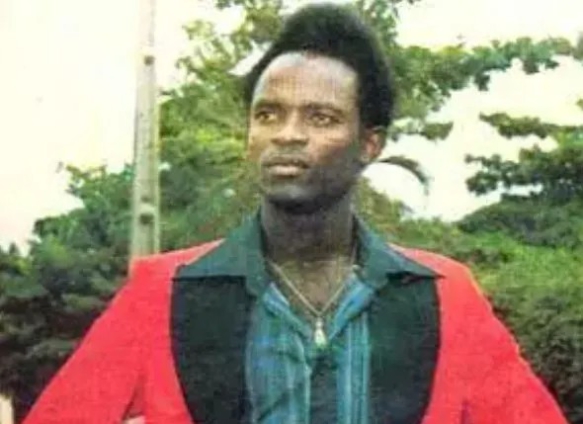
Prince Nico Mbarga wrote this amazing piece inspired by the love and sacrifices of his mother, who toiled day and night to take care of him and his siblings after their father died.
Before “Sweet Mother” was finally released in December 1976 by Rogers All-Stars, a recording company in Nigeria’s Onitsha, the song was shunned by many recording companies in Nigeria.
Some producers even thought it was childish. Today, the song, with its West African highlife beat, pidgin lyrics, and Congolese style guitar, is one of Africa’s greatest and most popular songs, sang at birthday parties, weddings, funerals, and even Mother’s Day church services, to celebrate motherhood. The song is also one of the world’s biggest-selling singles in music history.

The son of a Cameroonian father and a Nigerian mother, Mbarga was born in Abakaliki, the Ebonyi State capital, Nigeria, on April 8, 1950. He grew up in Ikom, Nigeria, listening to highlife music on his father’s radio.
His father, who sawed timber, made sure Mbarga was educated. At the same time, he taught him how to play the xylophone, having also learned to play the instrument from his family growing up.
Mbarga later built his own xylophone from dried-out plantain skins and scooped bar. And not too long after his father died, leaving him, his mom and his siblings behind, Mbarga decided to pursue music.
During the Biafran War in 1967, he left Ikom for Mamfe, Cameroon, where he worked as a “band boy” for a Congolese group, helping to carry instruments for concerts at hotels in surrounding towns.
In the process, Mbarga fell in love with Congolese rumba and learned to play the conga, the drums, the bass and the “finger-picking style” of Congolese electric guitar, according to Narratively.com.
He got married and after the Biafran War, he came back to Nigeria in 1970 with his wife Lucy and they settled in the trading town of Onitsha.
“We loved the place,” Lucy recalled. “From there, God blessed him.”
Mbarga formed his group, Rocafil Jazz, in Onitsha and they signed a contract to play every Sunday at Onitsha’s Plaza Hotel. There, he met other music stars, and by 1973, he had recorded his first hit “I No Go Marry My Papa,” after being picked up by EMI. The song didn’t do badly in sales.
Mbarga went on to produce other songs while studying law but EMI soon parted ways with him after he failed to produce other commercial hits.
Then came “Sweet Mother” produced in 1976 by Onitsha-based Rogers All Stars. Mbarga and his band started touring Nigeria and everywhere they went, people demanded “Sweet Mother”.
“It was like a national anthem,” band member Jean Duclair recounted. Mbarga and the band also toured across West Africa — Cameroon, Ghana, Togo, Cote D’Ivoire, Benin, Burkina Faso — and then to Kenya, with people gathered in their numbers at concerts screaming Mbarga’s name. They also played at scores of venues in London.
But by 1983, Mbarga’s band had fallen apart owing to a misunderstanding about money and contracts. Even though the band reformed, it was never like before. Meanwhile, Mbarga moved back to Ikom, where he built the Sweet Mother Hotel which he managed. He also performed there and got married to his second wife, Esame.
Mbarga was hoping to come back strongly into the music scene with his band when he passed away in a tragic motorcycle accident on June 23, 1997, in Calabar. He left behind one of Africa’s greatest songs “Sweet Mother”, which helped lead his band to Africa’s Music Hall of Fame.
Years after his death, he is still highly revered in Nigeria and beyond. In December 2004, listeners of the BBC voted “Sweet Mother” as Africa’s Favorite Song.
“It’s not just about the lyrics,” Joseph Warungu of BBC said of the song at the time. “There is something about the singing guitar that gets you. Again, it is the guitar in this song that drives you mad.”
Latest Stories
-
Fire destroys 3-bedroom house at Bogyawe
7 minutes -
Why the Supreme Court is a “policy court” – Justice Richard Adjei-Frimpong breaks it down
12 minutes -
Playback: The Law discussed Supreme Court @150
1 hour -
MTN Momo staff walk to promote wellness and fitness
2 hours -
Assafuah: Sedina Attionu’s return from Nevada will test government’s commitment to accountability
2 hours -
How GRA’s Modified Taxation Scheme is boosting revenue compliance & SMEs competitiveness
2 hours -
Stonebwoy Can Do It: A call to unite behind 2026 BHIM Fest
2 hours -
World Shea Expo returns to Tamale for 2026 edition
2 hours -
Prioritise cocoa sector with better prices, timely payments-Annoh-Dompreh urges NDC
3 hours -
Lands and Mines Watch Ghana endorses Heath Goldfields’ mining capacity
3 hours -
Gbintiri residents protest alleged diversion of 24-hour market project
4 hours -
Justin Bieber headlines Coachella with nostalgia-fuelled set
4 hours -
Ukraine and Russia accuse each other of hundreds of ceasefire violations
4 hours -
Asha Bhosle: The sound of Bollywood dies aged 92
4 hours -
Fire destroys section of 4-bedroom apartment at Tantra Hill
4 hours