

Audio By Carbonatix
Findings from the Decolonizing and Reimagining Made in Africa Monitoring, Evaluation, and Learning (MEL) Methods and Practices project, led by the University for Development Studies (UDS), with support from the Mastercard Foundation, have uncovered the pivotal role of Indigenous Knowledge in Western Science, Disaster Risk Management, and Climate Adaptation.
The research findings also indicate that with the integration of indigenous African knowledge such as traditional medicine and healing, technology, festivities, and recreation, life has improved significantly.
Indigenous agricultural practices, including crop diversification, inter-cropping, and soil conservation methods, provide sustainable solutions to climate change challenges. These techniques, as recognized by scientists, bolster food security, combat soil erosion, and facilitate adaptation to shifting environmental conditions.
Indigenous healers in Africa have long utilized plants like the African potato (Hypoxis hemerocallidea) and bitter aloe (Aloe ferox) to treat various ailments. Western scientists are now investigating these traditional remedies for their pharmacological properties, paving the way for the development of new drugs and medical treatments.
Similarly, in Northern Ghana, residents have devised indigenous water management systems, such as dugout wells and irrigation channels, to navigate seasonal droughts and unpredictable rainfall. Western hydrologists have documented these practices, recognising their value for climate adaptation and sustainable development efforts.
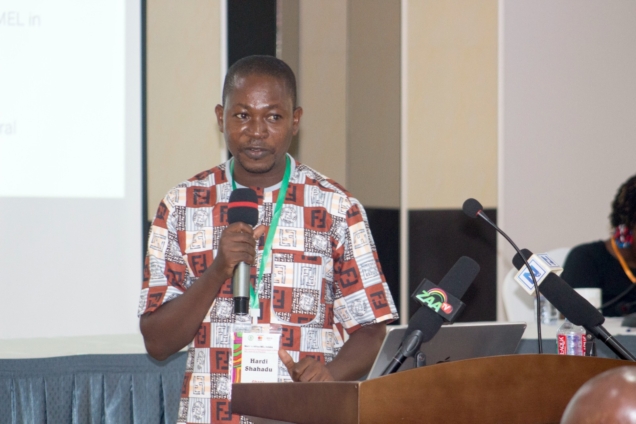
The Project Convenings Lead at UDS, Hardi Shahadu, presented a landscape analysis of Monitoring, Evaluation, and Learning (MEL) Practices, Frameworks & Tools, along with findings from 15 countries across Central, North, and West Africa in Tamale. He emphasises that indigenous African knowledge serves as a crucial foundation to initiate and implement developmental projects within the continent.
He urged participants to reconnect with their cultural heritage and explore the depth of indigenous knowledge that can serve as a foundation for future endeavours.
“We need to go back to our roots to really look at what indigenous knowledge exists that we can build upon,” Hardi said.
Indigenous African knowledge encompasses a complex system of beliefs, customs, traditions, and value systems, along with inter-generational relationships that shape the generation, practice, preservation, and transmission of knowledge to future generations.
Hardi emphasizes areas of opportunity that can be leveraged to ensure the project fulfils its mandate. One such opportunity is utilising people's lived experiences to shape, execute, and assess development initiatives.
He advocates for enhanced collaboration among practitioners, academics, and local communities, urging participants to transition from theoretical discussions to practical implementation in African Monitoring, Evaluation, and Learning (MEL). Additionally, he encourages increased partnership building and forward-thinking approaches.
Judith Akoto from Country Impact Programs Office in Ghana and Sajilu Kamwendo, the director of Outcome & Impact Evaluation, highlight that the Mastercard Foundation backs the Impact team and Foundation in integrating strong inclusive processes, culturally sensitive and de-colonial approaches, and narratives grounded in local contexts.
"We do our evaluations in a respectful and consultative manner. We will ensure that our evaluations are co-created and the results are measured and experienced in multiple ways – focusing on results that matter to young people. Evaluations are focused on the transformative nature of our strategy - change in the lives of young people especially young women, change in systems, institutions and policies at scale," they said.
Latest Stories
-
Ablakwa receives Presidential Special Envoy on Reparations to advance global agenda
8 minutes -
Christina Koch becomes first woman to travel around the moon on Artemis II
19 minutes -
Epstein survivors’ calls to meet King Charles and Queen harder to ignore as US visit approaches
24 minutes -
UN Secretary-General names Ghana’s Anita Kiki Gbeho as South Sudan envoy
26 minutes -
Mali withdraws recognition of Sahrawi Republic, backs Morocco’s autonomy plan
30 minutes -
Gov’t distributes over 8,500 laptops to One Million Coders project
31 minutes -
Julius Debrah, ‘man to beat’ as NDC’s James Agbey dismisses Musah Dankwah’s polls
38 minutes -
GPRTU in Savannah Region to protest alleged eviction in Damongo
1 hour -
Re: Reinsurance does not replace process — A response to the SIGA–SIC defence
1 hour -
Gender Ministry supports Harriet Amuzu in ongoing abuse case
2 hours -
AG joins plaintiff to scrap OSP ?: We should be mindful of the mischief in this – Bobby Banson
2 hours -
Samson Lardy Anyenini questions willingness of Attorneys-General to prosecute political colleagues
2 hours -
It is only fair the OSP is heard in Supreme Court case – Bobby Banson
2 hours -
Asiedu Nketia resumes Ashanti tour, second leg kicks off on Sunday
2 hours -
NLA denies salary cut claims, threatens legal action over reports
2 hours