

Audio By Carbonatix
The recent drought in northern Ghana has raised concerns about crop failure and potential hunger in the enclave. This situation has further exposed the region to its single-rained season, which sets in April and ends September - October every year.
This, also puts the government on the spot to take proactive measures to address this issue, ensuring that the affected communities have access to food and that the agricultural sector is supported to prevent long-term damage.
Myjoyonline visited some farmers in the Savannah Region for their concerns. It also outlined a comprehensive plan that includes short-term, medium-term, and long-term measures to mitigate the effects of drought and ensure food security in northern Ghana.
Several acres of farms that are affected as a result of the drought are cereals with maize and groundnuts, which are cultivated on a large scale and are heavily hit in Savannah, Northern, and Upper East Regions.
In the case of the Savannah Region, maize and groundnut farmers in all seven districts are still counting their losses.
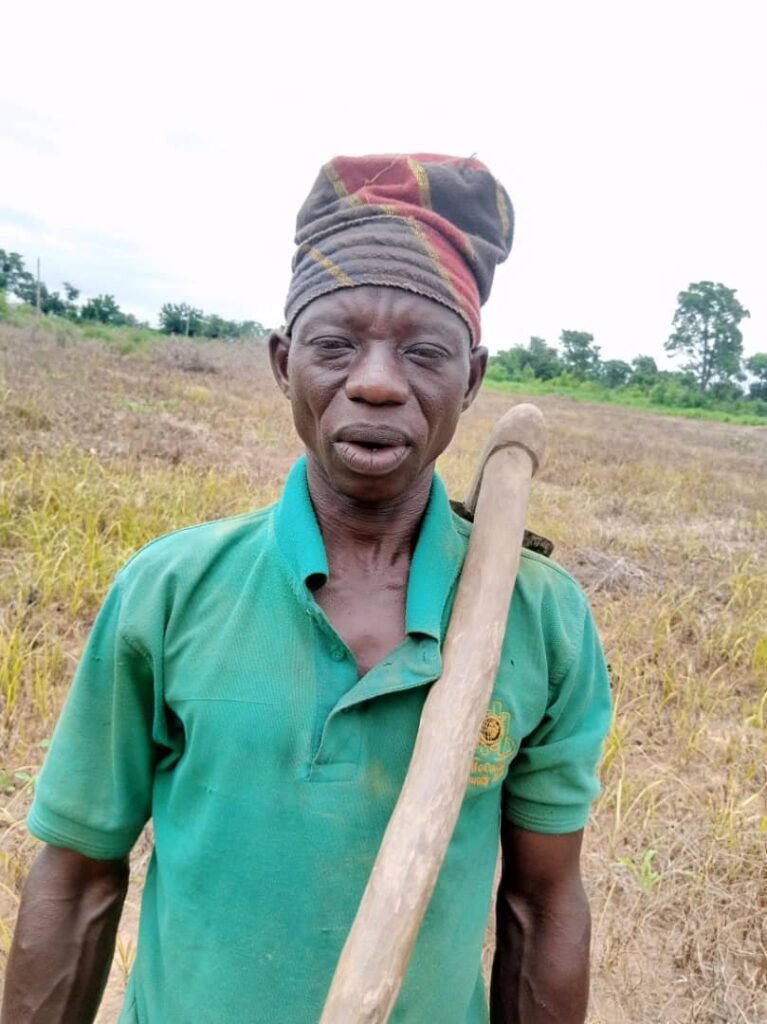
The experiences of Mr. Musah Iddrisu and Haruna Seidu offer insight into the challenges faced by communities in the affected regions. These two peasant farmers from Damongo and Daboya, located in the West Gonja Municipality and North Gonja District, respectively, share similar stories of hardship, which are reflective of the struggles of many across Northern Ghana.
Musah Iddrisu has seen significant growth in his maize farming, expanding his land from three acres to 24 acres for the 2024/25 farming season.
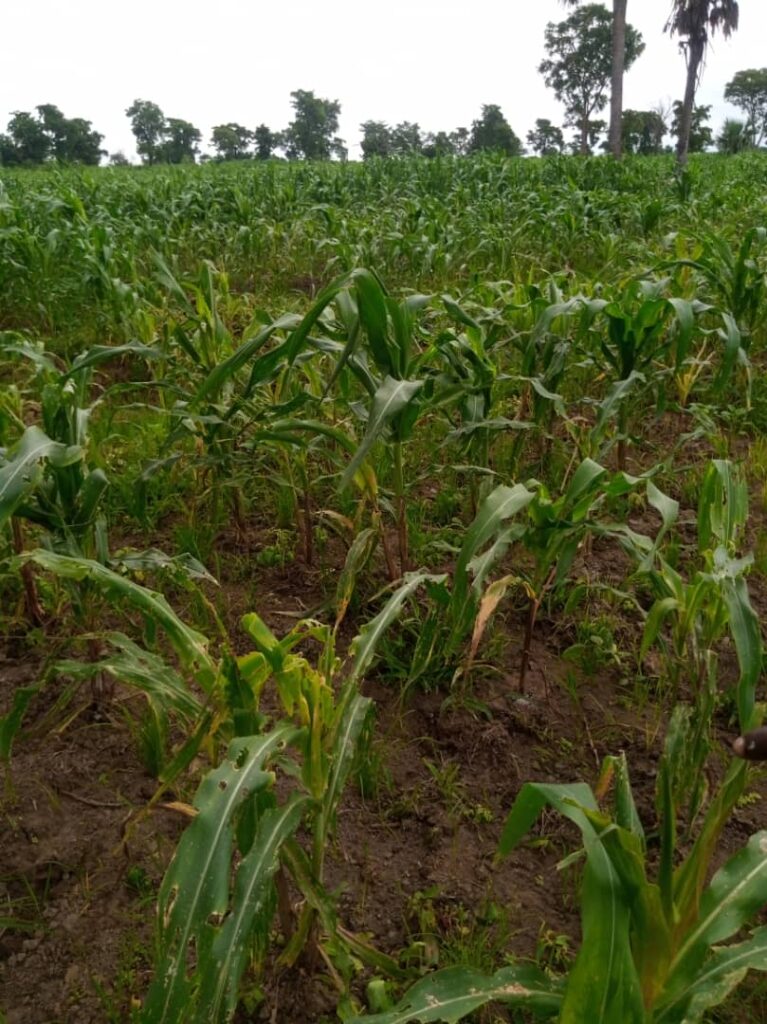
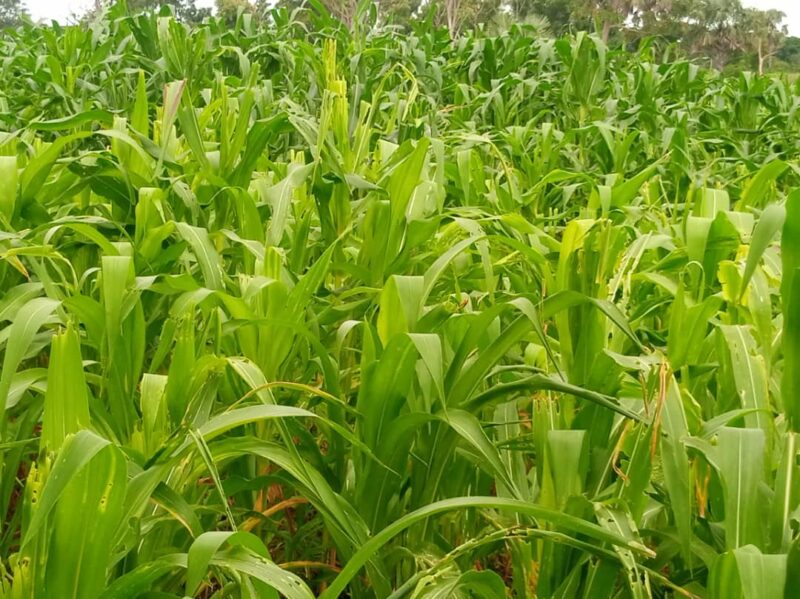
He indicated that after the first application of fertilizer, it was time for the second and rains stopped, hence his losses leading to the crops dying off or producing low yield.
"The last time it rained in Damongo was on June 2nd, 2024, and since then, there has been no rain. And as you can see for yourself, in the field, the maize has changed colour from green to yellow. The fertilizer I applied is still on the surface of the soil. So, this year, the weather has changed, making us suffer", he lamented.
Mr Haruna Seidu, a farmer specializing in maize and groundnuts, shared his experience of resilience in the face of challenges. He mentioned that he attempted to plant his crops twice, demonstrating his determination to succeed despite obstacles.
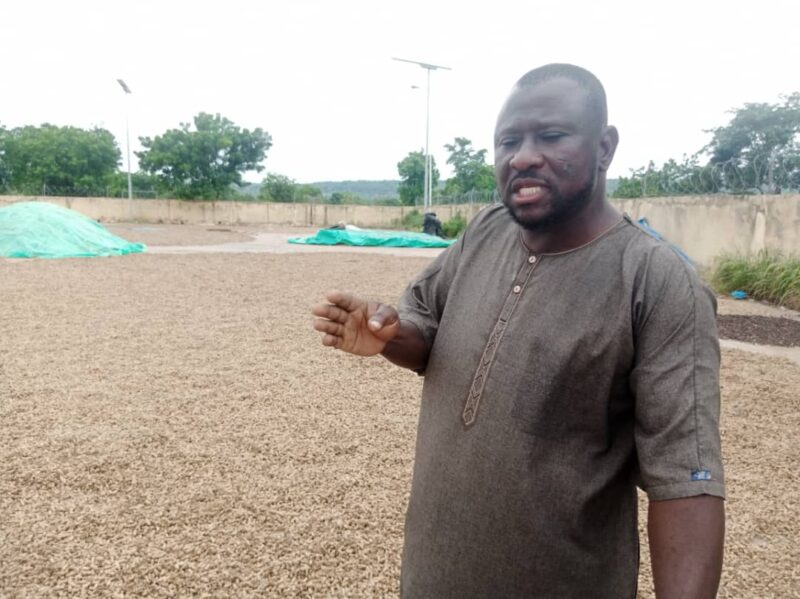
"I planted two times, yet the weather punished me. See how dried my farm is, I did plant first but due to the drought, germination was poor. So, I waited and planted again, and still, no changes. So, this time, I'm waiting for the rain to try pepper," he bemoaned.
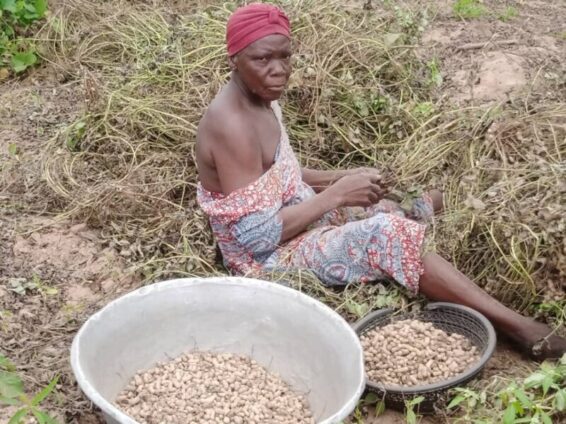
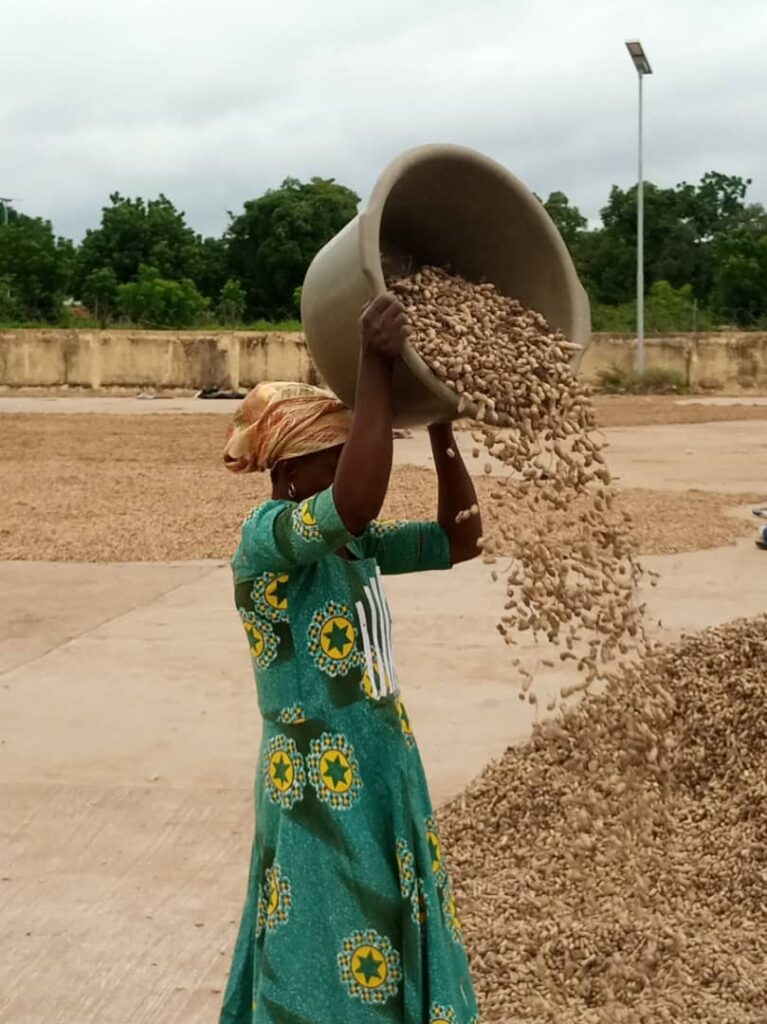
A visit by Myjoyonline.com to some groundnut drying parks, and homes further amplified farmers' concerns about low yield as a result of the drought.
Millions of farmlands across the northern enclave have either recorded very low yields or lost everything.
Farmers have reported a significant decline in their groundnut yields due to the ongoing drought. Previously, they would harvest between nine and 20 to 50-kilogram bags of groundnuts, but now that number has dropped to just one or two bags.
Some farmers have reported even more drastic reductions in their yields, with one individual stating they harvested just four bags of groundnuts from a six-acre plot of land.
There is a need for the government to adopt a short-term measure to provide emergency food aid to the affected regions and communities to prevent hunger and malnutrition.
This intervention will also go a long way to reduce the hikes in the price of grains, especially maize, groundnuts, and beans in the open markets.
This can be achieved through the distribution of food packages, including staples such as rice, maize, and beans. Additionally, the government should offer seeds and fertilizers to farmers to replant and rejuvenate their crops, especially in lowlands.
This will help to restore agricultural productivity and ensure that farmers can recover from the drought shock.
Nevertheless, irrigation support is also crucial, providing farmers with the equipment and technical assistance needed to adapt to the changing weather patterns and make them economically viable.
In the medium term, the government should promote the cultivation of drought-tolerant crops, such as sorghum and millet. These crops are more resilient to drought conditions and can help to reduce the risk of crop failure. Soil conservation techniques, such as contour farming, terracing, and non-tillage, should also be encouraged and implemented to reduce soil erosion and improve soil fertility.
Furthermore, support should be provided to livestock farmers, with attention to Northern, Savannah, and Upper West Regions, including feed and veterinary care, to help them maintain their herds.
In the long term, the government should invest in the development of irrigation infrastructure, including standard dams and canals that can withstand the test of time. This will not only provide a reliable source of water for farmers but also reduce farmers' dependence on rainfall and mitigate the impact of future droughts.
Climate-smart agricultural practices, such as agroforestry and conservation agriculture, should also be promoted and sustained to help farmers adapt to climate change.
Finally, an agricultural insurance scheme will not be a bad idea. It should be established to protect farmers from crop failure and livestock losses.
Mitigating the effects of drought in northern Ghana requires a multifaceted approach that addresses the immediate needs of affected communities while investing in long-term solutions to build resilience against future droughts.
Implementing these measures is an insurance for food security in the region and supports the agricultural sector to recover from the drought.
Latest Stories
-
A source of excellence across generations – Vice President Opoku-Agyemang lauds Mfantsipim
11 minutes -
(Photos) Mfantsipim School launches historic 150th anniversary
34 minutes -
Knights and Ladies of Marshall group backs Catholic Bishops’ stance on anti-LGBTQ+
2 hours -
Bright Simons writes: All the Filla in the Ibrahim Mahama/E&P – Gold Fields Saga
2 hours -
Monetise Idiocy In Ghana
2 hours -
The Ghanaian prophet and the mysterious death of his scottish wife Charmain Speirs
3 hours -
Nearly 400 sentenced in Nigeria for links to militant Islamists
3 hours -
Ghana’s recovery supported by gold strength despite global oil price pressures – Standard Bank Research
3 hours -
Methodist Church hails Mfantsipim@150; calls for “fresh consecration” to excellence
4 hours -
‘Excellence is our inheritance’ – Nana Sam Brew-Butler hails Mfantsipim’s 150-year reign in leadership
4 hours -
Kwaku Azar writes: A-G vs OSP
4 hours -
Mfantsipim–Adisadel rivalry built excellence, not division – Sam Jonah
4 hours -
Vice President launches Mfantsipim’s 150 years of shaping Ghana’s greatest mind
5 hours -
I assure Otumfuo, Mahama will join him to commission KNUST Teaching Hospital by end of this year – Haruna Iddrisu
5 hours -
Barcelona dominate derby to extend La Liga lead
5 hours