

Audio By Carbonatix
Moldovans have voted in parliamentary elections seen as critical for their future path to the European Union amid allegations of "massive Russian interference" before the vote.
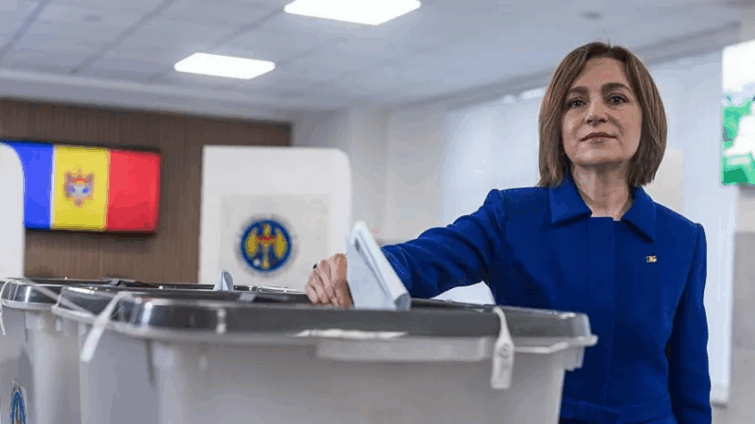
The claims, first made by Moldova's security forces, were repeated by pro-EU President Maia Sandu, who told reporters outside a polling station in the capital Chisinau the future of her country, flanked by Ukraine and Romania, was in danger.
Partial results will emerge in the coming hours, and the electoral commission said turnout was just over 52% - higher than in recent years.
Two political forces are seen as almost neck and neck in the race: Sandu's Party of Action and Solidarity (PAS) and the pro-Russian Patriotic Electoral Bloc.
Another important factor is the more than 270,000 voters who turned out in the largely pro-Western diaspora. In a measure of the tension surrounding the vote, bomb scares were reported at polling stations in Italy, Romania, Spain and the US.
Similar scares were reported in Moldova itself.
Moldova also has a pro-Russian breakaway enclave called Transnistria along its border with Ukraine, complete with a Russian military presence.
Residents in this sliver of land have Moldovan passports and most are strongly pro-Moscow, but they have to cross the Dniester river to vote.
Moldovans have been buffeted by Russia's full-scale war in neighbouring Ukraine, but they are also grappling with spiralling prices and high levels of corruption.
President Sandu, 53, won a second term of office last November and warned Moldovans the future of their democracy was in their hands: "Don't play with your vote or you'll lose everything!"
If her PAS party loses its majority in the 101-seat parliament, it will have to look for support from two of the other parties expected to get into parliament, the Alternativa bloc or the populist Our Party.
One of Sandu's main rivals, Socialist leader Igor Dodon, went on national TV as soon as polls closed to claim his pro-Russian allies in the Patriotic Electoral Bloc had won the election, despite there being no exit polls and before any early results were declared.
Thanking Moldovans for voting "in record numbers", he called on the PAS government to leave power, and for party supporters to take to the streets on Monday to "defend" their vote outside parliament at midday.
"We will not allow destabilisation," he promised. "The citizens have voted. Their vote must be respected even if you don't like it," he added, addressing President Sandu and her party.
One of the parties in Dodon's bloc was barred from running two days ago because of alleged illicit funding.
In the run-up to the vote, police reported evidence of an unprecedented effort by Russia to spread disinformation and buy votes. Dozens of men were also arrested, accused of travelling to Serbia for firearms training and co-ordinating unrest. A BBC investigation uncovered a network promising to pay participants if they posted pro-Russian propaganda and fake news.
Parties sympathetic to Moscow rejected the police claims as fake and a show - created by the government to scare people into supporting them. Russia's embassy in the UK rejected the BBC's allegations, accusing Moldova and its "Western sponsors" of seeking to divert attention from Chisinau's "internal woes".
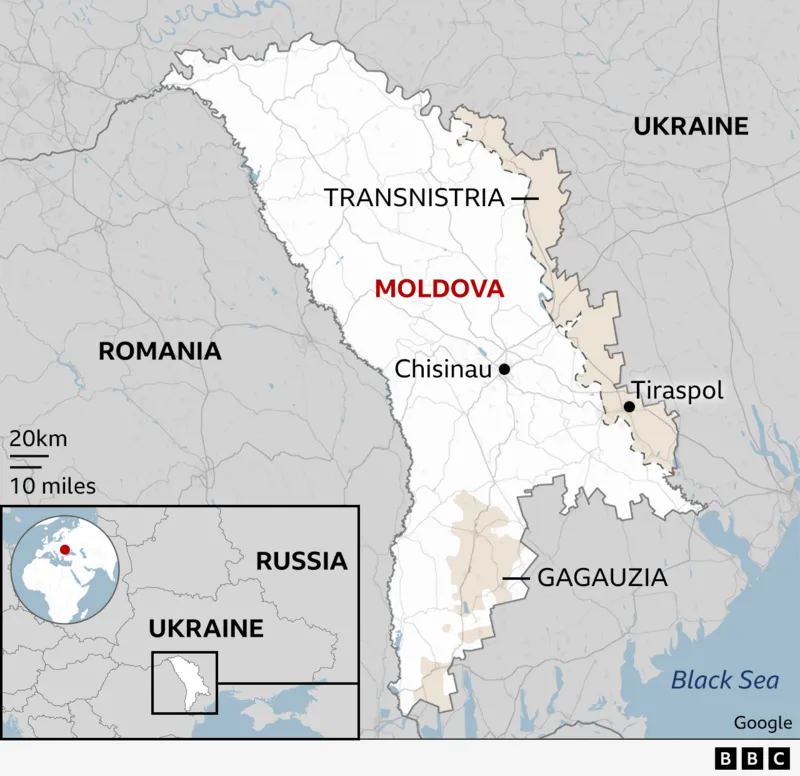
At the edge of Moldova's separatist enclave of Transnistria on Sunday, a long queue of cars waited to cross the river to register their vote at 12 polling stations opened beyond the administrative border, some of them more than 20km (12 miles) away.
The number of voters was down on recent years, at just over 12,000, an indication of the struggle many faced.
Moldovan police checked documents and car boots before letting them pass. Most cars had several people inside, often whole families.
By mid-afternoon, the queue stretched into the distance beyond a kiosk with a Soviet-style hammer-and-sickle emblem on top, and the green-and-red striped flag of Transnistria.
Speaking to drivers, most seemed unconcerned by the inconvenience, and the atmosphere was relatively relaxed.
One man told the BBC in Russian that he was voting for change because the PAS government had "promised paradise and delivered nothing". No-one would be more specific than that, insisting their voting preference was "secret".
Latest Stories
-
The powerhouses of the village: Honouring Ghana’s rural women on International Rural Women’s Day
3 seconds -
Vincent Assafuah petitions CHRAJ to investigate alleged irregularities in 2026 World Cup visa arrangements
34 seconds -
12-year-old boy found dead in muddy pit at Opeikuma
2 minutes -
GHS begins Yellow Fever vaccination campaign in three Upper West districts
3 minutes -
Organised Labour pushes for higher 2027 base pay despite slowing inflation
5 minutes -
Parliament’s Human Rights Committee demands swift justice in Obuasi SHTS sexual abuse case
15 minutes -
From Campaign Propaganda to Gov’t Accountability: When the message-makers demand a seat at the table
34 minutes -
Ashanti Region Security Coordinator warns sand winners to stay off Accra–Kumasi Expressway site
38 minutes -
PZ Cussons Ghana promotes hand washing among schoolchildren through Camel campaign
1 hour -
30 NDC aspirants file nominations in Upper West as regional election approaches
1 hour -
UPSA launches laptop assembly plant, requiring new students to assemble their own devices
1 hour -
UCC sociologist calls for action on gender inequality to end child marriage
1 hour -
LSN questions Ghana’s proposed five-year presidential term and DCE election reforms
1 hour -
AFCON 2027Q: Black Queens Coach to lead Black Stars for Somalia doubleheader with Tanko, Attram as assistants
1 hour -
AMA completes road repairs on Kwame Nkrumah Avenue
2 hours