

Audio By Carbonatix
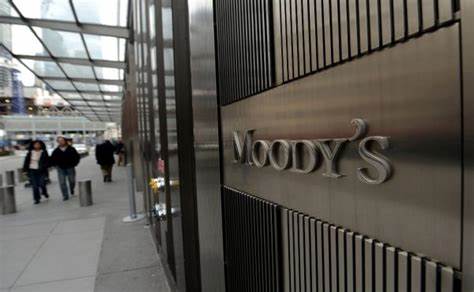
International ratings agency, Moody's, has affirmed Ghana’s B3 long-term issuer ratings.
It has also kept its economic outlook at negative.
The B3 rating and negative outlook reflect Ghana's high debt burden that is unlikely to fall rapidly, continued weak debt affordability, high gross borrowing requirements and ongoing liquidity challenges in the face of downside economic, social and financial risks in the aftermath of the coronavirus pandemic.
The rating affirmation also takes into account improving growth prospects, resilient external sector performance and the country's continued access to domestic and international capital markets, supported by the government's structural economic reform agenda to improve export competitiveness and broaden the revenue base.
Moody’s said “Ghana's credit profile is characterized by large gross borrowing requirements that exceed 20% of GDP, as well as persistent weak debt affordability stemming from interest payments rising to over 40% of revenue — both of which are among the weakest of sovereigns rated by Moody's, underpinning its exposure to potential funding shocks.”
Furthermore, it said “both long-standing credit characteristics are the result of a high debt burden financed at relatively high costs and relatively short maturities. These vulnerabilities have been exacerbated by the pandemic. The fiscal deficit widened to 13.9% of GDP in 2020 (inclusive of costs associated with the financial sector clean-up and "take or pay" energy contracts), pushing the debt burden beyond 80% of GDP, from 62.6% in 2019.”
The ratings agency said while the government's most recent budget sets out a plan of fiscal consolidation to reduce the fiscal deficit to 4.8% of GDP by 2024, the longer-term economic and social scarring from the coronavirus shock presents significant challenges to achieving such ambitious targets. Moody's also assumes that the pace of consolidation will be slower, leaving the debt burden above 80% of GDP for the foreseeable future.
“In the meantime, Ghana will increasingly rely on domestic and international bond issuance to meet deficit financing requirements and eurobond maturities starting 2023 and rising to $1 billion per year 2025-2027, leaving the sovereign exposed to a potential unfavorable turn in investor confidence”, it added.
Robust growth recovery and external position supports credit worthiness
Moody’s said the downside risks notwithstanding Ghana's credit profile benefits from strong economic growth potential.
It therefore expects GDP growth to rise towards 6% in 2022 and stay around these rates in the medium term -- in the absence of new shocks.
Meanwhile, Ghana's external position which has been a credit weakness in the past, has remained relatively stable through the pandemic, denoting greater resilience.
“The current account deficit was stable last year at 2.6% of GDP. Assuming steady commodity prices, Moody's expects the deficit to remain relatively narrow around 3% of GDP”, it said.
“Foreign exchange reserves, at four months of imports cover, have been bolstered by the recent eurobond issuance and gold and cocoa production that continues to perform well. Coupled with the ramping up of oil and gas production from the Pecan field, export prospects remain favorable”, it added.
“Ghana also has a track record of political stability and relatively sound institutional and governance frameworks compared to peers, most recently demonstrated in the peaceful elections in late 2020 and continued implementation of the economic reform agenda to improve export competitiveness and broaden the revenue base”, it continued.
Environmental, Social, Governance considerations
Moody’s said Ghana's ESG Credit Impact Score is highly negative, reflecting its high exposure to social risks.
Also, it explained that resilience to environmental and social risks is weak, constrained by low wealth and high debt levels.
“Ghana's credit profile is moderately exposed to environmental risks and is reflected in its E-3 issuer profile score. The cocoa sector is a large contributor to GDP and to exports and remains an important source of employment. Ghana is exposed to water management risks stemming from a lack of access to potable water in some areas. The weight of the agricultural sector exposes the economy to weather-related disruptions and the effects of climate change.”
It also said “the exposure to social risk is high (S-4 issuer profile score), driven by limited access to quality housing and education, especially in rural areas. Risks related to health and safety and access to basic services are moderately negative. In general, the government's measures aimed at reducing poverty and inequality and continuing to strengthen social safety nets somewhat mitigate but do not fully offset social risks.”
It concluded that governance is moderate with a G-3 issuer profile score.
Overall, Ghana performs better than many other Sub Saharan African peers, albeit the score partly reflects the slow domestic revenue mobilisation challenges facing the authorities.
Latest Stories
-
Association of Small-Scale Industries empowers trade executives in Bono East with a mentorship programme
4 minutes -
AMA evacuates refuse along Graphic Road, warns against indiscriminate dumping
9 minutes -
STC interdicts driver over Pokuase overtaking incident
13 minutes -
Ekumfi: How $6m EXIM participation built a $53m industrial asset — now poised for a 24-Hour Economy breakthrough
14 minutes -
4 arrested, 142 parcels of suspected Indian hemp seized as officers reject GH¢50k bribe
14 minutes -
No MMDCE can say they don’t see galamsey – Local Government Ministry
16 minutes -
Ghana, Germany explore stronger partnership in technical and vocational education
22 minutes -
AMA urges motorists and road users to comply with traffic regulations
23 minutes -
Sam George urges One Million Coders participants to complete all three levels
23 minutes -
Communications Minister announces 2,800-site telecom expansion during Volta visit
25 minutes -
Impunity fuelling sexual abuse in Ghana – Angela Dwamena-Aboagye
26 minutes -
NUGS condemns alleged sexual abuse by Obuasi SHTS headmaster, calls for prosecution
30 minutes -
President Mahama urges investors to employ trained local residents as 1,238-acre industrial park takes off
33 minutes -
Media doing its job, but politicians fuelling insults on social media – NMAG president
35 minutes -
Child protection must be the state’s responsibility, not NGOs’ burden – ARK Foundation Boss
41 minutes