

Audio By Carbonatix
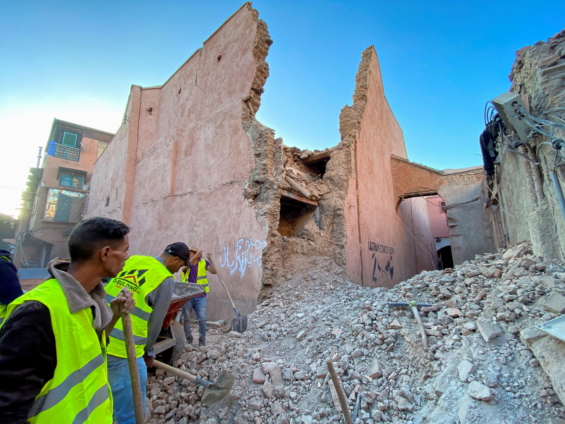
New satellite photos have revealed the devastating impact of Friday's earthquake on rural communities in Morocco.
The epicentre of the tremor was in the High Atlas Mountains, 71km (44 miles) from Marrakesh, and many of the worst affected areas are remote villages and towns.
Images of the village of Tafeghaghte taken after the quake hit show that nearly every building in the village was flattened, with only a few still standing.
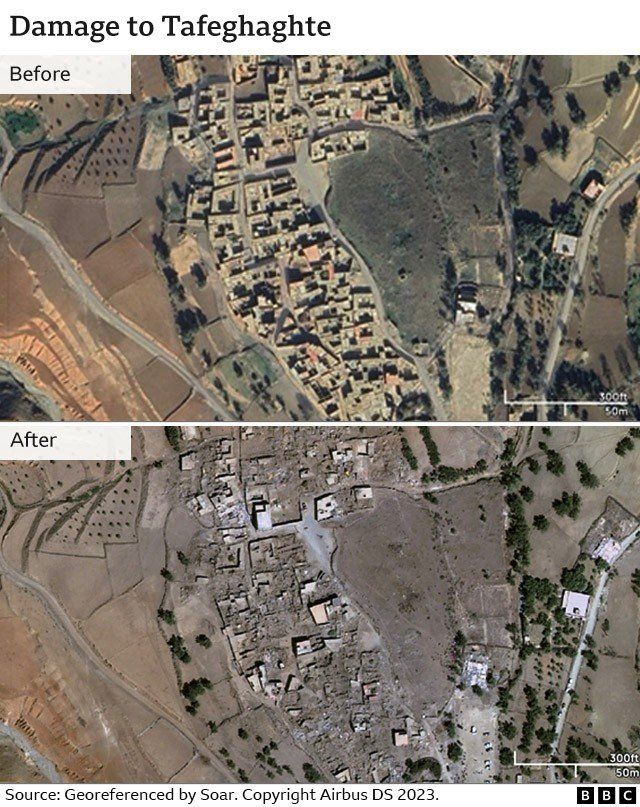
It is around 60km (37 miles) from Marrakesh and, like many of the areas which have been badly affected, is accessible only by a narrow, dusty track.
Of the roughly 200 people who lived there, more than 90 have been confirmed dead, and many more are missing.
Some families have lost seven members.
Days after the earthquake struck local people were still complaining that the only aid they had received was food and water brought by civilian volunteers, and they had spent three nights sleeping out in the open.
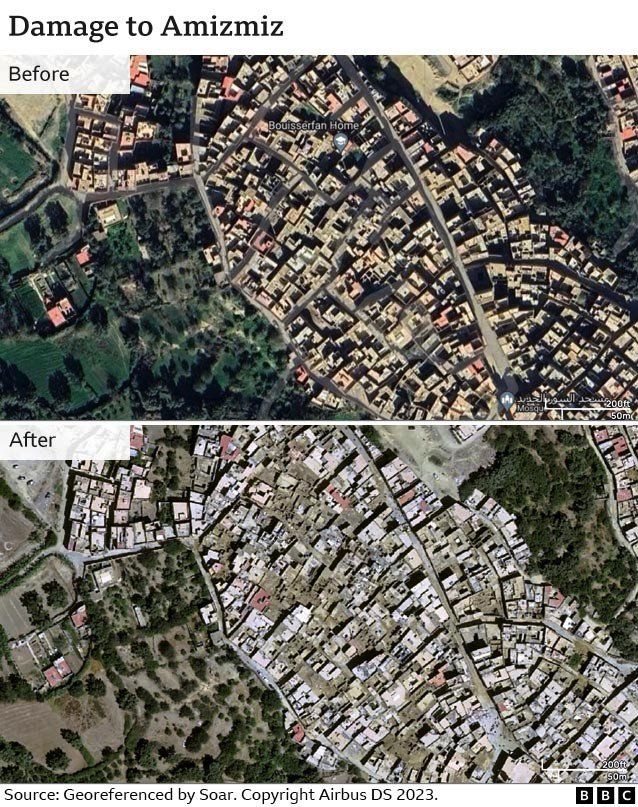
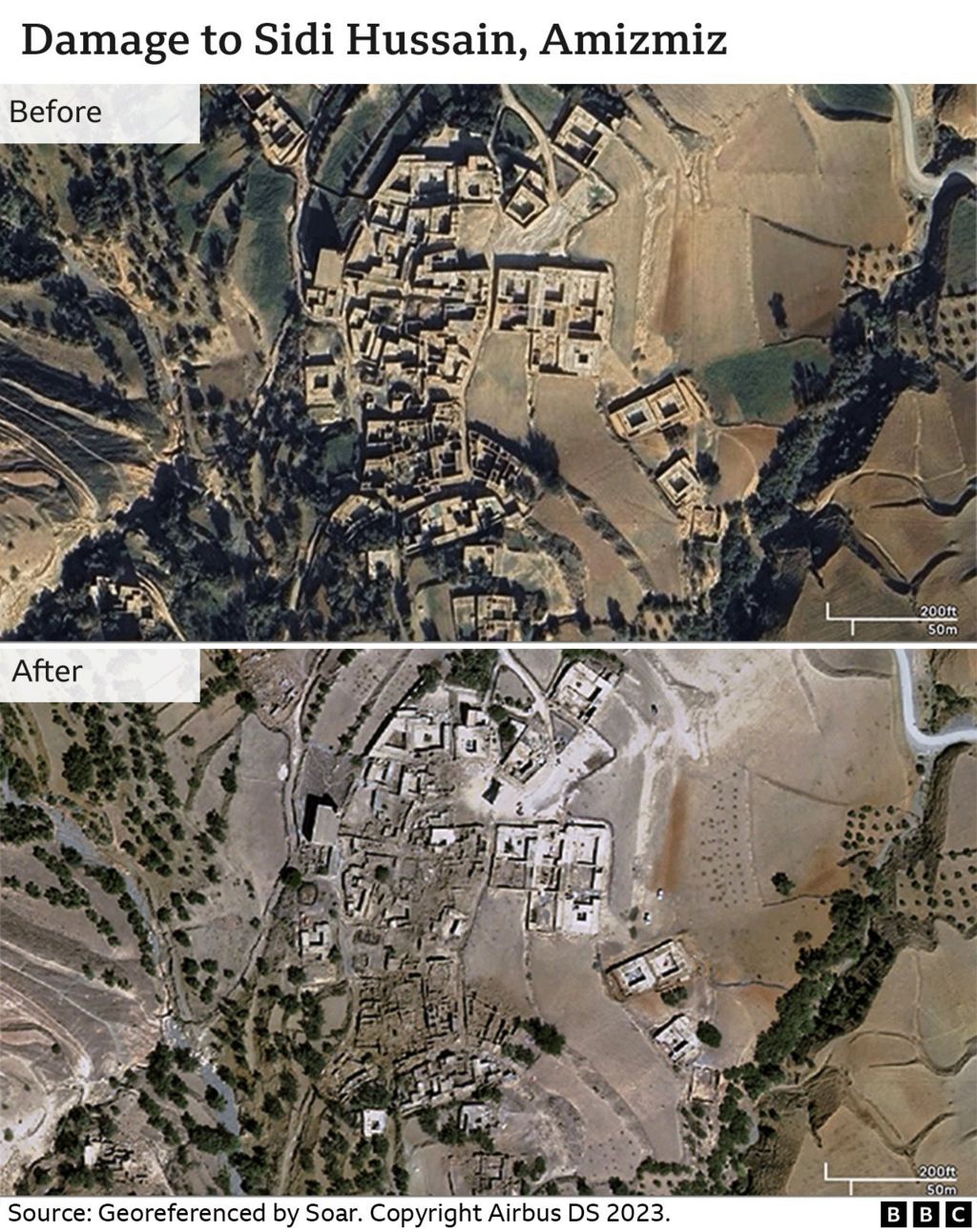
The devastation is similar in the nearby small town of Amizmiz, which is 3.3km (2 miles) to the north-west of Tafeghaghte.
Satellite images show that in one area nearly half of the buildings appear to have completely collapsed.
On Tuesday, Noureddine Bo Ikerouane told the Reuters news agency: "We just need a tent, we have been given blankets."
"I am afraid to go home as it may collapse because of the cracks," the carpenter who lives in the town added.
He was camping with his wife, mother-in-law and two sons in a makeshift tent made from blankets.
"Our money, our furniture, everything was destroyed. We didn't manage to save anything," said Malika Ouabella, also sheltering nearby.
Although emergency rescue teams from Spain, Britain and Qatar were already helping Morocco's search teams, other countries who had offered help - Italy, Belgium, France and Germany - said the Moroccan government had not yet accepted their proposal.
It is feared that time is running out to save any survivors, as houses in these mountain villages are typically made of mud bricks which crumble into fine rubble and do not tend to leave life-saving air pockets.
More than 150 people are reported to have died in the town.
Latest Stories
-
Police blur the line between invitations and arrests – Reindorf Twumasi Ankrah
17 minutes -
Turning invitations into arrests is making citizens reluctant to assist police – Twumasi Ankrah
51 minutes -
The Traffitech-GH SMS spot-fine system: The good, the sad, and the funny – Bright Simons writes
1 hour -
Hawa Koomson pledges experienced and mature leadership of NPP women’s wing
2 hours -
Young woman found dead at Kasoa Peace Town
3 hours -
Playback: The Law examined lawful arrest in Ghana
3 hours -
Mahama urges African governments to treat healthcare as an investment, not budget cost
4 hours -
Bawumia congratulates John Boadu and new NPP executives, pledges support ahead of 2028
4 hours -
Aksa Energy delegation pays courtesy call on GRA Commissioner-General
4 hours -
‘No talent should be left out’ – Bawumia pledges inclusive NPP campaign for 2028
4 hours -
Prof. Mike Oquaye recounts how he blocked the Special Prosecutor’s attempt to arrest Bawku Central MP
4 hours -
Make health sovereignty a priority for Africa – Mahama
4 hours -
Dorimon Naa, Wa West DCE lead massive clean-up exercise; threaten sanctions against recalcitrant residents
5 hours -
Photos from Adom FM Y2K Jam
5 hours -
Praye Tiatia steals the show at Adom FM Y2K Jam [Watch]
5 hours