

Audio By Carbonatix
Morocco is consolidating its position as one of North Africa’s most stable and strategically important countries through sweeping reforms, aggressive diplomacy and major investments in technology and infrastructure, according to the American think tank Stimson Centre.
In a new assessment, the think tank said Morocco is increasingly positioning itself as a political, economic and technological hub linking Europe, Africa and the Atlantic region.
The report highlighted Rabat’s growing diplomatic influence, particularly around its autonomy plan for the Sahara. According to the think tank, the adoption of United Nations Security Council Resolution 2797 in October 2025 created a new negotiation framework centred on Morocco’s proposal, with Algeria expected to participate fully in discussions.
The report said Morocco views the development as part of a broader diplomatic momentum backed by growing international support for its autonomy initiative.
Beyond diplomacy, the Kingdom is expanding partnerships with the United States, the European Union, Gulf states and African countries while deepening its footprint in sub-Saharan Africa through banking, telecommunications, fertilisers, infrastructure and religious cooperation.
Economically, the report said Morocco is pushing ahead with its New Development Model, launched in 2021 as a long-term roadmap to 2035. The strategy focuses on private-sector competitiveness, job creation, governance reforms, and stronger education and healthcare systems.
The think tank also pointed to Morocco’s ambitious social protection reforms, including expanded health insurance, pension coverage for informal workers and family allowances. By 2024, nearly 88% of Moroccans reportedly had access to basic health coverage.
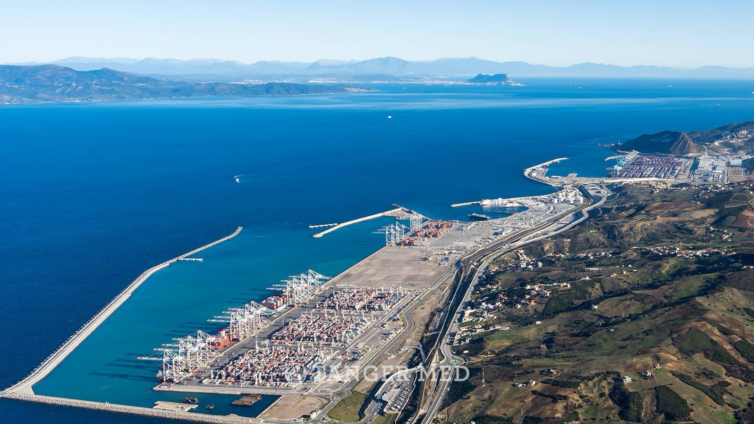
Morocco’s infrastructure expansion was also cited as a major strength. The report described the Tanger Med port complex as Africa’s leading container hub, having handled 10.2 million TEUs in 2024.
More than 1,200 companies now operate around the port in sectors including automotive manufacturing, aeronautics, textiles and logistics.
The think tank further noted that Morocco is betting heavily on artificial intelligence and digital technology to drive future growth.
Under its Morocco AI 2030 roadmap and Morocco Digital 2030 strategy, the Kingdom aims to create 240,000 digital jobs and contribute nearly $10 billion to GDP by 2030.
The report said Morocco also plans to establish the Al Jazari Institutes as national centres of excellence in artificial intelligence while creating a General Directorate for AI and Emerging Technologies to coordinate policy.
Rabat has also strengthened its global role in technology governance. The report noted that Morocco co-sponsored, alongside the United States, the first United Nations General Assembly resolution on artificial intelligence, adopted by consensus in March 2024.
On energy, the think tank described Morocco as a regional leader in solar, wind and green hydrogen development. It identified the Noor Ouarzazate Solar Complex as a symbol of the country’s clean energy ambitions.
According to the report, Morocco is seeking to position itself as a future supplier of green energy to Europe while expanding into battery production, electric vehicles and hydrogen technologies.
The Stimson Centre concluded that Morocco’s constitutional monarchy, industrial policy, trade agreements and long-term economic planning have given it the foundation to emerge as one of Africa’s most influential economic and geopolitical powers in the coming decades.
Latest Stories
-
Drug bust: NACOC should be part of port inspection team – Twum-Barimah
2 minutes -
Ward appointed Liverpool’s sporting director
2 minutes -
This isn’t the first cocaine bust; NPP must stop the politicisation – NACOC deputy boss
6 minutes -
Drug bust case: Only Customs officers, MPS officials in scanning room – NACOC
1 hour -
I don’t mind being insulted; I have a crocodile skin – President Mahama
1 hour -
Samson’s Take: Verify the badge – and verify the story
2 hours -
President Mahama explains why Ghana must rethink regulation of TikTok, other new media platforms
2 hours -
Rule of law must be protected – GBA condemns EOCO action against Baffour Awuah
3 hours -
950,000 barrels of Sankofa crude head to TOR as GNPC deepens domestic refining
3 hours -
Scales of deception removed – Annoh-Dompreh attacks new cocoa price
4 hours -
Young Positivist Writes : My Experience with GCLP
5 hours -
Strong Day 1 turnout sets tone for Day 2 of Republic Bank-JoyNews Habitat Fair Clinic
5 hours -
Ghana Army warns new soldiers against social media misuse, uniform abuse
6 hours -
AMA calls for science-led action to tackle environmental health risks in Accra
6 hours -
NPP Canada Organizer BigMo urges Diaspora to support Kodua Frimpong
7 hours