

Audio By Carbonatix
The Monetary Policy Committee of the Bank of Ghana has begun its review of the Ghanaian economy with all eyes on the policy rate to stimulate spending and growth amid the spike in covid-19 cases.
For the first time since March 2020, there are high hopes that the base lending rate will go down albeit slightly to enhance consumer and business spending.
And that’s the anticipations by many economists, analysts and market watchers.
The four days meeting is decisive because of the recent spike in coronavirus cases which could have rippling effect on consumers, businesses and the economy.
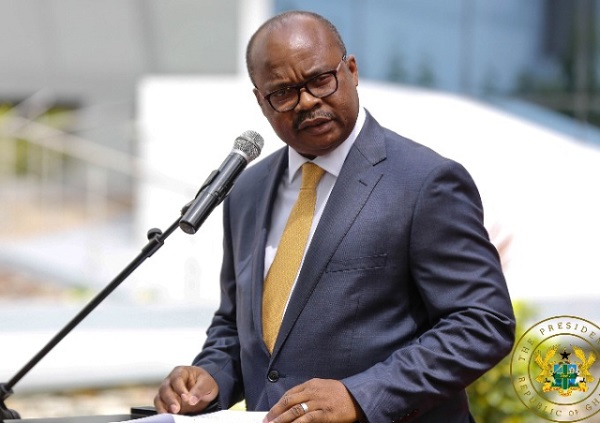
As such, the MPC chaired by the Governor, Dr. Ernest Addison will have to make critical decisions that will ease the financial pressures on businesses and consumers in the face of the second wave of Covid-19 pandemic.
The Bank of Ghana lowered the regulatory limits and the prudential rates for banks in March last year to enable them release more money into the system.
The Primary Reserve Requirement of banks was reduced from 10 to 8 percent, to provide more liquidity to banks to support critical sectors of the economy.
Business School Lecturer and a Financial Analyst, Dr. Laud Mensah wants the Policy Rate to be reduced further from the present 14.5 percent.
“If you look at the happenings around, clearly you could see that the system lacks liquidity. So for me if you ask me the adaption by the Monetary Policy Committee should be the expansionary approach where the policy rate will be reduced to give some confident and funds can easily flow into the system.”
“If they adopt the expansionary approach and the monetary policy is reduced consistently to the next two or three quarters, I think we will gradually see the policy rate to feed into our lending on our market”, he added.
Policy rate kept same for 4th consecutive
The Policy rate was kept for the fourth consecutive time in November 2020, a decision which triggered a relatively unchanged lending rate.
Governor Dr. Ernest Addison attributed the decision to some risks on the fiscal front that is lower revenue but high expenditure.
“The key risks are the evolution of the budget deficit and the financing needs to support budget implementation and the uncertainty surrounding the pandemic.”
Latest Stories
-
Standard Chartered Bank delivers strong returns and sustainable shareholder value
3 minutes -
Akufo-Addo’s role in the artificial cedi stability is indisputable — Facts do not bend to political convenience
6 minutes -
Breaking Bad actor RJ Mitte dies aged 34
12 minutes -
Wontumi pleads not guilty in GH¢30m Exim Bank loan case
17 minutes -
Beyond the Flyer: Awareness without screening is not enough
24 minutes -
Bekwai MP donates GH¢100,000 to hospital for specialist equipment
31 minutes -
Van Vicker sues Lil Win for defamation, demands GH¢10m
37 minutes -
FIFA/ FIBA agency Pep Sports moves to admit Ghana’s 7-Foot Basketball talent to its Ultra-Modern Sports campus after MyJoyOnline report
39 minutes -
GAUA strike disrupts academic plans at University of Ghana as students, parents express frustration
44 minutes -
Dad’s Army/African Polistas crowned champions of 2026 Accra Polo Club Trustees’ Cup
51 minutes -
Mahama approves Integrated Basic Education Model, with funding expected in 2027 under GETFund formula
53 minutes -
Money-driven elections fuelling corruption – Haruna Iddrisu
58 minutes -
Excessive borrowing ‘cracked’ Ghana’s economy under Akufo-Addo – Haruna Iddrisu
1 hour -
NPP’s silence on economic indicators suggests Mahama is doing better – Haruna Iddrisu
1 hour -
GoldBod must be more accountable to Ghanaians – Haruna Iddrisu
2 hours