

Audio By Carbonatix
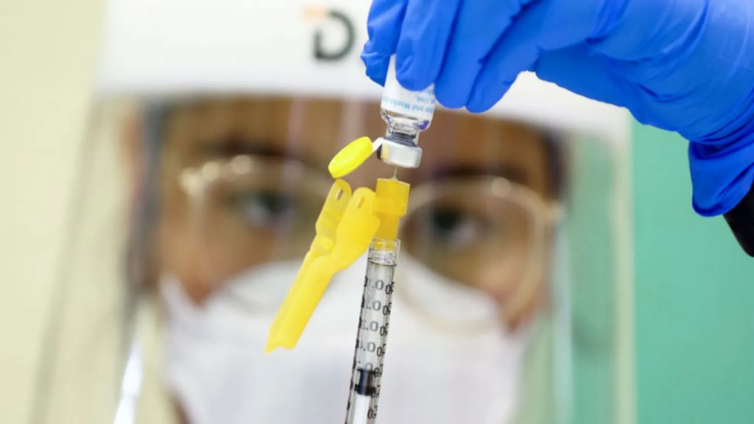
Nigeria has received 10,000 doses of a vaccine to combat mpox, making it the first African country to receive a batch amid the current outbreak of a disease that used to be called monkeypox.
The country began the process to secure the vaccines well before it was declared a global health emergency by the World Health Organization (WHO) earlier this month.
Africa has been hit hardest by the recent rapid spread of mpox - and international agencies have called for a speedier response to such emergencies.
Nigeria - which has confirmed 40 mpox cases this year but says the true number could be more than 700 - received its vaccine doses as a donation from the US.
The West African nation has not recorded any deaths from the virus. It has also not recorded any cases of Clade 1b, a new variant in the east of the Democratic Republic Congo that has also spread to neighbouring countries.
DR Congo, located in central Africa, has recorded more than 18,000 suspected cases of mpox and 615 deaths this year.
There are still no mpox-specific vaccines but smallpox ones work against the disease - and are being manufactured by two pharmaceutical companies.
Nigeria says it will prioritise health workers and at-risk communities in the 13 affected states during the vaccination campaign.
The Africa Centres for Disease Control and Prevention (CDC) estimates that 10 million doses are needed across the continent, with DR Congo being the most in need.
Clade 1b has caused concern among governments, scientists and international health bodies, but it is currently unclear just how deadly and contagious the variant is.
Mpox can be fatal if left untreated and causes symptoms such as fever, muscle aches and lesions across the body.
The process of getting the first jabs to Africa has been slow, with critics saying the WHO's regulatory process poses a major challenge.
Many low- and middle-income countries rely on the WHO, rather than their own drug regulators, to judge which medications are safe and effective.

But the WHO is "painfully risk-averse" and "concerned with a need to protect its trustworthiness", the New York Times recently reported.
Although two years have passed since the onset of the last outbreak driven by the Clade 2 variant prevalent in Nigeria, the WHO has not officially approved the two available vaccines, saying it does not have the data it requires to do a full review.
Professor Helen Rees, an adviser to the WHO and the Africa CDC, told the BBC the WHO's regulation process was "not fit for purpose in an emergency".
She said international health bodies needed to "really look" at how they were conducting approvals when medical products were needed urgently.
Only this month did the WHO ask vaccine manufacturers to register their interest in receiving an emergency licence for mpox jabs. This would allow WHO to fast track its approvals.
That could have begun years ago, numerous public health officials and scientists told news agency Reuters.
WHO is expected to grant its mpox emergency licences in September.
Africa's first 10,000 vaccines went to Nigeria and not DR Congo as a result of an early campaign from Nigerian health officials following the onset of the 2022 outbreak.
At a press conference held in the capital, Abuja, to mark Wednesday's arrival of the vaccines produced by Danish pharmaceutical company Bavarian Nordic, US Ambassador Richard Mills praised Nigeria for “leading a co-ordinated effort to respond to the outbreak before it escalates”.
The US Agency for International Development (USAid) said it had also donated 50,000 doses to DR Congo but a delivery date had not been released.
Although Africa has finally received its first delivery, the delay could have been shorter if a larger number of wealthy countries had donated jabs like the US had done, Ms Rees told the BBC's Newsday programme.
"After 2022 many of the countries that were affected by the [mpox] outbreak… many of them have stockpiles with millions of vaccines collectively stored," she said.
"Those stockpiles are obviously from a country perspective to protect their own citizens. But when you have a global emergency like this, every country should look at its stockpile and say 'can we actually help globally?'"
Latest Stories
-
UTAG-UG threatens strike on October 19 over unpaid allowance
23 seconds -
Let The Constitution direct Chieftaincy to deliver “All Development Is Local”
1 hour -
John Jinapor outlines renewable energy, nuclear power priorities for 2027
2 hours -
Ghana explores centre of excellence for hearing, communication and cochlear implant care
3 hours -
Schizophrenia-related disorders lead mental health cases recorded in Ghana
3 hours -
Dutch authorities enlist Ghana in hunt for fugitive drug lord Bolle Jos
3 hours -
Ghana housing finance conference adopts communiqué to improve affordable housing access
8 hours -
Special Initiatives Minister urges Wa Technical Institute to enrol more girls as EU-backed solar training lab opens
8 hours -
In the matter of my first year at the Bar
8 hours -
ActionAid Ghana calls for an end to child marriage, greater investment in girls’ rights
8 hours -
Newsfile to tackle World Cup visa scandal, beach demolitions, education strikes, BRICS bid
9 hours -
UK-Ghana Trade & Investment Summit: Trade Resource Centre to help businesses maximise UK-Ghana trade opportunities
9 hours -
Embassy of Denmark celebrates World Maritime Day
9 hours -
Linking LEAP to productive inclusion could cut extreme poverty by 2030 – UNICEF
10 hours -
Trade Ministry backs use of creative arts to rehabilitate prison inmates
10 hours