

Audio By Carbonatix
All student unions in Ivory Coast are being shut down, the government has announced, after the killing of two students which is being blamed on the powerful Student and School Federation (Fesci).
Several Fesci members have been arrested in connection with the murders of Khalifa Diomandé and Zigui Mars Aubin Déagoué, which took place in August and September.
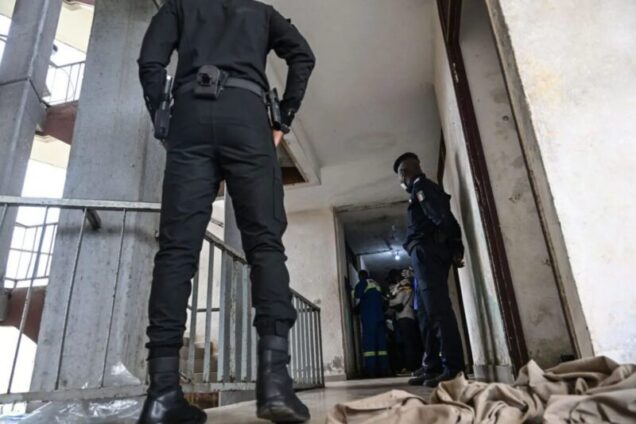
An underground tunnel used for torturing people and a brothel were found during investigations at Félix-Houphouët-Boigny University in the main city of Abidjan, the authorities say.
Students tell the BBC it was an open secret that Fesci ran both illicit sites but that everybody was too afraid to speak out.
"You wouldn't have believed you were in a university in an organised country," said a former student who has asked to remain anonymous.
"I was threatened by Fesci many times, they tried to rape me," she tells the BBC. "My boyfriend tried to stand up for me, and he was beaten up," she alleges. On other occasions, she says she had to pay Fesci members to leave her alone.
She says she is still traumatised and has not set foot on the campus since dropping out after her ordeal eight years ago.
"I don’t know how it lasted so long but now I feel relieved for the victims," she adds.
Extortion was common, say students.
"I was supposed to pay $100 (£77) per month for my room," explains Jose Aristide, "but they were forcing me to pay $250 per month.
"There was no other option. Everyone feared them."
On Thursday, Ivory Coast's Security Council said it had carried out a series of raids on universities in Abidjan and the central city of Bouaké in which more than 100 machetes and grenades were seized.
They also found and expelled 5,000 undeclared residents at university campuses across Abidjan, Bouaké and Daloa.
When the student union ban was announced that same day, people celebrated.
One lecturer tells the BBC he welcomes the ban, saying he hopes it will bring some peace to the campuses.
Originally set up in the 1990s as a student body, Fesci soon became an anti-government protest group and has long been suspected of involvement in organised crime.
It has also served as a springboard into politics for some.
Former Fesci leaders include Guillaume Soro - a rebel leader-turned-prime minister, and Charles Blé Goudé - a former youth minister who was accused then acquitted of massive human rights violations during post-election violence that happened a decade ago.
Latest Stories
-
Man City found guilty of all charges of financial rule breaches, Premier League confirms
17 minutes -
Jeffrey Nortey wins Screen Icon of the Year again at Ghana Entertainment Awards USA
19 minutes -
Man Utd do not deserve Man City titles – Rooney
20 minutes -
Birifoh outdoors new chief: Naa Victor Gandaa V outlines vision for security, education and tourism
21 minutes -
DreamOval Foundation appoints five-member board to drive digital education and youth empowerment
35 minutes -
Accounting for public funds is not enough to prove performance – Ghana Audit Service
35 minutes -
GACC trains journalists on Auditor-General’s NPA Performance Audit Report
35 minutes -
Freedom of expression doesn’t require degradation of public discourse – Bagbin
38 minutes -
NADMO begins relief distribution to over 4,000 households affected by Hohoe floods
53 minutes -
Road Minister tasks Arab Contractors to expedite Kumasi Outer Ring Road
60 minutes -
Media must strengthen fact-checking to fight information disorder – President’s Legal Advisor
1 hour -
DVLA begins pilot of RFID-enabled number plates ahead of 2027 rollout
1 hour -
There is more than one pathway to the future you want
1 hour -
Government appeals to striking teachers to suspend action as FWSC talks resume
1 hour -
Gender Ministry calls for greater industry support for women in TVET
1 hour