

Audio By Carbonatix
Ghana on Tuesday unveiled a National Sickle Cell Disease (SCD) Strategy aimed at improving both preventive and treatment services for the condition.
The strategy, set to be in effect until 2028, seeks to promote awareness and education about sickle cell disease in communities while working to reduce the stigma and discrimination faced by individuals living with the condition.
The Health Minister, Dr. Bernard Okoe-Boye, who launched the strategy, stated that the document was closely aligned with broader efforts to strengthen Ghana's health system in addressing genetic disorders.
He emphasised that the strategy underscored the nation's commitment to tackling sickle cell disease, a hereditary condition that affects many Ghanaians, particularly the youth and the working-age population.
Current statistics suggest that approximately 15,000 to 20,000 babies are born with sickle cell disease in Ghana each year, accounting for about two percent of all live births.
Dr. Okoe-Boye noted that about 25 per cent of the population carried the sickle cell trait, meaning a significant portion of the productive population was likely to pass the gene to future generations.
He pointed out that the high prevalence of sickle cell disease and its traits presented a major health, economic, and social burden.
The impact of the disease has been deeply debilitating for affected individuals, their families, the healthcare system, and the nation as a whole.
Dr. Okoe-Boye also noted that children under five, adolescents, and pregnant women were especially vulnerable to complications related to sickle cell disease, leading to higher rates of morbidity and mortality in these groups.
He called for the strategy's implementation with a strong commitment to improving health outcomes and enhancing the quality of life for those affected by sickle cell disease.
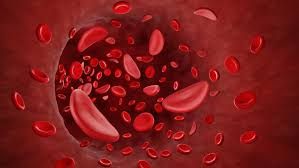
Sickle Cell Disease (SCD) refers to a group of inherited blood disorders that cause red blood cells to become stiff and crescent-shaped, obstructing blood flow and leading to severe complications.
The condition is caused by a mutation in the hemoglobin gene, which produces an abnormal form of hemoglobin known as hemoglobin S. This abnormal protein alters the shape of red blood cells, making them rigid instead of flexible.
The most common symptom of SCD is anemia, which can lead to dizziness, shortness of breath, and fatigue. Other symptoms include jaundice, which causes a yellowing of the skin, eyes, and mouth.
Complications of Sickle Cell Disease can include painful episodes (pain crises), stroke, acute chest syndrome, organ damage, infections, and kidney disease.
Mr. Hafiz Adam, the Chief Director of the Ministry of Health, said that SCD was a major public health issue in Ghana, being the most prevalent genetic disorder in the country.
He said that about 18,000 babies are born with the condition each year.
“It is estimated that one in every four Ghanaian has the haemoglobin Sor C gene indicating high rates of SCD, and this calls for comprehensive strategies to addressing SCD related illness and deaths,” he said.
Mr. Adam said that the National Strategy for SCD aimed to create a future where the burden of the disease was significantly reduced and managed.
He stated, "We want to ensure that every person living with SCD receives the best possible care, enabling them to lead healthy lives."
Latest Stories
-
GPL 2026/27: Darkwah Wiafe’s winner sees All Blacks beat Kotoko
5 minutes -
ITF World Tour : Patel Wins Boys’ Singles Final at J100 Accra
17 minutes -
Ghana must pursue BRICS partnership if it brings economic benefits – Kpebu
21 minutes -
Success and Wright Claims J100 Accra Girls’ Doubles Championship
21 minutes -
ITF J100: America’s Wright wins J100 Accra Girls’ Singles Title
28 minutes -
Expedition hopes to find aviator Amelia Earhart’s plane on remote island
28 minutes -
US seeks changes to rejected $109m health compact with Ghana – Mahama
59 minutes -
Nine dead in mass shooting at Pennsylvania home
1 hour -
‘Time for Ukraine to get new president,’ says Trump after Zelensky condemns diesel deal
1 hour -
Hincapie injury adds to Arsenal issues after Guimaraes rescue act
1 hour -
Henderson scores twice as Chelsea thumb Bournemouth
2 hours -
Photos: Mentapulse Africa convenes health and labour summit to address talent retention
2 hours -
Mahama inspects Nkokɔ Nketenkete plant, eyes Bechem as chicken capital
2 hours -
Ghana not seeking full BRICS membership, applying as Partner Country – Ablakwa
2 hours -
Woman injures three people in third Poland school knife attack in a week
2 hours