

Audio By Carbonatix
Government plans to shorten mining licence durations and mandate direct revenue-sharing with local communities in its most sweeping mining law reforms in nearly two decades, details of which were announced by the Lands Minister on Wednesday.
The planned overhaul reflects a broader trend across West Africa, where governments are rewriting mining codes to capture more value from rising commodity prices.
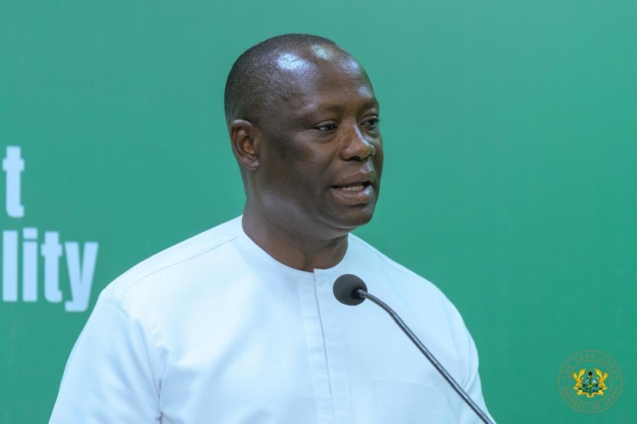
Lands and Natural Resources Minister Emmanuel Armah Kofi Buah said the changes, which include scrapping automatic renewal of some licences, will apply only to future contracts, a departure from the stance in Mali and Burkina Faso, where military-led governments have applied reforms retroactively.
“In Ghana, we don't do retrospective laws,” Buah said at a presentation in the capital, Accra. “Existing agreements are sanctified and will be respected.”
He added that the overhaul of the Minerals and Mining Act and mining policy was 85% complete following extensive stakeholder consultations.
DEVELOPMENT REQUIREMENT
Ghana, Africa's top gold producer, expects output to rise to 5.1 million ounces this year. Major miners in the country include Newmont, Gold Fields, AngloGold Ashanti, Zijin, Asante Gold, and Perseus.
It also exports bauxite and manganese with plans to start lithium production.
Under the proposed law changes, prospecting licences would no longer be held indefinitely, and the maximum term for mining leases would be reduced from 30 years to a shorter period agreed by the government and firms. Companies failing to meet environmental, social or production obligations would lose the right to automatic licence renewal.
In a major shift, the government plans to abolish development agreements, in which companies send money to the central government.
Instead, companies will be required to sign agreements committing a fixed percentage of gross mineral sales revenue to fund local development projects as the government seeks to address long-standing grievances from communities that they have seen little benefit from mining operations.
The reforms also propose a three-tier mineral rights regime, introducing a new medium-scale licence category to bridge the gap between large multinational operators and small-scale artisanal miners.
Another key change under consideration is the reduction or abolition of stability agreements, which currently offer up to 15 years of tax and regulatory protection to large investors.
Future agreements would be limited to capital recovery periods for major investments.
Latest Stories
-
GPRTU wants full TRAFFITECH-GH implementation to start in 2027
11 minutes -
Mahama announces plans to import electric wheelchairs for PWDs
15 minutes -
KGL U17 Colts 2026: Western beat Prempeh Elite Academy to set up final final with Greater Accra Region
34 minutes -
Late Solanke strike salvages 10-man Spurs draw at Man United
44 minutes -
Gender Ministry to monitor welfare of Nana Akua Addo’s children amid domestic violence case
50 minutes -
Benedict Okyere Yeboah: Ghana’s football problem goes beyond sacking a coach
60 minutes -
GPL 2026/27: Darkwah Wiafe’s winner sees All Blacks beat Kotoko
1 hour -
ITF World Tour : Patel Wins Boys’ Singles Final at J100 Accra
1 hour -
Ghana must pursue BRICS partnership if it brings economic benefits – Kpebu
1 hour -
Success and Wright Claims J100 Accra Girls’ Doubles Championship
1 hour -
ITF J100: America’s Wright wins J100 Accra Girls’ Singles Title
1 hour -
Expedition hopes to find aviator Amelia Earhart’s plane on remote island
1 hour -
US seeks changes to rejected $109m health compact with Ghana – Mahama
2 hours -
Nine dead in mass shooting at Pennsylvania home
2 hours -
‘Time for Ukraine to get new president,’ says Trump after Zelensky condemns diesel deal
2 hours