


Audio By Carbonatix
The Ghana Prisons Service has launched a high-level investigation following allegations that a convicted inmate at the Ankaful Maximum Security Prison played a role in the murder of the Queen Mother of the Abamba Traditional Area in the Atebubu-Amantin Municipality of the Bono East Region.
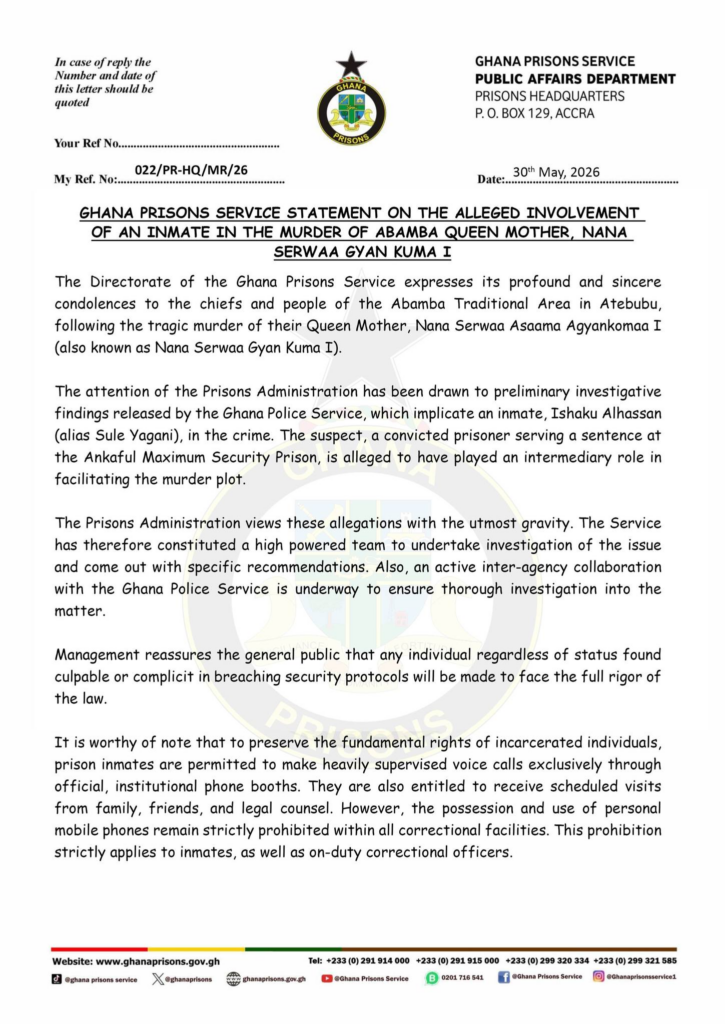
In a statement issued on Saturday, May 30, the Service expressed its "profound and sincere condolences" to the chiefs and people of the Abamba Traditional Area following the tragic killing of Nana Serwaa Asaama Agyankoma I, also known as Nana Serwaa Gyan Kuma I.
The development follows preliminary findings by the Ghana Police Service, which reportedly implicate an inmate identified as Ishaku Alhassan in the crime.
- READ ALSO: Abamba Queen Mother allegedly shot dead
According to the findings, the suspect, a convicted prisoner currently serving a sentence at Ankaful Maximum Security Prison, is alleged to have acted as an intermediary in facilitating the murder plot.
The Ghana Prisons Service described the allegations as extremely serious and assured the public that comprehensive investigations are underway.
"The Prisons Administration views these allegations with the utmost gravity," the statement said.
To establish the facts surrounding the matter, prison authorities have constituted what they described as a "high-powered team" to conduct an internal investigation and recommend appropriate actions.
The Service also confirmed that it is working closely with the Ghana Police Service as part of an ongoing inter-agency effort aimed at uncovering the full circumstances surrounding the case.
Officials stressed that the collaboration is intended to ensure a thorough and transparent investigation into the allegations.
The Prisons Administration further assured the public that any individual found to have breached security regulations or aided criminal activities would face the full force of the law, regardless of their position or status.
Management emphasised that accountability would be enforced wherever evidence of wrongdoing is established.
The statement noted that anyone found culpable or complicit in compromising prison security protocols would be dealt with in accordance with the law.
Responding to possible questions about inmate communications, the Ghana Prisons Service outlined the procedures governing contact between prisoners and the outside world.
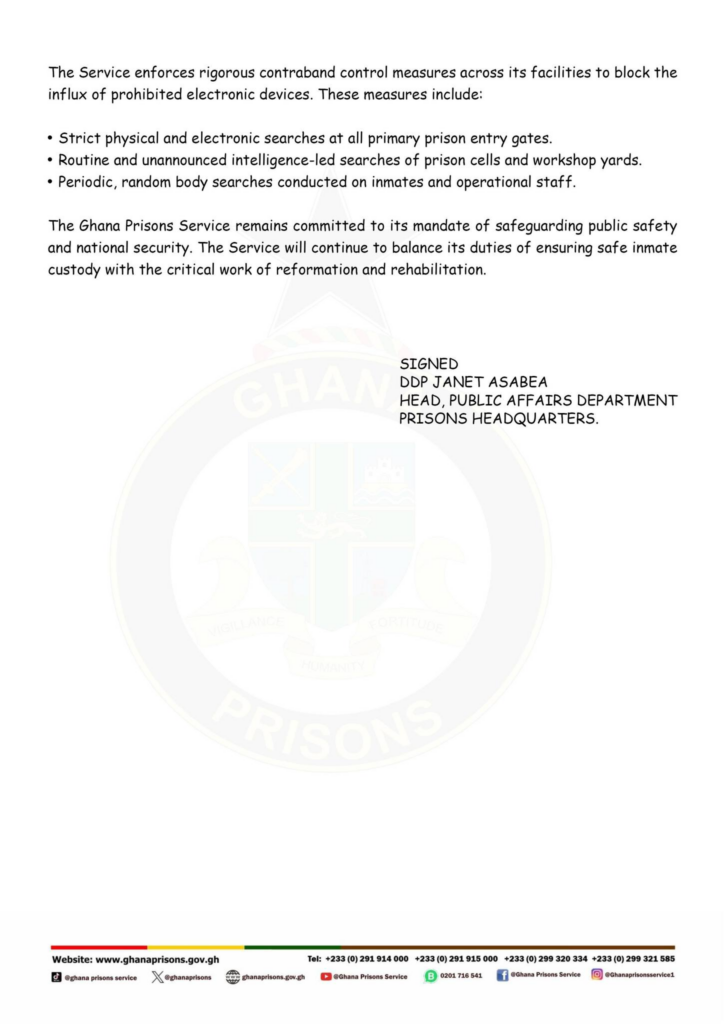
The Service explained that, in line with the protection of inmates' fundamental rights, prisoners are allowed to make voice calls only through official prison telephone booths under strict supervision.
Inmates are also permitted to receive scheduled visits from relatives, friends and legal representatives under regulated conditions.
However, the Service reiterated that the possession or use of personal mobile phones remains strictly prohibited in all correctional facilities across the country.
The ban applies not only to inmates but also to correctional officers while on duty.
As scrutiny intensifies over the alleged involvement of a prisoner in the murder plot, the Prisons Service highlighted existing security measures designed to prevent the entry and use of prohibited items within prison facilities.
According to the statement, the Service employs several layers of security to prevent the infiltration of contraband, particularly electronic devices.
These measures include strict physical and electronic searches conducted at prison entry points, routine intelligence-led inspections of prison cells and workshop areas, as well as unannounced searches aimed at detecting prohibited items.
Authorities also conduct periodic random body searches of both inmates and operational staff as part of efforts to maintain discipline and security within correctional institutions.
The Service maintained that these protocols are continuously enforced to prevent security breaches and safeguard the integrity of the prison system.
The Ghana Prisons Service reaffirmed its commitment to protecting public safety and preserving national security while carrying out its correctional mandate.
Officials stressed that the institution remains focused on ensuring secure custody of inmates while simultaneously pursuing rehabilitation and reformation programmes designed to facilitate their reintegration into society.
"The Ghana Prisons Service remains committed to its mandate of safeguarding public safety and national security. The Service will continue to balance its duties of ensuring safe inmate custody with the critical work of reformation and rehabilitation," the statement concluded.
Latest Stories
-
Local Gov’t Minister announces plans to regenerate Agbogbloshie enclave
38 seconds -
LA 2028: Black Queens performance watch ahead of Mauritius clash
1 minute -
Gov’t transfers GH¢9.1bn DACF to MMDAs under Mahama — Mahama Ayariga
2 minutes -
From tools to strategy: How Ghanaian MSMEs can harness AI for scale
3 minutes -
GCB MD engages customers in live social media ‘Ask Me Anything’ session
6 minutes -
Football clubs ‘are in love’ with Kurt Okraku – Aduana FC boss
6 minutes -
SavannaFest Tournament: Coach appeals to MTN to invite scouts in future tournaments
8 minutes -
John Boadu pledges unity, reconciliation as he takes over as NPP National Chairman
11 minutes -
‘Whatever the personal cost, I will not abandon my duty’ – Baffour Awuah assures Salomey Bafoh
12 minutes -
Government to increase funding for Houses of Chiefs to speed up dispute resolution
14 minutes -
Govt’ to introduce digital property rate system to boost MMDAs’ revenue – Mahama Ayariga
16 minutes -
Traditional Medicine Practice Council closes three unlicensed spa and massage centres in Ashanti Region
18 minutes -
Let’s accept the reality and move along – Mike Oquaye on NPP’s decision to make flagbearer party leader
20 minutes -
Early presidential primary helped cool tensions in NPP – Prof. Mike Oquaye
38 minutes -
NDC congratulates new NPP executives, urges national interest above party interests
41 minutes