

Audio By Carbonatix
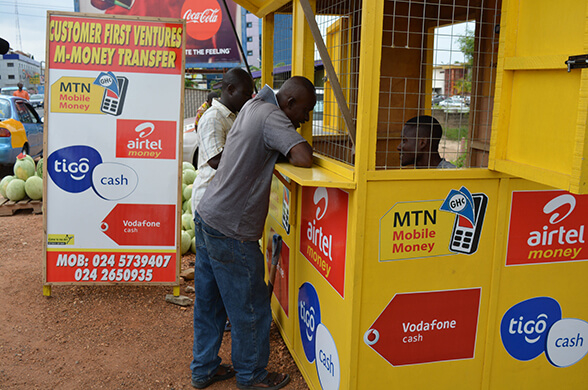
The Institute of Statistics, Social, and Economic Research has indicated that the new restriction on mobile money (MOMO) transactions could derail the digitization of micro, small, and medium-sized enterprises and progress in the cash-lite economy.
In a press statement copied to the Ghana News Agency, the Institute acknowledged that the proposed rate would have a minimal impact on small-value transactions.
However, ISSER noted that the move would adversely impact micro, small, and medium enterprises that rely on MoMo for their financial transactions.
“Worthy of attention is the potential impact on micro and small enterprises, especially traders and farmers within the agricultural value chains concentrated in rural areas. For these segments, especially traders and transporters of foodstuffs who rely on MoMo to address security concerns with carrying cash across the country, an increase in cost is likely to be transferred to consumers,” the statement said.
This move, the institute said, could be a trigger for both food and non-food inflation.
The institute raised concern that beyond the move to restrict MoMo transactions, the developing social media-driven e-commerce ecosystem, which relies on MoMo for payment, would also see the transfer of the revised charges to consumers.
“As service providers on the various e-commerce platforms will pass on the charges to consumers in the form of increased prices of goods and services,” the statement said.
In a joint statement copied to the media, MOMO agents around Ghana said they would implement a temporary measure that limits cash withdrawals to GHS 1,000 per transaction from December 1.
ISSER said that the potential impact of the restrictions might be significant, particularly for neglected and last-mile populations.
“On average, 76 percent of mobile money agents are within 30 minutes of consumers in rural areas. On the other hand, it takes 2 hours for over 50 percent of rural dwellers to reach an ATM, with only about 40 percent being able to reach a bank or microfinance in two hours,” the statement said.
This situation ISSER said that many MoMo users in rural areas, where ATMs, banks, and microfinance institutions were not an option, would be confronted with the option of either enduring the high transaction costs or resorting to cash.
Latest Stories
-
MamaCare CEO warns unresolved conflicts among health workers could undermine maternal and neonatal care
20 minutes -
Health professionals urged to translate medical knowledge into practice to save mothers
27 minutes -
Conflicts among care providers linked to maternal, neonatal deaths – Expert
2 hours -
GIS marks 10th TIME conference, champions improved teaching practices
2 hours -
BRICS Or Balance? What Ghana’s bid really means
3 hours -
GPRTU wants full TRAFFITECH-GH implementation to start in 2027
3 hours -
Mahama announces plans to import electric wheelchairs for PWDs
3 hours -
KGL U17 Colts 2026: Western beat Prempeh Elite Academy to set up final final with Greater Accra Region
3 hours -
Late Solanke strike salvages 10-man Spurs draw at Man United
3 hours -
Gender Ministry to monitor welfare of Nana Akua Addo’s children amid domestic violence case
4 hours -
Benedict Okyere Yeboah: Ghana’s football problem goes beyond sacking a coach
4 hours -
GPL 2026/27: Darkwah Wiafe’s winner sees All Blacks beat Kotoko
4 hours -
ITF World Tour : Patel Wins Boys’ Singles Final at J100 Accra
4 hours -
Ghana must pursue BRICS partnership if it brings economic benefits – Kpebu
4 hours -
Success and Wright Claims J100 Accra Girls’ Doubles Championship
4 hours